

Fridge, Dishwasher, Sink: Odour Prevention and Maintenance
Fridge, freezer, dishwasher, sink and trap: the routines and frequencies that prevent odours in the kitchen of a short-term rental.
8 min read
Three appliances are responsible for almost all kitchen odours in a furnished rental: the fridge, the dishwasher, and the sink. They share a common trait: they remain closed and damp between stays, sometimes for several days. An odour that settles in any of the three is noticeable as soon as the front door opens, and no air freshener will mask it. This guide gives you the treatment for each, with the frequency that prevents it ever getting that far.
What to do, and when
| Task | Frequency | The critical point |
|---|---|---|
| Clean the fridge | Every 4 cleans | Empty completely, including drawers |
| Empty the dishwasher | Every clean | Leave the door ajar |
| Clean the dishwasher | Every month | The filter, above all |
| Clean the sink | Every clean | The trap and waste cover |
| Clean the freezer | Every 3 months | Defrost if needed, drawers and walls |
| Refill the ice tray | Every clean | Throw out old ice, use fresh water |
| Replace sponges | Every clean | No exceptions |
| Prepare washing-up brush and cloth | Every clean | Clean and dry, by the sink |
| Restock dishwasher tablets | Every clean | Enough for the whole stay |
The fridge, appliance by appliance
A rental fridge faces a challenge that a private fridge never does: it is emptied and refilled by strangers every three days, with leftovers abandoned at departure.
At every clean, the minimum: remove everything the guest has left, without exception or judgement. An opened jar, a half-full bottle of milk, a plate of leftovers under cling film. Nothing is kept from one guest to the next, even if sealed. Then wipe the visible shelves and the inside of the door.
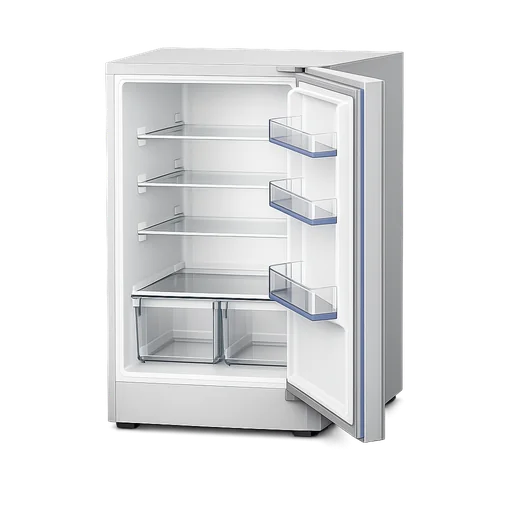
Every four cleans, a full clean:
- Empty completelyRemoving shelves and drawers.
- Wash with warm water and bicarbonate of sodaRather than perfumed detergent: fridge plastic absorbs product smells, which then transfer to food.
- Don't forget the door sealsWhere mould grows unnoticed. An old toothbrush and vinegar water are enough.
- Check and clear the drain holeAt the back of the compartment, often blocked by a crumb. This is the classic cause of water pooling under the vegetable drawer.
- Dry everythingBefore reassembling.
Two small details make a disproportionate difference: a small container of bicarbonate left at the back absorbs odours between stays, and leaving the door ajar if the property will be empty for more than a few days, with the appliance switched off.
What you know about the specific fridge in this property, a removable vegetable drawer, a fragile seal, a glass shelf that must not be rinsed in cold water, should be written in the task note. The cleaner reads it as they open the door, not afterwards.
 Air the room
 Vacuum the floors
 Clean the fridge
 Clean the shower screen
 Clean the mirrors
Your notes, under each task
Rewrite the library tip with what you know about the property: your cleaner reads it right under the title.
More detailsThe freezer, every three months
The freezer compartment is often forgotten. Guests find ice cubes from another summer, an opened bag of vegetables, and a layer of frost that stops the drawer closing.
The method, to be planned for a day when the appliance can be switched off for a few hours:
- Empty it completelyAnd throw away anything left by a guest.
- Switch off and allow to defrostWith the door open, placing a mop or tray underneath for the water. A bowl of hot water inside speeds up melting; never use a knife to remove ice, as it can puncture the system.
- Wash drawers and wallsWith warm water and bicarbonate, then dry thoroughly.
- Switch back onAnd do not put anything back until the temperature has dropped again.
If defrosting cannot be done within the cleaning time, do it at the end of a visit and plan to switch back on at the next clean, or on a day with no arrivals.
The ice tray
The ice tray should be prepared at every clean, and it's a small touch that's much appreciated in summer. Throw away any ice left by the previous guest: it has taken on the freezer's smell, and no one knows what water was used. Rinse the tray with hot water, no detergent, refill with fresh drinking water and place it flat, away from food. A tray with a lid or ice cube bags prevent the ice from absorbing freezer odours.
The dishwasher: the filter, then the rest
The eggy or musty smell blamed on the dishwasher almost always comes from the filter at the bottom of the compartment, not the machine itself.
At every clean: remove the filter, rinse it under hot water, scrub if needed, replace it. Thirty seconds. Wipe the door seal as you go.
Every month: run an empty cycle on the hottest programme, with a glass of white vinegar on the top rack or a dedicated cleaning product. Also clean the spray arms: their holes get blocked with limescale, and poorly washed dishes almost always come from this.
Finally, check the levels of dishwasher salt and rinse aid. A glass that comes out with a white film is not dirty, it just lacks rinse aid, but the guest will not know the difference.
And the final step, the same as for the washing machine: leave the door ajar between stays. For clean dishes, the rule is the same as for the departure round: empty the machine at the start of cleaning, as detailed in the departure round guide.
For the guest, leave enough dishwasher tablets for the whole stay in a cupboard near the machine. A guest who cannot find a tablet will run the machine with washing-up liquid, and the next cleaner will find a kitchen flooded with foam. Restocking this type of consumable is much easier to track in stock than by eye: each restocking task in the checklist can become a tracked item.
 X2Restock the toilet paperToilet paper6
 Refill the hand soapHand soap100%
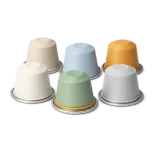 X4Restock the coffee capsulesCoffee capsules10
 Leave the welcome giftWelcome gift1
Built from your checklist
Switch tracking on: every restock task becomes an item, with its starting quantity.
More detailsThe sink and the trap
The sink is cleaned at every visit, but the smell does not come from the bowl: it comes from the waste cover and the trap.
The routine treatment, at every visit:
- Clean the bowl with a mild product, then rinse and dry thoroughly. On stainless steel, drying is what gives the shine, not the product.
- Remove and rinse the waste cover, where food residues collect.
- Pour half a litre of water down every waste outlet in the property at the end of the clean, including those rarely used. A dry trap allows air from the pipes to rise, and this is the most common cause of unexplained drain smells in a property left empty.
Once a month, a deeper treatment: bicarbonate then white vinegar down the waste, leave for ten minutes, then a litre of very hot water. Avoid chemical unblockers as a routine, as they damage seals over time.
On a resin or composite sink, do not use abrasive products or scouring pads: the surface will dull and then trap dirt. On stainless steel, wipe in the direction of the brushing.
Sponges: replace, never wash
A kitchen sponge is one of the most contaminated items in a property. It is damp, warm, porous, and full of organic matter.
The only rule that works in rentals: a new sponge at every departure, thrown away without discussion. The cost is negligible, and leaving the next guest the previous guest's sponge is exactly the kind of detail that gets mentioned in a review.
The same logic applies to the worktop cloth, which goes in the wash with the tea towels, never with bath linen, as detailed in Tablecloths, napkins, tea towels: table linen for rentals. Place a clean, dry washing-up brush and a full bottle of washing-up liquid next to the new sponge: the full list for the washing-up area is in kitchen consumables.
What to check before leaving
Three points, one minute:
- No food left in the fridge, freezer, or cupboards, including opened dry goods. Only the basic products you provide yourself remain: salt, pepper, oil, sugar.
- Both doors left ajar, dishwasher and washing machine.
- A final sniff in front of the sink and closed fridge, the two places where a developing odour can still be detected.
Your questions
How often should you clean the fridge in a rental?
A full empty and wipe of visible shelves at every departure, and a deep clean every four cleans: shelves and drawers removed, door seals scrubbed, drain hole cleared. Bicarbonate is better than perfumed detergent, as the smell transfers to food.
Why does my dishwasher smell of eggs?
Almost always, it's the filter at the bottom of the compartment, clogged with residue. Rinse it at every clean, wipe the door seal, and run an empty cycle on the hottest programme with white vinegar once a month. Always leave the door ajar between stays.
How do I get rid of a drain smell in an empty property?
Pour half a litre of water down every waste outlet, including those never used. A dry trap allows air from the pipes to rise, and this is the most common cause of unexplained odours in a property left closed for several days.
Should you change the sponge at every guest departure?
Yes, without exception. A damp, porous sponge is the most contaminated item in a kitchen, and the next guest will see it as the previous guest's. The cost is negligible compared to the review it could cause.
What should you do with food left by guests?
Remove everything, including sealed or vacuum-packed items. Nothing is kept from one stay to the next: you do not know how long it has been there or how it was stored. Also check the freezer and cupboards, which are often forgotten during the round.
Why do my glasses come out of the dishwasher with a white film?
It is missing rinse aid, or the water is very hard and the salt compartment is empty. The glass is not dirty, but the guest will not know the difference. Check both levels at every clean and descale the spray arms once a month.

Written by Janik Thoisy
Janik Thoisy manages short-term rentals day to day and shares her cleaning and organisation methods here.
Published on August 13, 2026 · Updated on November 8, 2026
Read next
 Airbnb Cleaning Checklist: Room-by-Room List for HostsAirbnb cleaning checklist for every turnover: room-by-room list, cleaning order, a one-page version, Airbnb's 5 steps and the 10 spots everyone forgets.Cleaning tips
 Clean an Airbnb in 1 Hour: The Minute-by-Minute MethodClean an Airbnb in 1 hour: room order, timing by area, equipment kit, and the pitfalls that make the clock run over between guests.Cleaning tips
 Airbnb Cleaning Supplies: 15 Essentials for Your KitAirbnb cleaning supplies: the 15 essential products for a short-term rental, their uses, annual budget, reserve to keep and stock tracking.
One property free to put all of this in place, for as long as it takes.