Airbnb Cleaning: 10 Mistakes That Lead to Bad Reviews
Hair, dust, odours, marks: the 10 cleaning mistakes guests notice first, and how to eliminate them from your Airbnb reviews.
11 min read
A property can be tastefully decorated and perfectly located: all it takes is one hair on the pillow or a musty smell when the door opens for the stay to get off to a bad start, and for the review to reflect it. The figures speak for themselves: around 95% of guests mention cleanliness in their review, and a cleanliness rating dropping below 4.8 can mean almost 20% fewer bookings.
The good news? Bad “cleanliness” reviews almost always come from the same 10 mistakes, repeated from property to property. Rarely major faults: more often, details you stop noticing after cleaning the same place over and over. Here’s how to spot them, eliminate them, and catch an unhappy guest before they write their review.
Why cleanliness weighs so heavily in your reviews
A useful reminder: cleanliness isn’t just another criterion, it’s the number one factor. According to an AHLA study cited in the industry, 81% of guests rank it as their top priority when choosing accommodation (Hospitable). The effect works both ways: listings rated 5 stars for cleanliness are booked around 25% more often than others (Smoobu), while a global rating consistently below 4.35 stars can lead to your listing being removed from the platform. The rating criteria, including the dedicated cleanliness score visible to all future guests, are detailed in the Airbnb Help Centre.
In other words: each mistake below isn’t just a simple oversight, it’s a measurable business risk.
Mistakes 1 and 2: hair and high-up dust
Mistake 1: missed hair and pet fur. This is the most common complaint in negative reviews. A hair in the shower or on the pillow sends an instant message: “someone was here before you”. Critical areas: shower tray, pillows, sofa, bathroom skirting boards, and behind the toilet door. The solution: use a slightly damp microfibre cloth after vacuuming on light fabrics, then inspect on your knees, at a child’s eye level. That’s where you see what the vacuum missed.
Mistake 2: dust up high (and underneath). On top of door frames, lampshades, the fridge, extractor fans grey with dust: guests notice these, especially in mezzanines or bunk beds, where their eyes are level with high surfaces. The same goes for under beds and sofas: if a phone falls, the guest discovers dust bunnies. No need to do these areas every clean, but set a fixed schedule (once a week, or every two or three cleans) so they’re never missed for more than a few days.
Mistakes 3 and 4: odours and questionable bedding
Mistake 3: neglecting the entrance smell. Guests judge cleanliness by smell before they judge it by sight. Damp, drains, stale smoke, forgotten bin: a suspicious smell taints the perception of the whole property, even if spotless. The minimum reflex: air out for 10 to 15 minutes at every clean, pour water into the drains of little-used properties, empty all bins, including the bathroom one. Avoid masking with strong air fresheners: a heavy chemical scent suggests something is being covered up, and the ANSES reminds us these products emit volatile compounds best limited indoors. For a cause-by-cause approach, see our dedicated guide: Eliminating Bad Odours in a Rental: The Complete Guide.
Mistake 4: bedding that raises doubts. Yellowish stains on a pillow, no mattress protector, a duvet that smells musty: nothing puts guests off faster. Hotel standards are clear: full linen change after every stay, wash at 60°C to eliminate dust mites and bacteria, duvets and pillows washed once a month (Direct Hôtellerie). Equip every bed with washable mattress and pillow protectors: a few pounds that save mattresses worth hundreds.
Mistakes 5 and 6: streaky glass and a rushed bathroom
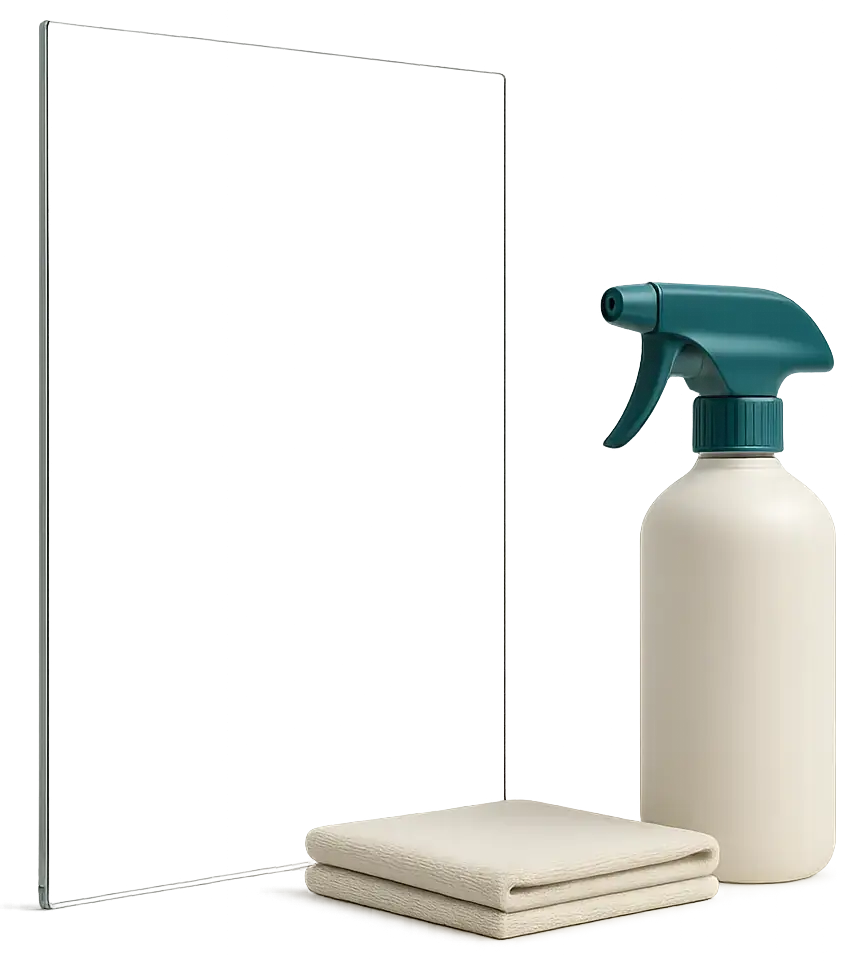
Mistake 5: mirrors and windows with marks. A bathroom mirror splattered with toothpaste is one of the most photographed details in negative reviews. The problem is often the equipment: a greasy sponge or fluffy cloth spreads dirt rather than cleaning. The winning combo: diluted white vinegar (or glass cleaner), a special glass microfibre, and a final vertical wipe. Check the result from an angle, against the light: that’s how the guest will see any marks.
Mistake 6: the bathroom cleaned too quickly. This is the room where guests are most demanding, and for good reason: a poorly maintained rental bathroom can contain up to three times more bacteria than a hotel bathroom (Smoobu). Three recurring issues: limescale on taps and shower screens, blackened grout, plughole full of hair. Plan a weekly descaling with white vinegar, treat grout at the first sign of black, and always check the plughole. The full hotel protocol is in How to Clean a Bathroom Like a Hotel: The Method.
Mistakes 7 and 8: “surface clean” kitchens and high-touch details
Mistake 7: cleaning the kitchen without opening it. Worktops spotless... but a smelly fridge, oven with burnt-on splashes, splattered microwave, or worse: a greasy pan put away by the previous guest. The rule: at every clean, open and check the fridge, microwave, oven, dishwasher and bin, and spot-check the stored crockery. A glass with lipstick marks almost always ends up in a review. The cleaning order and key points are detailed in our method for cleaning the kitchen between stays.
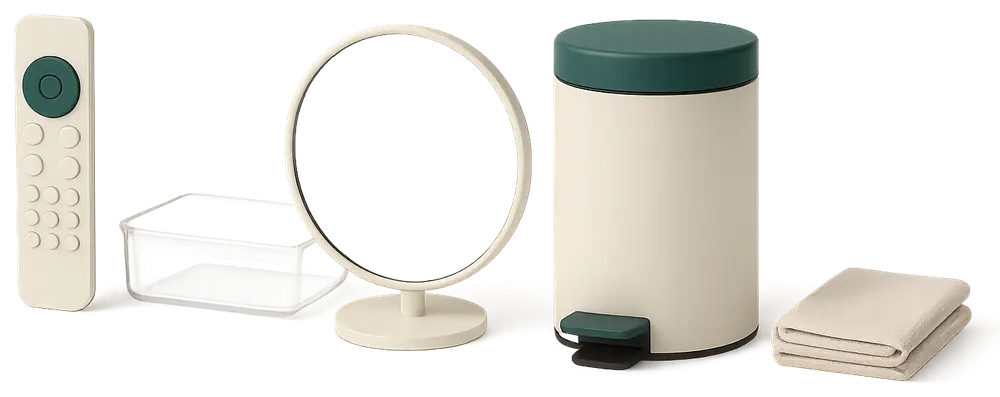
Mistake 8: forgetting touch points. Light switches, door handles, remote controls, appliance buttons, stair rails: these are the most touched and least cleaned surfaces. Since enhanced cleaning protocols became standard in 2020, disinfecting touch points with the correct contact time is now expected. Wiping down this list with a disinfectant cloth takes less than 5 minutes per property.
Mistakes 9 and 10: cleaning without a checklist and tight scheduling
Mistake 9: relying on memory. Most oversights aren’t due to lack of care but to cleaning “from memory”, differently each time or depending on who’s doing it. Without a written list, everyone has their own blind spots, and they show up in reviews. The solution: a written checklist, the same for everyone, with sensitive points specific to each property (the bathroom extractor, the cutlery drawer that collects crumbs...). Our full template is here: Airbnb Cleaning Checklist: Room-by-Room List for Hosts.
Mistake 10: underestimating the time needed. A rushed clean is almost always a clean scheduled too tightly. Allow on average 35 to 45 minutes for a studio, around 60 minutes for a one-bed flat, and 100 to 120 minutes for a house, more after a long stay or with pets. If the slot between an 11am check-out and a 3pm check-in leaves only 45 minutes for a family house, the outcome is inevitable. Schedule with a buffer, and have a plan B for same-day turnovers.
The 10 mistakes at a glance
| Mistake | What the guest writes | The quick fix |
|---|---|---|
| Hair and fur | “Hair in the shower” | Damp microfibre, kneeling inspection |
| Dust up high | “Dusty” | High and low areas on a set schedule |
| Entrance smell | “Musty smell” | Air 15 min, drains, all bins |
| Questionable bedding | “Doubtful sheets” | Protector on every bed, linen at 60°C |
| Marks on mirrors | “Dirty mirror” | Glass microfibre, check against the light |
| Rushed bathroom | “Limescale, black grout” | Weekly descaling, clear the plughole |
| Kitchen not opened | “Dirty fridge, greasy dishes” | Open every appliance, spot-check crockery |
| Touch points | “Sticky remote” | Disinfectant wipe, 5 min |
| Cleaning from memory | Different misses each stay | Written checklist per property |
| Slot too tight | “Not finished” | Realistic timing, buffer, plan B |
Beyond cleaning: what lowers your cleanliness score even when it’s clean
Some “cleanliness” reviews aren’t about dirt. A poorly made bed, curtains half closed, a light off in a dark room, towels left in a heap: the property is clean, but doesn’t look it. These last-minute touches, which take five minutes, are detailed in our list of staging tips before departure.
The same goes for technical issues: a guest arriving to no hot water or a remote with dead batteries is more likely to leave a bad score everywhere, cleanliness included. Add these checks at the end of cleaning; the full list is in our technical checks before arrival.
The anti-bad review method: standardise, prove, check
Eliminating these 10 mistakes once isn’t enough: they need to stay eliminated at every turnover, whoever is cleaning. Three pillars:
- Standardise.One checklist per property, explicitly including the risk areas from this article (touch points, high-up areas, plugholes, fridge). What isn’t written down will eventually be forgotten.
- Prove.Ask for end-of-clean photos of sensitive points: made bed, bathroom, kitchen, empty bins. They serve as both remote quality control and proof in case of disputes. How to request and review them quickly is in our guide to photo-based quality control.
- Check and correct.Read every review mentioning cleanliness and trace it back: which mistake, which property, which slot was too tight? A recurring complaint becomes a new checklist item.
One indicator is very helpful for tracing the cause: the state of the property as rated by the cleaner on arrival. A property left very dirty by the previous guest explains a longer clean or a missed spot; a property in good condition followed by a complaint points to the method. In CleanClac, the cleaner rates this state from 1 to 5 stars before starting.
Condition rated on arrival
Before the first task, the cleaner rates the property out of 5, with a photo if needed.
More detailsAs for products, a few basics used well (white vinegar, degreaser, disinfectant for touch points, dedicated microfibres for each area) cover almost everything: ADEME also recommends limiting the number of products to reduce costs, indoor air pollution, and the risk of dangerous mixtures.
Catching dissatisfaction before the review
The worst cleanliness review is the one you discover after it’s published, when a ten-minute visit could have fixed everything. The right reflex: give guests a simple way to report a problem during their stay, and make sure it’s visible, not buried in the welcome booklet.
That’s the role of the “Cleaning Checked” guest card from CleanClac: a QR code placed in the property, which guests scan with no app or account needed. They see when the last clean was done, which points were checked and what was prepared for them, then rate cleanliness from 1 to 5 stars. A rating of 3 stars or less alerts you immediately, and this review is never shown publicly: you have time to send someone or call the guest before they rate their stay on the platform.
 Chloe

 Isabel
Every rating reaches the right person
From 1 to 5 stars, with a few words if the guest wishes.
More detailsYour questions
What is the most frequently cited cleaning mistake in bad reviews?
Missed hair and pet fur, by far, especially in the shower, on pillows and on the sofa. They are particularly damaging as they suggest the whole clean was rushed, even if everything else is spotless. A final inspection of fabrics and the bathroom, at eye level, eliminates most of the risk.
Can a single bad cleanliness rating really hurt my listing?
A single rating won’t destroy a listing, but the cumulative effect is quick: below 4.8 for cleanliness, industry studies see around 20% fewer bookings, and a global rating consistently below 4.35 can lead to your listing being removed. Each average review weighs even more if you have few reviews in total.
How much time should I allow for cleaning between guests?
On average, 35 to 45 minutes for a studio, 1 hour for a one-bed flat, and up to 2 hours for a house, including linen depending on your setup. Add extra time after long stays, groups or pets. A slot that’s too tight is the direct cause of most oversights: schedule cleaning as soon as the booking comes in, not the day before.
Do I need to disinfect every clean or is normal cleaning enough?
Cleaning (degreasing, dusting) is enough for most surfaces. Touch points (handles, switches, remotes, taps) should be disinfected at every turnover, leaving the product on for the recommended time. This is a legacy of enhanced cleaning protocols, now an expected standard for guests, for just a few extra minutes’ work.
How can I check cleaning quality when I’m not on site?
The winning duo: a detailed checklist per property and end-of-clean photos of sensitive points (bed, bathroom, kitchen). You can check quality remotely in 2 minutes, the cleaner knows exactly what’s expected, and you have timestamped proof in case a guest complains about cleanliness.
How should I respond to a negative cleanliness review?
Reply publicly, briefly and without over-justifying: thank them, acknowledge the specific point, say what you’ve changed (“the shower plug is now checked at every clean”). Future guests mainly read your reaction. Privately, trace the cause with your cleaner, using cleaning photos, and add the point to the checklist.
Can you know a guest is unhappy before they leave a review?
Yes, if you give them a simple channel during their stay: a welcome message inviting them to report any issue, or a QR code in the property collecting a private cleanliness rating. A problem reported on the first night can be fixed with a quick visit or goodwill gesture; if discovered in the review, it stays visible for months.

Written by Janik Thoisy
Janik Thoisy manages short-term rentals day to day and shares her cleaning and organisation methods here.
Published on August 7, 2026 · Updated on November 16, 2026
Read next
 Airbnb Cleaning Checklist: Room-by-Room List for HostsAirbnb cleaning checklist for every turnover: room-by-room list, cleaning order, a one-page version, Airbnb's 5 steps and the 10 spots everyone forgets.Cleaning tips
 Clean an Airbnb in 1 Hour: The Minute-by-Minute MethodClean an Airbnb in 1 hour: room order, timing by area, equipment kit, and the pitfalls that make the clock run over between guests.Cleaning tips
 Airbnb Cleaning Supplies: 15 Essentials for Your KitAirbnb cleaning supplies: the 15 essential products for a short-term rental, their uses, annual budget, reserve to keep and stock tracking.
One property free to put all of this in place, for as long as it takes.