
Oven, hob, extractor: degreasing a rental kitchen
Oven, ceramic hob, extractor, microwave, toaster: the practical degreasing guide, with real-world frequencies and methods without harsh chemicals.
The kitchen is the room that most quickly gives away a poorly maintained property, because grease isn't immediately visible but never disappears on its own. An oven that smokes at the first gratin, an extractor dripping oil, a hob dotted with burnt rings: these are the result of months of rushed cleans. This guide gives you the degreasing method for each appliance, and above all, how often each one needs attention.
What needs cleaning, and how often
These appliances don't need doing after every guest, which is exactly why they're so often forgotten.
| Appliance | Recommended frequency | Time required |
|---|---|---|
| Hob | Every clean | 3 minutes |
| Microwave | Every 4 cleans | 10 minutes |
| Oven | Every 6 cleans | 30 to 45 minutes |
| Toaster | Every 6 cleans | 5 minutes |
| Extractor | Every 8 cleans | 20 minutes |
| Outdoor kitchen | Every clean | Depends on equipment |
The rule to remember: hob every time, the rest on a schedule. An oven cleaned every six turnovers stays easy to clean; the same oven left for a season will take two hours and a heavy-duty cleaner.
The hob: the habit that avoids scrubbing
Clean the hob when it's warm, never hot or stone cold. If it's hot, the product evaporates before it works and the glass can crack. If it's cold, splatters have hardened.
For a ceramic or induction hob:
- Wipe up liquid spillsWith a damp microfibre cloth.
- For burnt-on marks, lay a hot damp clothOver the spot, leave for five minutes, then scrape with a razor-blade scraper held flat, almost parallel to the glass. This tool replaces all cleaning products.
- Finish with a ceramic hob cleanerAnd buff with a dry microfibre.
Never use a green scouring pad or abrasive powder: micro-scratches permanently dull the glass and trap dirt.
For a gas hob, soak the pan supports and burner caps in hot water with washing-up liquid while you do the rest of the kitchen. Dry thoroughly before reassembling, or the next guest will have trouble lighting it.
The oven, no harsh chemicals
A rental oven doesn't need aggressive products if you stick to the right interval. The method that works, and is odourless:
- Remove shelves and traysSoak them in very hot water with washing-up liquid.
- Make a pasteWith bicarbonate of soda and a little water, about the consistency of toothpaste.
- Spread over the sides, base, and inside of the doorAvoiding the heating element and fan.
- Leave for several hoursIdeally for the whole clean, or overnight if the oven is very dirty.
- Wipe off with a damp microfibreThen go over with a cloth soaked in white vinegar: the reaction lifts the last residues.
- Rinse with clean waterAnd leave the door open to dry.
If the oven has a pyrolytic (self-cleaning) function, use it, but always remove the shelves first: they will be permanently dulled by the high temperatures. And warn guests, as pyrolysis produces a strong smell and requires airing the room.
The inner glass door is worth the effort: on most ovens, it comes off with two screws under the door, and that's the only way to remove the grease trapped between the two panes, the stuff that makes an oven look dirty even when it's clean.
The extractor: the appliance nobody takes apart
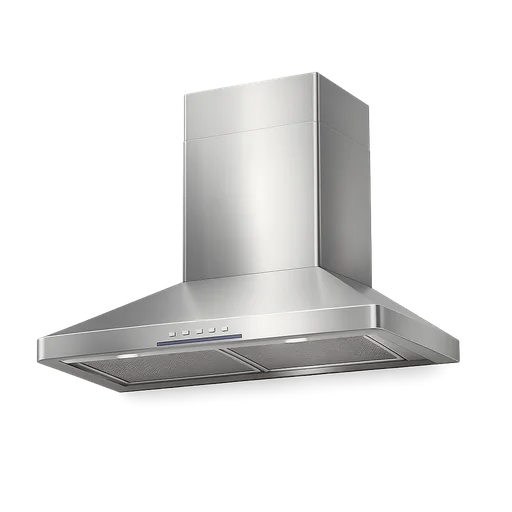
The extractor is where all the kitchen grease ends up, and a saturated filter simply stops extracting: the grease then settles on the top cupboards and ceiling.
Two parts, two treatments:
- The metal filter: remove it by pressing a clip. Soak in very hot water with washing-up liquid and a spoonful of soda crystals for thirty minutes, scrub gently, rinse, and dry thoroughly. It can also go in the dishwasher on an intensive cycle, on its own.
- The charcoal filter, for recirculating extractors with no outside vent: this can't be washed, it must be replaced every six to twelve months depending on use. A washed charcoal filter is a dead filter.
Wipe the stainless steel exterior in the direction of the grain, with a gentle degreaser, then buff dry.
The microwave: ten minutes, no scrubbing
Let steam do the work:
- A bowl of water with half a squeezed lemonOr two tablespoons of white vinegar.
- Five minutes on full powerThen five minutes with the door closed so the steam keeps working.
- Wipe with a microfibre cloth.Baked-on splatters come off easily.
Don't forget the ceiling inside the cavity, where splatters hide out of sight, and the turntable, which can go in the dishwasher.
The toaster: crumb trap
A toaster full of crumbs is a fire hazard as well as unpleasant. Unplug, remove the crumb tray, empty it, then turn the toaster upside down over a bin and tap firmly. A dry, fine brush between the slots does the rest. Never put any liquid inside.
The outdoor kitchen
This combines all the challenges of an indoor kitchen with the outdoors: grease plus the weather. Treat it at every clean like an indoor worktop, with extra attention to the outdoor sink, whose trap dries out between stays and lets smells back up. Pour half a litre of water down each plughole at the end of the clean to refill the trap and solve the problem. The barbecue and plancha have their own routine, detailed in Barbecue and Plancha in Holiday Lets: Cleaning and Safety.
Your questions
How often should you clean a rental oven?
About every six cleans, which is enough to keep it easy to clean. Leave it a whole season and the baked-on grease will take two hours and a heavy-duty cleaner. The hob needs doing every turnover, and the extractor every eight cleans.
How do you clean an oven without chemicals?
A paste of bicarbonate of soda and water spread on the sides, left for several hours, then wiped off with a damp microfibre and followed by a cloth with white vinegar. Remove the shelves first and soak them. This method is odourless and suitable for properties with guests arriving the next day.
How do you remove a burnt mark from a ceramic hob?
Lay a hot damp cloth over the mark, leave for five minutes, then scrape with a razor-blade scraper held almost flat against the glass. Finish with a ceramic hob cleaner. Never use an abrasive sponge: micro-scratches permanently dull the glass.
How often should you change an extractor filter?
The metal filter should be washed about every eight cleans, by soaking or in the dishwasher on an intensive cycle. The charcoal filter in recirculating extractors can't be washed: it must be replaced every six to twelve months. A saturated filter stops extracting, and grease then settles on the top cupboards.
How do you clean a microwave without scrubbing?
Heat a bowl of water with half a squeezed lemon for five minutes on full power, leave the door closed for five more minutes, then wipe with a microfibre. The steam loosens baked-on splatters. Remember the ceiling inside, which you can't see from the front, and put the turntable in the dishwasher.
Should you clean the toaster between guests?
Empty the crumb tray every six cleans, and more often if you host families. It's not just about cleanliness: a crumb-filled toaster is a fire risk. Unplug, empty, tap over a bin, and never put any liquid inside.
Read next
 Complete Airbnb Cleaning Checklist: Never Miss a SpotRoom-by-room Airbnb cleaning checklist: optimal order, commonly missed spots, final checks. The method for a spotless property at every turnover.Cleaning tips
 Clean an Airbnb in 1 Hour Flat: The MethodMinute-by-minute method to clean an Airbnb in 1 hour: room order, equipment, timing per area and pro tips to keep to the clock.Cleaning tips
 15 essential cleaning products for short-term rentalsComplete cleaning kit for your Airbnb: the 15 must-have products, their specific uses, annual budget, and where to store them in your property.
Move from theory to practice.
One property free to put all of this in place, for as long as it takes.