

Terrace, garden, sun loungers: the exterior of a holiday let
Terrace, garden furniture, parasol, sun loungers, hammock: the method for the exterior of a holiday rental, material by material and season by season.
9 min read
The exterior is what the guest sees when they open the shutters, often before they've even put down their suitcase, and it's also what they chose from the photos in the listing. A terrace with dead leaves in the corners and sun lounger cushions soaked with damp undoes in ten seconds all the work done inside. This guide covers the outdoor round: in what order, with what, and how often.
What to do, and when
| Task | Frequency | Key point |
|---|---|---|
| Sweep the terrace | At every clean | Before the inside, from the back outwards |
| Pick up leaves | At every clean | After sweeping, not during |
| Clean garden furniture | At every clean | According to the material |
| Clean the parasol | At every clean | Canopy and base, always closed afterwards |
| Store sun loungers | At every clean | Cushions put away, never left out overnight |
| Clean the hammock | At every clean | Shake and brush the fabric, bring in if it rains |
| Clean the summer kitchen | At every clean | Worktop, sink and plancha |
| Water the plants | At every clean | Last thing |
| Empty ashtrays | At every clean | Nothing should still be smouldering |
| Clean outdoor play equipment | Monthly | Check all fixings |
| Check the bikes | At every clean | Tyres, brakes, locks |
The exterior is done before the interior. Sweeping a terrace sends dust and debris towards the patio doors: doing it after mopping the floors means you'll have to go over them again. The full order for floors, inside and out, is detailed in the floor cleaning method.
Sweeping a terrace without bringing it all back inside
The direction you sweep makes all the difference. Always start from the back of the terrace outwards or towards a collection point, never towards the patio doors. Debris collects in one spot for you to scoop up at the end, rather than chasing a pile that scatters.
Three commonly missed areas, and they're exactly what the guest sees when sitting down:
- The sliding door tracks, where sand and grit block the doors. A handheld vacuum does more here than a broom.
- Under the furniture, which the broom usually goes around instead of under. Move the table, it takes twenty seconds.
- Corners and the base of low walls, where leaves get compacted and stain the floor as they decompose.
On a wooden terrace, always sweep along the boards: sweeping across pushes debris into the grooves instead of out.
Garden furniture, material by material
There is no universal product for outdoors, and the wrong one leaves a visible mark all season.
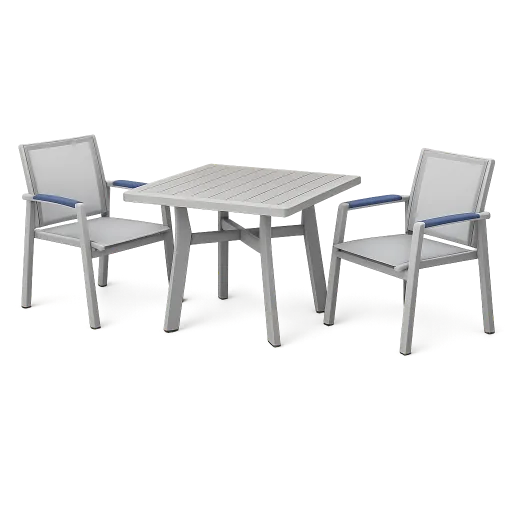
- Woven resin and plastic: warm water and mild soap, soft brush. Avoid pressure washers, which distort the weave and snap the strands.
- Aluminium and lacquered steel: damp microfibre cloth and neutral soap, then dry off. No abrasive products, which scratch the lacquer and let corrosion in.
- Teak and exotic woods: soft brush along the grain, clean water. A wood restorer once or twice a year is enough; the rest of the time, just water. Wood turning grey is not damaged, it's a natural patina.
- Glass table tops: wash then dry with a clean microfibre to avoid limescale marks, which are especially visible in sunlight.
In all cases, dry after washing. A table left to air dry keeps the limescale rings from tap water, and that's exactly what the guest sees when they put down their coffee.
The parasol: the canopy, and above all, storage
Brush the canopy dry to remove dust and pollen, then clean stains with warm soapy water, never in the washing machine: machine washing destroys the water-repellent treatment and the fabric soaks up water at the first shower.
More important than cleaning: the parasol must always be closed and strapped at the end of the clean. An open parasol catches the wind, and a night-time gust can break the frame or send the base into the patio doors. Also check that the canopy is completely dry before closing: a folded damp canopy develops mould stains in a few days, and those never come out.
Sun loungers and cushions
Outdoor cushions are the most fragile part of any setup. They absorb night-time damp, dry poorly and develop dark stains in a single season if left outside.
The rule: cushions brought in or stored in a chest at the end of every clean, sun loungers folded or lined up as shown in your photos. Provide a waterproof storage chest if there’s no outbuilding: it pays for itself in one summer.
For common stains on outdoor fabric, warm soapy water and a soft brush deal with most things. Dry flat and in the shade: direct sun fades coloured fabrics.
The hammock and hanging textiles
The hammock is the most photographed piece of kit and the least maintained. Its fabric stays outside, collects dew, pollen and bird droppings, and it’s the first thing the guest lies on.
- Shake and brush the fabric dry at every clean, both sides, with a soft brush. This is the “Clean the hammock” task.
- Treat stains with warm soapy water, rinse with clean water, and leave to dry stretched out, never rolled up.
- Bring it in if it rains or if the property will be empty for several days: a hammock that dries badly develops black mould stains that never come out.
- Check the ropes, rings and anchor points as you go. A frayed rope is a safety issue, not just cosmetic.
Same logic for shade sails and outdoor curtains: brush them, make sure they’re dry before folding, bring them in out of season.
Ashtrays
A full ashtray on the terrace table is the first thing a non-smoker notices, and the smell of cold tobacco drifts through the patio doors. At every clean, on the terrace, balcony or in the garden:
- Check nothing is still smouldering.A cigarette butt can smoulder for ages under the ash: if in doubt, pour a little water before emptying.
- Empty into a sealed bagThat goes out with the household rubbish, never in the compost or recycling, and never in an indoor bin where the smell will linger overnight.
- Rinse and dryThe ashtray, then put it back outside. A clean, visible ashtray outside is a silent reminder that smoking is outdoors only.
Pick up any butts dropped around the table, in planters and at the foot of the terrace. Butts inside, or a tobacco smell in a bedroom, require a different approach, detailed in the guide on odours.
Outdoor play equipment
Slide, swing, climbing frame, playhouse, trampoline: garden play equipment is for children, and safety is the priority, far more than appearance. Once a month in season, and after every family stay:
- Wipe down contact surfaces: swing seats, slide surfaces, handles, with soapy water then clean water. A dusty slide dirties clothes, a seat wet with dew should be dried before guests arrive.
- Check every fixing: nothing moves, no screws sticking out, chains and ropes are neither frayed nor rusty, anchors are secure in the ground.
- Check the ground underneath: no stones, branches or garden tools left under a swing or at the foot of a slide.
- The trampoline, if there is one: safety net intact, pads in place over the springs, mat with no tears.
If there’s any doubt about a piece of equipment, don’t try to fix it during the clean: take a photo, report it, and make it off-limits in the meantime, swing seat removed or access closed. Keep the manufacturer’s instructions with the property guide: they specify age, maximum weight and maintenance.
Bikes provided for guests
Bikes in the garage are a selling point, and a source of messages if the first guest to use them finds a flat tyre. Before every arrival:
- Tyres pumped up: if you can press the tyre in easily with your thumb, it’s too soft. Leave a pump next to the bikes, with the right fitting for their valves.
- Brakes tested: with the lever pulled, the bike shouldn’t move when pushed. If the lever touches the handlebar, it needs adjusting before any use.
- The chain, clean and rust-free, lights front and rear, bell.
- Locks and helmets, stored nearby, with the lock key or code in the same place as other property codes.
A bike that doesn’t pass this check shouldn’t be lent out: store it separately and report it, rather than letting a guest out with faulty brakes. Bike shed locks are checked with the other access points, as detailed in the technical checks guide.
The exterior through the seasons
The outdoor round is not the same job in April as in November. Adapting each task to the season avoids overloading the cleaner in summer and missing the essentials in winter.
| Season | Main issue | Extra step |
|---|---|---|
| Spring | Pollen, first spider webs | Wipe furniture every visit, even if it looks clean |
| Summer | Sand, pool water, sun cream | Sliding door tracks, cushions brought in, outdoor shower |
| Autumn | Leaves, damp, moss | Pick up leaves every clean, watch for slippery paving |
| Winter | Frost, property often empty | Furniture stored or covered, cushions and hammock put away |
Coastal, mountain and rural properties each have their own pitfalls, detailed in cleaning for seasonal lets. Leisure facilities have their own guides: pool, jacuzzi and sauna on one side, barbecue, plancha and summer kitchen on the other.
Proving the exterior is ready
A terrace is judged by photos, and it's often what gets the booking. Asking for a photo of the exterior at the end of the clean takes a minute for the cleaner and saves you a trip. The terrace, garden, balcony, summer kitchen or outdoor entrance (swept threshold, doormat, front door) can each have their own required photos, with a model photo showing the expected setup: parasol closed, sun loungers lined up, cushions put away.
 Air the room
 Vacuum the floors
 Mop the floors
 Empty the bins
 KitchenX2
 BathroomX2
 BedroomX2
 Living room
 Keys
 Windows
Proof, room by room
In the Proof tab, pick the rooms and checkpoints to photograph after the cleaning, and how many photos each.
More detailsWhat is a safety issue, not just cleaning
Three checks to do at the same time as the outdoor round, because no one else will:
- The gate and barriers, especially if the property is for families or has a pool.
- Loose paving slabs and slippery steps, especially after rain or a frosty season.
- Outdoor lighting, which is needed for arrivals at night. A guest arriving at 11pm to a dark garden starts their stay badly.
These points take little time but are your responsibility, unlike a missed bit of dust.
Your questions
Should you clean the exterior before or after the interior?
Before. Sweeping the terrace sends dust and debris towards the patio doors, and some will get inside. Doing the exterior first avoids having to redo the indoor floors, and gives time for outdoor surfaces to dry while you work inside.
How do you clean woven resin garden furniture?
Warm water, mild soap and a soft brush, then dry off. Avoid pressure washers, which distort the weave and snap the strands one by one. Always dry after washing: water left to dry on its own leaves a limescale film that's very visible in sunlight.
Can you machine wash a parasol canopy?
No. Machine washing destroys the water-repellent treatment and the fabric soaks up water at the first shower. Brush dry, spot clean with warm soapy water, and let it dry completely before closing: a folded damp canopy will go mouldy in a few days.
Should outdoor cushions be brought in after every stay?
Yes, always. Cushions absorb night-time damp, dry poorly and stain in a single season if left outside. A waterproof storage chest pays for itself in one summer if there’s no sheltered outbuilding.
How do you maintain a wooden terrace?
Sweep along the boards, never across, or you'll push debris into the grooves. Clean with water and a soft brush at every clean; use a wood restorer once or twice a year. Wood turning grey is a patina, not damage.
What should you check outside apart from cleaning?
The gate and barriers, especially near a pool, loose or slippery paving, and outdoor lighting for arrivals at night. These are safety issues, not just cleanliness, and no one else will check them if the cleaner doesn't.

Written by Janik Thoisy
Janik Thoisy manages short-term rentals day to day and shares her cleaning and organisation methods here.
Published on August 13, 2026 · Updated on November 8, 2026
Read next
 Airbnb Cleaning Checklist: Room-by-Room List for HostsAirbnb cleaning checklist for every turnover: room-by-room list, cleaning order, a one-page version, Airbnb's 5 steps and the 10 spots everyone forgets.Cleaning tips
 Clean an Airbnb in 1 Hour: The Minute-by-Minute MethodClean an Airbnb in 1 hour: room order, timing by area, equipment kit, and the pitfalls that make the clock run over between guests.Cleaning tips
 Airbnb Cleaning Supplies: 15 Essentials for Your KitAirbnb cleaning supplies: the 15 essential products for a short-term rental, their uses, annual budget, reserve to keep and stock tracking.
One property free to put all of this in place, for as long as it takes.