

Descaling kettles, coffee makers and coffee machines
Learn how often to descale your kettle, filter coffee maker, capsule or bean-to-cup machine based on water hardness, plus which product to use.
7 min read
Coffee is the first thing a guest makes in the morning, and a scaled-up machine is one of the most frequent causes of complaints because it always shows up at the worst moment: lukewarm coffee, a flow that takes three minutes, a kettle full of white flakes. Limescale doesn’t appear overnight, it builds up at a predictable rate that depends only on your water’s hardness. This guide gives you the real descaling frequencies and the right method for each appliance.
How often to descale, depending on water hardness
| Appliance | Soft water | Hard water |
|---|---|---|
| Kettle | Every 2 months | Every month |
| Filter coffee maker | Every 2 months | Every month |
| Pump coffee machine | Every 4 months | Every 3 months |
The values on the right are those used in the CleanClac checklist, because a rental can’t afford to discover the problem on the day it becomes visible.
Finding out your water hardness takes two minutes: it’s published by local authority on the Ministry’s water portal, and often shown on your bill. Above 25 °f, consider your water hard and follow the right-hand column without debate.
The problem with monthly or quarterly intervals is that they never match a specific cleaning. No one remembers the last descaling date, and you only notice when the machine barely runs. A task that comes up automatically after a month or three solves the problem without a calendar or memory.
 Vacuum the floorsEvery cleaning
 Clean the fridgeEvery 4 cleanings
 Clean the ovenEvery 4 cleanings
Every task, its own rhythm
The oven every 6 cleanings, the air vents every 3 months: each task only shows up when its turn comes.
More detailsThe kettle: the simplest and most visible
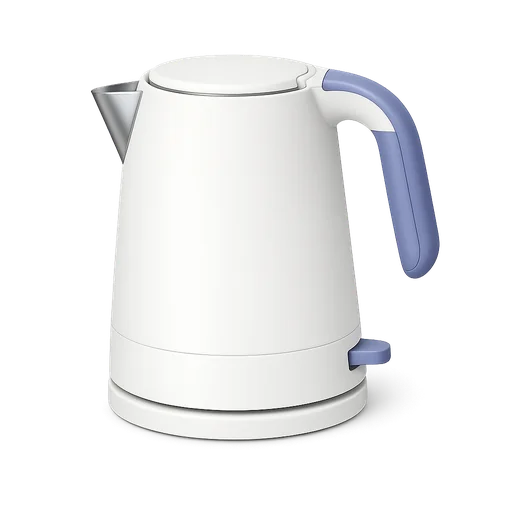
Limescale in a kettle is instantly visible, as white patches on the bottom and flakes floating in the cup. It’s immediately associated with a dirty property, even though it’s only mineral.
The method:
- Fill halfway with a mix of half water, half white vinegar.
- Bring to the boilThen leave to stand for one hour, kettle switched off.
- Empty and scrubThe bottom with a soft brush if any patches remain.
- Boil two or three times with clean waterDiscarding each time, so the next guest doesn’t get vinegar tea.
Citric acid powder, one tablespoon in half a litre, does the same job without the smell, and is the best choice if the property is occupied the same day.
The anti-scale filter inside the spout, found on many models, can be removed and brushed. Hardly anyone does this, yet it’s what traps the visible flakes in the cup.
The filter coffee maker
Same principle, same product, but never use neat vinegar: always dilute half and half.
- Pour the mixtureInto the tank, about half a carafe’s worth.
- Run a cycle halfwayStop, and leave to stand for thirty minutes.
- Finish the cycleThen run two cycles with clean water.
The filter holder, jug and lid are dishwasher safe. A brown deposit in the jug isn’t limescale but coffee tannin: it comes off with bicarbonate, not descaler.
Pump coffee machines: beware of vinegar
This is the most important point in this guide, and the most often overlooked. On an espresso, capsule or bean-to-cup machine, white vinegar is not recommended by most manufacturers: its acidity attacks seals and some parts of the pump circuit. A machine descaled with vinegar for two years will eventually leak, and the warranty won’t cover it.
For these machines, use the descaler recommended by the manufacturer or a compatible citric acid-based descaler, and follow the built-in programme if the machine has one. Most recent models trigger an alert themselves: this is the best possible schedule, as long as someone sees it.
Three extra steps at every clean for these machines:
- Empty and rinse the used capsule bin or grounds container, where coffee ferments in two days.
- Empty the drip tray, often full and rarely checked.
- Rinse the water tank and refill with fresh water, never water left from the previous guest.
Mistakes that damage machines
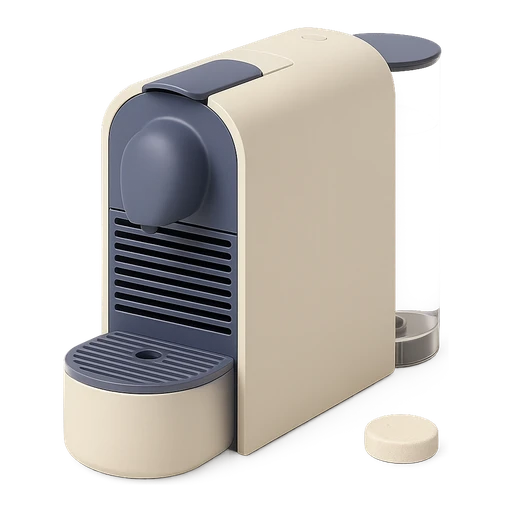
Descaler not rinsed properly.
A first acidic coffee or vinegar-flavoured tea is worse than a bit of limescale. Always do two or three full rinses.
Vinegar in a pump machine
Despite the instructions. Leaks come later, and it’s a guest who discovers them.
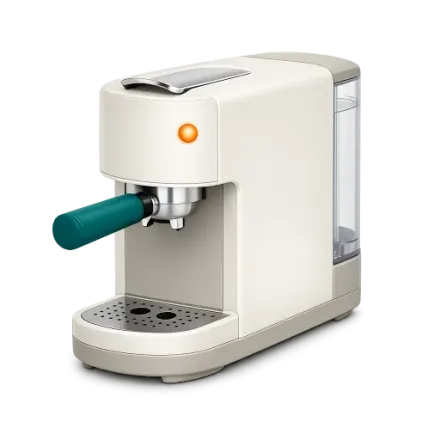
Descale warning ignored.
On most recent machines, it lights up at the right time. If the cleaner sees it, they should report it or start the cycle, not just turn it off.
Kettle anti-scale filter never removed
Even though it’s what traps the visible flakes in the cup.
Descaling cycle started at the end of cleaning
Without time to finish: the machine is left mid-programme, tank full of product, for the arriving guest. Start it at the beginning of the clean, it will run while you do the rest.
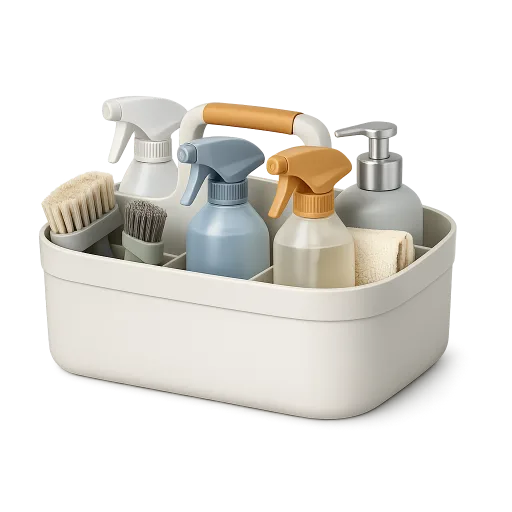
Mixing two products
In the same tank to “go faster”.
What to prepare around the machine
A clean machine is not enough if the guest can’t find anything to put in it. The coffee corner is restocked at every clean, at the same time as descaling:
Capsules or coffee beans
Suited to the exact model, with a discreet label on the jar or drawer if several types circulate between your properties;
Coffee filters
For a filter coffee maker, left in their box near the machine;
A selection of tea bags
For the kettle;
Sugar
In sachets or loose in a filled sugar bowl;
A carton of UHT milk
If you offer breakfast.
Details of what’s worth providing, and in what quantity, are in the breakfast and welcome drinks guide. Capsules are the fastest-depleted consumable in a rental kitchen: with a stock alert for each item, you see shortages coming instead of discovering them in a morning message.
One threshold, full history
Each product has its own alert threshold and log: quantity, cleaning date, cleaner.
More detailsFinally, add a small user guide near the machine: capsule type, power button, where to find filters. This alone prevents many of the first morning’s messages.
The habit that halves limescale
The best descaling is the one you don’t have to do. Two habits make all the difference in a hard water property:
- Never leave standing water in a tank or kettle between stays. Limescale forms as water dries, not while it’s circulating. Always empty at the end of cleaning.
- A water filter jug provided, with a cartridge changed every month. It protects appliances if guests use it to fill them, and is a real comfort feature in very hard water areas.
The same logic applies to taps, shower columns and screens, covered in Shower, bath, screen: tackling limescale. Other small appliances, including toasters and microwaves, are covered in the small appliance descaling guide.
Your questions
How often should you descale a kettle in a rental?
Every month in hard water, every two months in soft water. In a rental, it’s best to stick to the monthly schedule: limescale in a kettle is instantly visible in the cup and is immediately read as poor maintenance, even if it’s only mineral.
Can you descale a coffee machine with white vinegar?
For a filter coffee maker, yes, diluted half and half. For a pump, espresso, capsule or bean-to-cup machine, most manufacturers advise against it: the acidity attacks seals and the circuit. Use the recommended descaler or a compatible citric acid product.
How do I know if my water is hard?
Hardness is published by local authority on the Ministry of Health’s water portal and often appears on your bill. Above 25 °f, treat your water as hard and descale monthly. Below 15 °f, descaling every two months is more than enough.
What to do about brown deposits at the bottom of a coffee jug?
That’s not limescale but coffee tannin, and descaler won’t help. Scrub with bicarbonate of soda and a soft sponge, or leave to soak for an hour in hot water with bicarbonate. The jug will be clear after one go.
Should you empty appliances between stays?
Yes, always. Limescale forms as water evaporates, not while it’s circulating: a kettle or tank left full for four days will scale up much faster. Empty kettle, machine tank and jug at the end of cleaning.
Which descaler to use for a property occupied the same day?
Citric acid powder, one tablespoon in half a litre of water. It descales as well as vinegar, leaves no smell and rinses out in two cycles. White vinegar is very effective but needs more rinsing before a guest makes their first coffee.

Written by Janik Thoisy
Janik Thoisy manages short-term rentals day to day and shares her cleaning and organisation methods here.
Published on August 13, 2026 · Updated on November 8, 2026
Read next
 Airbnb Cleaning Checklist: Room-by-Room List for HostsAirbnb cleaning checklist for every turnover: room-by-room list, cleaning order, a one-page version, Airbnb's 5 steps and the 10 spots everyone forgets.Cleaning tipsClean an Airbnb in 1 Hour: The Minute-by-Minute MethodClean an Airbnb in 1 hour: room order, timing by area, equipment kit, and the pitfalls that make the clock run over between guests.Cleaning tipsAirbnb Cleaning Supplies: 15 Essentials for Your KitAirbnb cleaning supplies: the 15 essential products for a short-term rental, their uses, annual budget, reserve to keep and stock tracking.
One property free to put all of this in place, for as long as it takes.