Shower, bath, screen: tackling limescale
Enjoy spotless glass, a gleaming shower column, white seals, and an odour-free drain with this limescale removal method for rental bathrooms.
10 min read
The bathroom is the room where guests are most critical, because it is the only one where they undress. A shower screen clouded with limescale, a grey seal, a drain giving off a smell: three details that can tip a review, and all three come from the same cause, water left to dry where it sits. This guide gives you the right actions, frequencies, and products to avoid.
What to do, and how often
| Task | Frequency | The critical point |
|---|---|---|
| Clean the shower screen | Every clean | The squeegee, not the product |
| Clean the bath | Every clean | The rim and the drain |
| Clean the shower drain | Every 4 cleans | The real source of odour |
| Polish the taps | Every clean | Always dry off |
| Polish the shower column | Every clean | From shower head to mixer |
| Descale the shower head | Monthly | Soak, don't scrub |
| Wash the shower curtain | Monthly | Re-hang unfolded, still damp |
| Clean the basin | Every clean | Including the overflow |
| Top up limescale remover | Every clean | Keep some for the screen and taps |
| Top up bathroom cleaner | Every clean | Enough for shower, basin and WC |
The basin, WC and mirrors, which are the final touch in the bathroom, have their own guide: WC, basin, mirrors and glass.
The shower screen: the one move that changes everything
Limescale on a screen is not due to lack of product, but to water left to dry on it. Every evaporated drop leaves its minerals behind, and the layer builds up until it forms a film no spray can penetrate.
The routine treatment, at every clean:
- Clean with a gentle productOr vinegar water if the screen is untreated glass.
- Rinse.
- Squeegee from top to bottomThen wipe with a dry microfibre cloth. This last step, and only this, gives you clear glass.
If a film is already present, apply warm white vinegar with a cloth and leave for ten to fifteen minutes to dissolve the layer; repeat rather than scrub. Abrasive scrubbing scratches the glass, and scratched glass attracts limescale twice as fast.
Two warnings: limescale-treated screens, where vinegar damages the coating (use only soapy water, the property instructions should specify), and aluminium seals on some enclosures, which acid will corrode.
The move that halves your work all season: leave a squeegee in the shower with a small note inviting guests to use it. Some will, and those who do not will not mind you asking.
Seals, and why they turn black
A silicone seal that turns black is not dirty: it is colonised by mould growing inside the material. Surface cleaning will no longer reach it.
The method that works, monthly or as soon as black spots appear:
- Soak kitchen paperOr cotton wool in a diluted bleach solution or a specialist sealant gel.
- Apply directly to the sealAnd leave for one to two hours. It is the prolonged contact that works, not the concentration.
- Rinse thoroughlyAnd ventilate throughout the process.
Never mix this product with a descaler or vinegar: the reaction releases chlorine gas, which is dangerous in a closed room. Rinse completely between products.
If the seal remains grey after two treatments, it needs replacing, not cleaning. A silicone seal can be replaced in an hour and gives a shower a new lease of life.
The drain, the real source of odour
A bathroom smell almost always comes from the shower drain, and almost never from the surfaces. Under the grille, a mix of hair, soap and limescale accumulates and ferments.
Every four cleans:
- Lift the grilleUsually just resting in place or fixed with a central screw.
- Remove the build-up mechanicallyWith a hook or pliers. No product will dissolve hair.
- Brush the basket and collar.
- Pour in bicarbonate of soda then white vinegarLeave for ten minutes, then one litre of very hot water.
Avoid chemical unblockers for routine maintenance: they damage seals and old pipes, and do not solve the mechanical problem.
In a rarely used shower, the trap dries out between stays and lets drain smells rise: pour half a litre of water into each drain at the end of the clean, including those in any secondary bathrooms.
The shower column, from head to mixer
The column is the most photographed feature in a modern bathroom, and the quickest to show marks: chrome or stainless steel, it shows every dried drop and fingerprint. It now has its own task in the library, "Polish the shower column", because it is not treated like a screen.
At every clean, from top to bottom:
- The shower headRub the silicone nozzles with your fingertip or a soft brush, this releases limescale starting to block them. A jet spraying sideways is almost always a blocked nozzle.
- The hoseWipe along its length with a damp microfibre, paying attention to the joints, where limescale forms white lumps.
- The rail and sliding holderGentle cleaner, then rinse.
- The mixerThermostatic or not: same treatment, avoiding printed markings, which will fade with harsh products.
- Dry the whole columnWith a clean microfibre. This is what gives the shine.
Once a month, and more often in very hard water, descale the shower head thoroughly: wrap it in a bag filled with warm white vinegar, secured with an elastic band, for thirty minutes to an hour, then run hot water for a minute. For black, gold or brushed finishes, use soapy water and a longer soak instead: acid attacks these finishes as it does taps. This is the "Descale the shower head" task, which recurs monthly.
The bath
Clean the bath itself with a gentle, non-abrasive product, paying particular attention to the waterline, where a greasy soap film collects. On acrylic, never use powders or scouring sponges: micro-scratches dull the surface and trap dirt.
Three areas often missed by a quick clean:
- The rim and wall seal, where water stagnates.
- The overflow, whose collar usually unscrews, and which smells if never opened.
- Under the mixer and the hose, where limescale builds up out of sight.
The shower curtain
A shower-bath without a screen has a curtain, and this is often the dirtiest item in the bathroom: the bottom stays damp, gets pink or black stains, and sticks to the guest's leg. Wash it once a month, and as soon as a stain appears:
- Check the label. Most polyester curtains, and many soft plastic ones, can be machine washed at 40°C on a delicate cycle. Those that cannot must be hand washed in warm soapy water, scrubbing the bottom.
- Add a few cleaning cloths to the drum: they rub the curtain during the cycle and remove deposits from the bottom. Never with guest laundry.
- No tumble dryer. Re-hang immediately, still damp and fully unfolded: it will finish drying on its rail, without creases. Check the rings as you go, and replace any that are broken.
Between washes, at every clean, leave the curtain drawn and unfolded to dry, never bunched up against the wall, where moisture gets trapped. Black stains that resist washing are mould inside the fibres: the curtain needs replacing. Keep a spare for each bathroom, so a shower is never left without a curtain while one is being washed.
Taps, and the only secret to shine
The shine on a tap comes from no product: it comes from drying off after rinsing. A washed tap left to dry keeps the marks from the water itself.
For a scaled-up mixer, wrap it in a cloth soaked in warm white vinegar, leave for thirty minutes, then scrub with a soft brush and rinse. The aerator at the spout unscrews and can be soaked separately: this is what causes a stray jet or low flow, never the mains pressure.
Two caveats: matt black, brushed brass or copper finishes cannot take acid or abrasives, use only soapy water and dry off. And on chrome, never use a scouring sponge, which leaves permanent micro-scratches. Limescale in kitchen appliances, kettles and coffee machines, follows the same logic of water hardness: descale kettle, coffee maker and coffee machine.
Products to leave in the bathroom
A bathroom can be kept up with very few products, as long as they never run out:
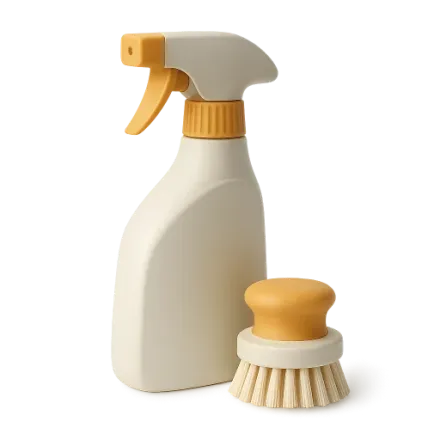
A gentle bathroom cleaner
Suitable for ceramic, acrylic and chrome;
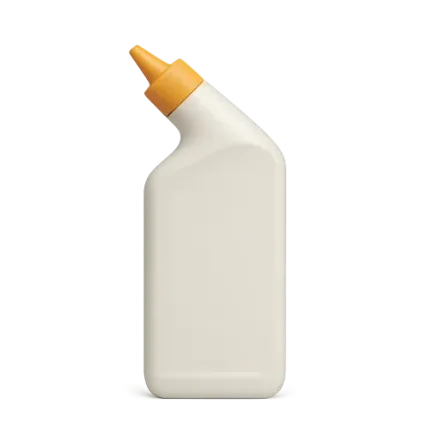
A limescale remover
For the screen, column and taps, except on delicate finishes;
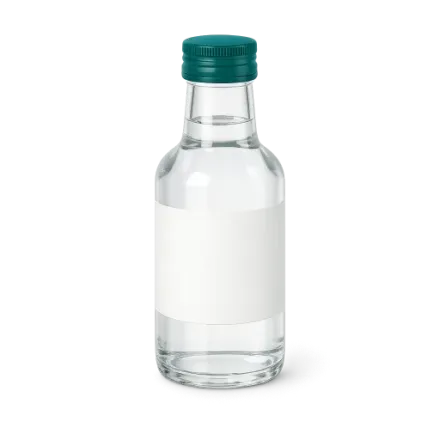
White vinegar
Or citric acid for deep descaling;
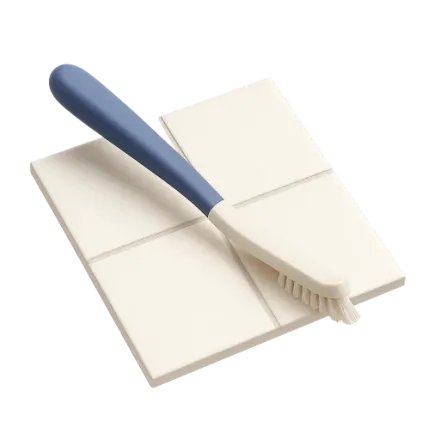
A specialist sealant gel
Used alone and never mixed;
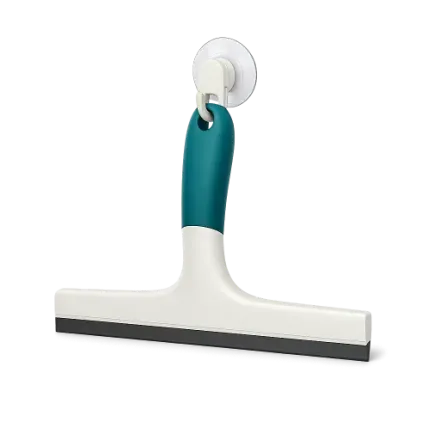
A squeegee
A soft brush and microfibres in the colour reserved for the bathroom.
These are two bottles that run out without warning, always on the day limescale is most visible. In CleanClac, the bathroom cleaner and limescale remover can be tracked bottle by bottle: the cleaner notes the remaining amount at the end of the restock task, and the manager is alerted when it drops below the threshold. Guest products, shower gel, shampoo and soap, are a separate list: bathroom consumables.
 Toilet paperToilet paper31
 Hand soap70%55%
 Coffee capsules1411
 Water bottles64
 Welcome gift54
 Tea bags108

Airbnb inventory, under control
Inventory management for your rental happens during the cleaning: every product put out is counted down.
More detailsChecking the bathroom without being there
The bathroom is the room a manager would most like to see after every clean, and the one they see least. Ask for one or two photos at the end of each clean, with an optional reference photo showing the desired framing, screen and column in shot: a limescale film is very visible in a well-lit photo, a drain is not. The photo does not replace the action, but lets you spot a screen getting scaled up clean after clean before a guest mentions it.
 12:31 PM12:33 PM12:35 PM12:37 PM12:40 PM12:42 PM
Photos or video
Photos on the tasks you choose, or a video of the property of up to three minutes.
More detailsYour questions
How do you remove limescale from a shower screen?
Warm white vinegar applied with a cloth, leave for fifteen minutes, rinse, then squeegee from top to bottom and wipe with a dry microfibre. Repeat rather than scrub: abrasion scratches the glass, and scratched glass scales up twice as fast. On a limescale-treated screen, use only soapy water.
Why do shower seals turn black?
Because mould grows inside the silicone, not just on the surface. Surface cleaning no longer reaches it. Apply kitchen paper soaked in diluted bleach or specialist sealant gel directly to the seal, leave for one to two hours, rinse thoroughly and ventilate. If it fails twice, replace the seal.
How do you get rid of a smelly shower drain?
Lift the grille and remove the build-up of hair and soap by hand: no product will dissolve it. Brush, then pour in bicarbonate and white vinegar, leave for ten minutes and rinse with very hot water. Do this every four cleans before the smell appears.
How do you make a tap shine without streaks?
By drying it after rinsing, with a microfibre. No product replaces this step: the marks are from water left to dry. For a scaled-up mixer, wrap it in a cloth with warm vinegar for thirty minutes, and unscrew the aerator to soak separately.
Which products should be avoided in a rental bathroom?
Abrasives on acrylic, chrome and resin, which leave permanent micro-scratches. Acids on marble, limestone and black or brass taps. And above all, never mix bleach and descaler or vinegar: the mix releases chlorine gas.
Should you leave a squeegee in the shower for guests?
It is one of the best effort-to-result ratios in rentals. A visible squeegee with a polite note is enough for some guests to use it, which greatly reduces the limescale to tackle. Those who do not use it never take offence.

Written by Janik Thoisy
Janik Thoisy manages short-term rentals day to day and shares her cleaning and organisation methods here.
Published on August 13, 2026 · Updated on November 8, 2026
Read next
 Airbnb Cleaning Checklist: Room-by-Room List for HostsAirbnb cleaning checklist for every turnover: room-by-room list, cleaning order, a one-page version, Airbnb's 5 steps and the 10 spots everyone forgets.Cleaning tips
 Clean an Airbnb in 1 Hour: The Minute-by-Minute MethodClean an Airbnb in 1 hour: room order, timing by area, equipment kit, and the pitfalls that make the clock run over between guests.Cleaning tips
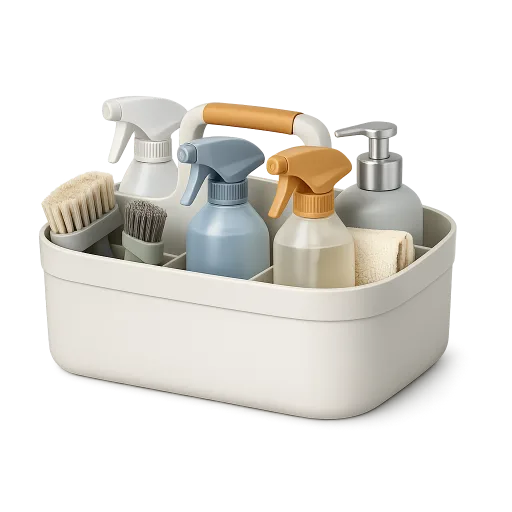 Airbnb Cleaning Supplies: 15 Essentials for Your KitAirbnb cleaning supplies: the 15 essential products for a short-term rental, their uses, annual budget, reserve to keep and stock tracking.
One property free to put all of this in place, for as long as it takes.