

Streak-Free Windows and Mirrors: The Pros’ Method
Streak-free windows, mirrors, and shower screens: equipment under £40, squeegee technique, special cases, and cleaning frequencies for your rental.
11 min read
A guest enters your property, sunlight streams through the patio doors… and reveals smears, fingerprints on the mirror, a dull film on the shower screen. The rest of the cleaning was spotless, but this is the detail they will remember. Glass surfaces are unforgiving: the wrong product, the wrong cloth, or cleaning in direct sunlight all leave their mark. The good news? With the right equipment (under £40) and a technique borrowed from hotel professionals, perfect windows become a quick routine between bookings.
Why windows and mirrors matter so much for cleanliness ratings
Guests judge what they see, and glass surfaces are the first to betray the light. A mirror splattered with toothpaste or a window covered in fingerprints instantly signals neglect, even if the rest of the property is immaculate.
The figures speak for themselves: 78% of guests cite impeccable cleanliness as the number one sign of quality in a listing, according to a 2026 Vrbo survey. And the impact is direct: a cleanliness rating below 4.8 leads to around 20% fewer bookings. Conversely, listings with a 5-star cleanliness rating are booked about 25% more often, according to Smoobu.
The 10 minutes spent on windows and mirrors at each changeover are among the most profitable in your cleaning protocol. To identify other details that can harm your ratings, see our article Airbnb Cleaning: 10 Mistakes That Lead to Bad Reviews.
The professional kit: 5 tools, under £40
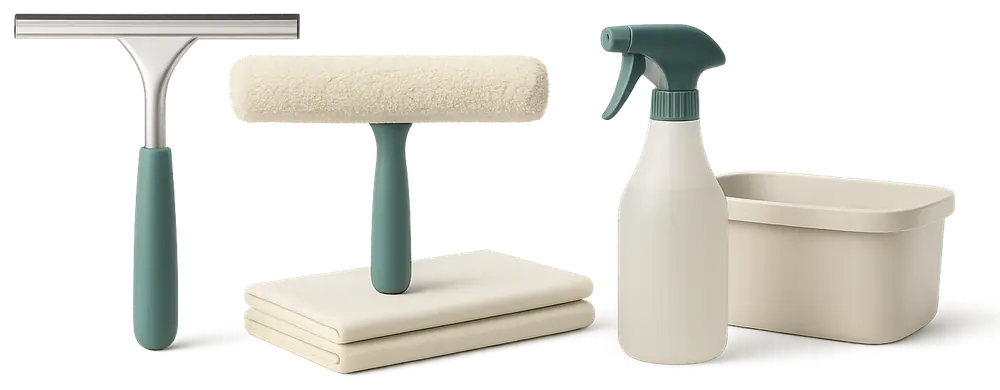
Forget newspaper and linty kitchen roll. Professionals use a minimal, durable, and highly effective kit:
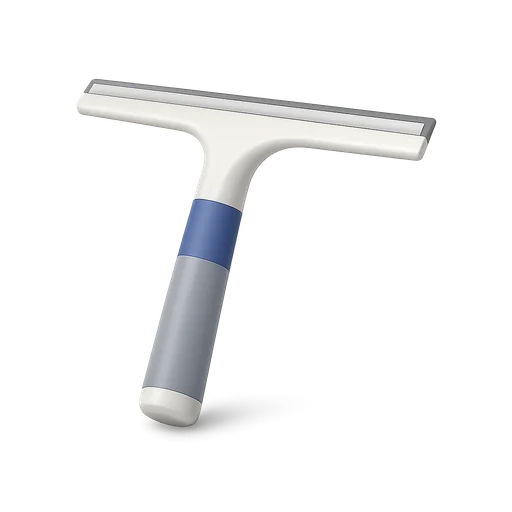
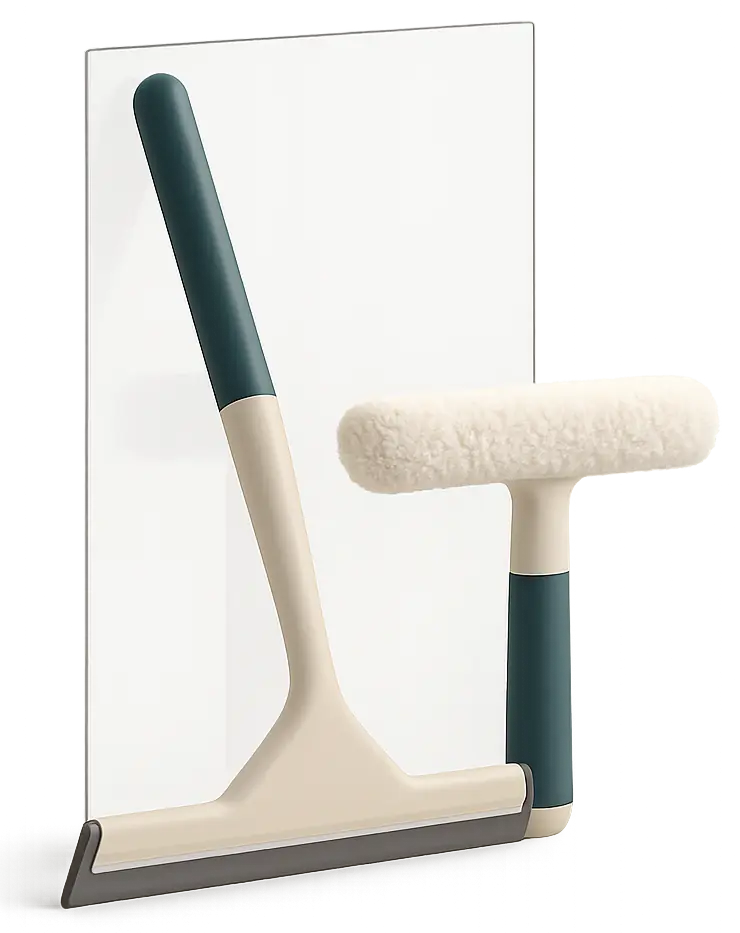
- A quality window squeegee (£10 to £20): the number one tool. Width of 25 to 35cm, with a replaceable soft rubber blade. A nicked rubber leaves a fine line of water with each pass: replace it as soon as you see streaks (refills cost £2 or £3).
- A washer (£5 to £10): this bar with a microfibre sleeve applies the solution and loosens dirt before squeegeeing.
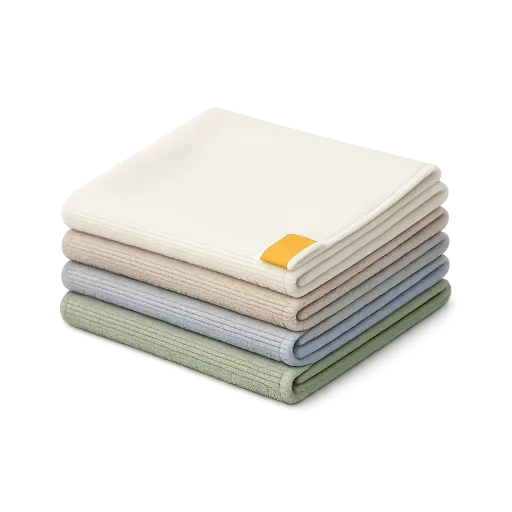
- Two special glass microfibres (£3 to £6 each): tightly woven, lint-free, and used exclusively for glass. A microfibre that has wiped a greasy worktop will redeposit that grease onto the glass.
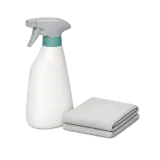
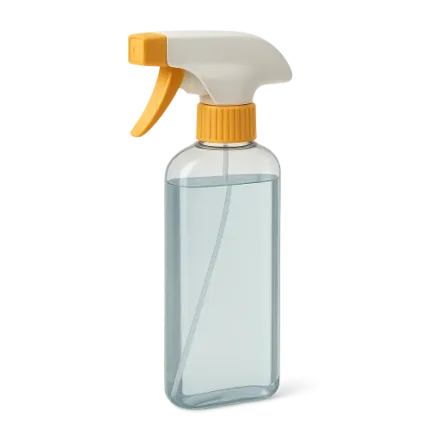
- A spray bottle (£2 or £3) for mirrors and small surfaces.
- A flat bucket wide enough to dip the washer.
As for products, there's no need for expensive sprays: warm water with a drop of washing-up liquid (one teaspoon per 5 litres, no more) is enough for windows. For mirrors and limescale-stained shower screens, white vinegar diluted 50% dissolves limescale and dries streak-free, a simple and economical approach in line with ADEME recommendations on cleaning products. One absolute safety rule: never mix vinegar and bleach, as the combination releases a toxic gas, as highlighted by ANSES research on cleaning products.
The squeegee technique, step by step
This is the move that separates amateurs from professionals. Once mastered, allow 2 to 3 minutes per standard window.
Dust first
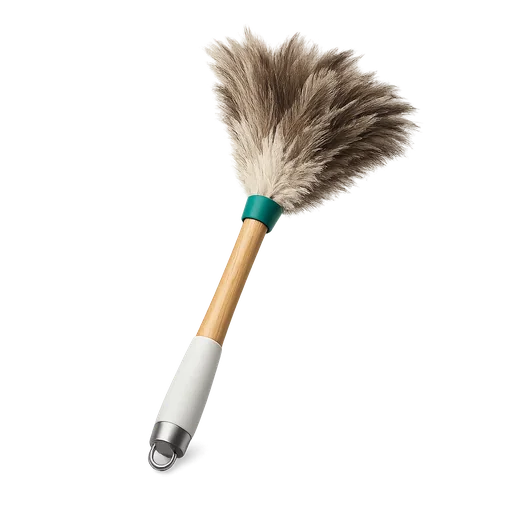
The frame, sills, and glass should be wiped dry (microfibre or vacuum with brush attachment). Wetting dust creates muddy streaks.
Apply the solution with the washer
From top to bottom, paying extra attention to fingerprint-prone areas (handles, bottom of patio doors).
Squeegee in one continuous movement
Overlapping horizontal strokes from the top, or the faster professional "S" motion. In both cases, wipe the rubber blade with the microfibre after each pass: this is the little-known but crucial secret.
Finish the edges
Run a dry, folded microfibre along the frame to absorb any fine lines of water left by the squeegee.
Check in raking light
Stand at an angle to the glass. Streaks invisible from the front appear instantly, just as your guest will see them at sunset.
Mirrors and shower screens: special cases
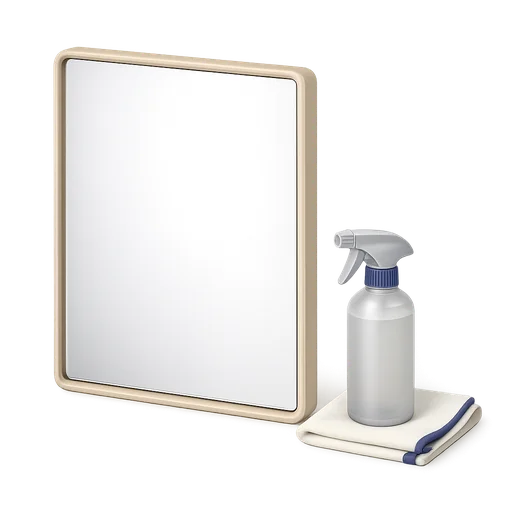
Mirrors: spray the cloth, not the mirror
A common mistake is spraying product directly onto the mirror. The liquid runs behind the backing and eventually causes irreversible black oxidation marks. The right move: spray the microfibre 2 or 3 times, clean in circular motions, then finish with vertical strokes using the dry side of the cloth.
Hotel anti-fog tip: rub the mirror with a dab of shaving foam, then buff dry. The invisible film delays condensation for several days, a small "wow" appreciated by guests. Mirrors, sinks, and toilets are the first things noticed in a bathroom: find all the finishing touches in our WC, sink, and mirror finishing method.
Shower screens: limescale is the real enemy
A shower screen dulled by limescale visually ages the whole bathroom. The effective protocol: spray warm white vinegar diluted 50%, leave for 5 to 10 minutes, scrub with the soft side of a sponge, rinse, then always squeegee. For heavily scaled screens, repeat with heated neat vinegar (never boiling). If the film persists, or for trays and bathtubs, see our guide to tackling limescale.
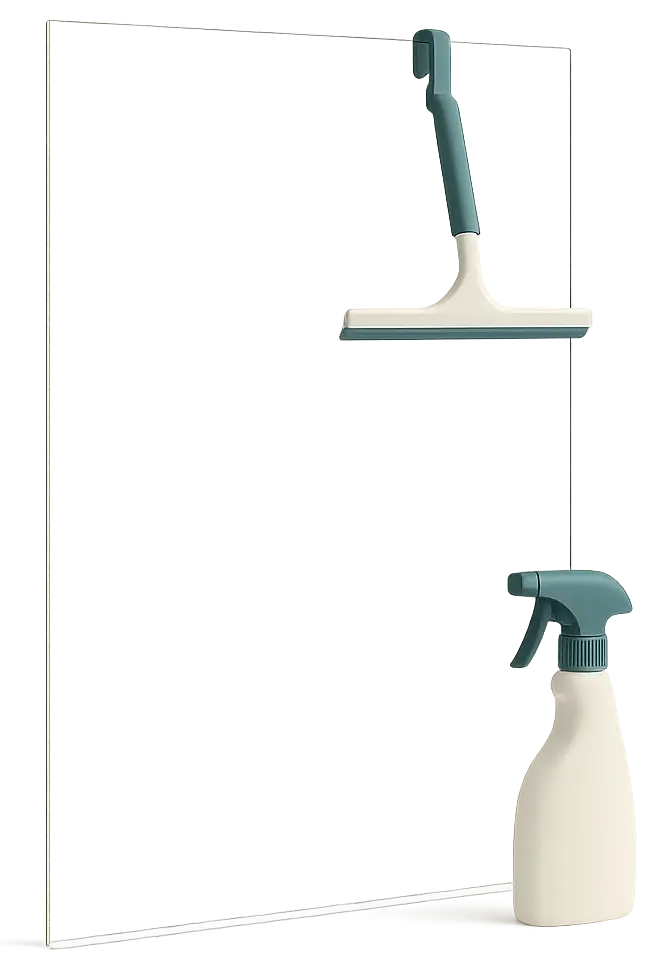
The real solution is prevention: leave a squeegee in the shower (some guests will use it themselves) and ask your team to squeegee the screen at each changeover. 30 seconds of squeegeeing saves 15 minutes of descaling the following month. For a complete protocol for the most scrutinised room in the property, see our guide How to Clean a Bathroom Like a Hotel: The Method.
Other glass surfaces in the property
- Glass coffee tables and tops: slightly damp microfibre, then dry. Fingerprints and glass rings reappear every stay: this is a changeover task, not a monthly one.
- TV screens: dry microfibre only, never any product or direct spraying.
- Stove or fireplace glass: once cold, a damp paper dipped in fine ash makes a surprisingly effective gentle abrasive; rinse, then dry.
- Plexiglass and polycarbonate (some screens, balustrades): mild soapy water and microfibre, never alcohol-based products, which can cause cracking.
- Frosted or sandblasted glass: shows fingerprints easily; use a damp microfibre with a drop of soap, no hard scrubbing.
Patio doors, conservatories, and exterior windows
The outside requires the same technique, with three extra challenges: pollen in spring, salt by the sea, and rain drying in rings. A few practical rules:
- Start with the tracks of sliding doors: vacuum up sand, insects, and leaves before wetting, or mud will run onto your clean glass.
- Rinse with clean water before washing by the sea: crystallised salt will scratch under the squeegee.
- Choose overcast, frost-free weather, not direct sun or strong wind.
- Fly screens: brush or vacuum dry, once a month in season.
- At height, never risk a ladder with a bucket: use a telescopic pole for windows reachable from the ground, call a professional for the rest.
Terrace, balustrades, garden furniture: the exterior of a furnished rental has its own routine, detailed in our guide to outdoor cleaning for rentals.
The 7 mistakes that leave streaks (and how to avoid them)
- Cleaning in direct sunlightHeat dries the solution before squeegeeing and sets streaks. Clean in the morning, or start with shaded sides.
- Too much productExcess detergent leaves a greasy film that attracts dust. One drop of washing-up liquid really is enough.
- Using kitchen roll or a standard spongeThe former leaves lint, the latter can cause micro-scratches.
- Washing microfibres with fabric softenerIt clogs the fibres and ruins absorbency. Wash at 40 to 60°C without softener, and they stay effective for hundreds of washes.
- Neglecting the squeegee rubberNicked or hardened, it leaves water lines. Check it at every deep clean.
- Missing targeted fingerprintsInternal glass doors, glass coffee tables, TV screens. These are the surfaces guests touch, and notice, the most.
- Cleaning windows firstDo it at the end of cleaning, after dusting and vacuuming, or airborne particles will settle on the damp glass.
How often to clean what? The realistic schedule
Not everything needs cleaning at every changeover. Here’s the schedule used by organised cleaning companies:
| Surface | Every changeover | Monthly | Quarterly |
|---|---|---|---|
| Mirrors (bathroom, hallway, bedrooms) | |||
| Shower screens and doors | Yes (+ descaling if needed) | ||
| Fingerprints: glass doors, glass tables, bottom of patio doors | |||
| Complete interior windows | |||
| Accessible exterior windows | |||
| High windows, conservatories, outbuildings |
This breakdown changes the time equation: the "windows" part of a standard changeover takes 8 to 12 minutes (mirrors, shower screen, fingerprints), while a full clean of all windows in a two-bedroom flat takes 45 minutes to an hour. As a guide, a full studio clean takes 35 to 45 minutes: a full window wash at every changeover is neither realistic nor necessary. Schedule it as a separate monthly task, during a gap between bookings.
To integrate these frequencies into a structured task list, use our Airbnb Cleaning Checklist: Room-by-Room List for Hosts.
Ensuring your cleaning team meets the standard
The best technique is useless if it’s only followed when you do the cleaning yourself. Three levers.
Document the technique where it matters. A written instruction (“squeegee the shower screen”, “spray the cloth, never the mirror”, “check in raking light”) is better than a quickly forgotten demonstration, especially if it appears under the task as the cleaner does it. This is what CleanClac’s personalised checklist instructions offer, read by the cleaner in their language.
 Air the room
 Vacuum the floors
 Clean the fridge
 Clean the shower screen
 Clean the mirrors
Your notes, under each task
Rewrite the library tip with what you know about the property: your cleaner reads it right under the title.
More detailsEquip every property. A dedicated window kit stored on site removes the excuse of missing equipment and avoids contaminated cloths being carried from property to property.
Request a photo as proof. A photo of the mirror and shower screen at the end of the clean allows remote quality control in 10 seconds: a streak is instantly visible in a photo taken in raking light. Specify what you want to see in the photo description (“screen at an angle, light on”). In CleanClac, these photos are timestamped by the server and included in the cleaning summary; the property video is for subscribers only. Details are on the cleaning report page.
 12:31 PM12:33 PM12:35 PM12:37 PM12:40 PM12:42 PM
Photos or video
Photos on the tasks you choose, or a video of the property of up to three minutes.
More detailsThis is not a minor point: 33% of guests cite lack of cleanliness among the most common problems in short-term rentals, according to a survey reported by ConsumerAffairs. Standards only protect your rating if they are checked at every changeover. And to see exactly what the cleanliness rating covers from the guest’s perspective, the Airbnb Help Centre details the criteria.
Streak-free windows at every changeover, without a second thought
Streak-free windows are 20% technique, 20% equipment, and 60% consistency.
Your questions
How do you clean windows without leaving streaks?
Dust dry, apply a solution of warm water with a drop of washing-up liquid using a washer, then squeegee with overlapping horizontal strokes, wiping the rubber between each pass. Finish the edges with a dry microfibre and check in raking light. Avoid direct sunlight, which dries the product too quickly.
Is white vinegar effective for windows and mirrors?
Yes, diluted 50% in warm water, white vinegar dissolves limescale and greasy film, and dries streak-free. It is especially suitable for limescale-stained shower screens and mirrors. Never mix it with bleach: the reaction releases a toxic gas.
Why do my windows have streaks after cleaning?
Most common causes: too much product (leaves a greasy film), cleaning in direct sunlight, unsuitable or fabric-softened cloth, worn squeegee rubber, dust not removed before washing. Fix these five points and check the result by standing at an angle to the glass.
How often should you clean the windows in a holiday rental?
Mirrors, shower screens, and fingerprints should be cleaned at every changeover (8 to 12 minutes). A full clean of interior windows and accessible exterior windows should be scheduled monthly, and hard-to-reach surfaces (high, conservatory) quarterly, ideally during a gap in bookings.
How do you clean a patio door by the sea?
Rinse first with clean water to dissolve salt, which would scratch the glass under the squeegee, and vacuum sand from the tracks. Then wash with warm water and a drop of washing-up liquid, squeegee, and finish the edges with a microfibre. With sea spray, marks return quickly: plan for more frequent exterior cleaning in season, at least every fortnight.
How do you remove stubborn limescale from a shower screen?
Spray warm white vinegar (neat if heavily scaled), leave for 5 to 10 minutes, scrub with the soft side of a sponge, rinse, and squeegee. Repeat if necessary. To prevent build-up, have the screen squeegeed at every clean to avoid long descaling sessions.

Written by Janik Thoisy
Janik Thoisy manages short-term rentals day to day and shares her cleaning and organisation methods here.
Published on August 7, 2026 · Updated on November 2, 2026
Read next
 Airbnb Cleaning Checklist: Room-by-Room List for HostsAirbnb cleaning checklist for every turnover: room-by-room list, cleaning order, a one-page version, Airbnb's 5 steps and the 10 spots everyone forgets.Cleaning tips
 Clean an Airbnb in 1 Hour: The Minute-by-Minute MethodClean an Airbnb in 1 hour: room order, timing by area, equipment kit, and the pitfalls that make the clock run over between guests.Cleaning tips
 Airbnb Cleaning Supplies: 15 Essentials for Your KitAirbnb cleaning supplies: the 15 essential products for a short-term rental, their uses, annual budget, reserve to keep and stock tracking.
One property free to put all of this in place, for as long as it takes.