

Dosing Consumables: The Method That Prevents Shortages
Quantities per guest and per night, fixed or per stay, alert threshold, buffer stock, cleaner's kit: how to dose consumables without running out.
7 min read
Replenishment is the most time-consuming part of running a short-term rental, and the least well-equipped. Most hosts rely on gut feeling: you look in the cupboard, estimate, buy too much or too little, and one day the cleaner calls because there is no toilet paper left on a Sunday. This guide provides a sizing method that works without a spreadsheet, suitable for one property or fifteen.
The principle: calculate per night, supply per stay or per capacity
Two concepts not to be confused.
Consumption is calculated per guest per night. This is the only unit that remains valid when the length of stays changes. A four-person property that does twenty guest nights will use roughly the same amount in two one-week stays as in seven two-night stays, except for “per stay” consumables.
The quantity placed in the property is set in two ways, depending on your tools:
- Without a tool, at maximum capacity. The cleaner has nothing to calculate, always puts out the same amount, and any surplus of a non-perishable consumable is used for the next stay. This is simple, but ties up more stock in each property.
- With stock tracking, according to the stay. The quantity is calculated based on the number of guests arriving for the stay, and the cleaner reads directly how much to restock. This is the only method that remains accurate when a six-person property mainly hosts couples.
These approaches coexist: the per-night calculation is for purchasing, the quantity placed is for execution.
 X2X4X5
Sized to every stay
In smart mode, the quantity to put out is worked out for each stay, from the guests and the nights.
More detailsThe three families of consumables
They behave differently and are sized differently.
| Family | Consumed according to | Examples |
|---|---|---|
| Per night | Number of people × nights | Toilet paper, coffee, shower gel, capsules |
| Per stay | Number of stays | Sponge, bin bags, welcome products |
| Per period | The calendar | Toilet block, diffuser, charcoal filter |
It is the third family that causes problems, because you do not see it coming: the toilet block every 2 weeks, the diffuser every 2 months, the extractor filter every 6 to 12 months. These deadlines must be managed by a system, never by someone's memory.
The alert threshold rather than inventory
Counting the entire stock at every visit is unrealistic. The alert threshold is the only practice that works over time: for each item, you define a minimum quantity expressed in number of stays, and only check that.
The basic rule: a minimum equal to two stays’ worth of consumption, which gives you time to order and be delivered without ever running out.
Without a tool, the cleaner does not estimate anything: they simply report when they drop below the marker, for example a line drawn in the cupboard or a dedicated box. A binary signal, yes or no, is infinitely more reliable than a numerical estimate asked of someone who has a cleaning job to finish.
With a tool, the question becomes even simpler, because it is asked at the right time: at the end of each replenishment task. Items that can be counted (rolls, capsules, bags) are declared by number placed; those that are checked visually (shower gel, washing-up liquid, olive oil, floor cleaner) are declared by fill level. The property’s level is updated, and the threshold does the rest.
Implementing the method in CleanClac
Stock tracking is an option, disabled by default: you switch it on property by property, using the “Track stocks” toggle. While it is off, the cleaner is not asked any stock questions. Once switched on:
- Stock is created from the checklist.Each replenishment task for the property, “Restock toilet paper”, “Refill salt”, “Restock coffee capsules”, becomes a tracked item. No separate list to enter.
- Each item is setTo a fixed or smart quantity, with its alert threshold.
- Cleaning productsAre tracked bottle by bottle (multi-purpose spray, glass cleaner, floor cleaner, bathroom cleaner, descaler) or as a single item “Cleaning products”, depending on the desired level of detail.
- Below the thresholdThe property is flagged in the app and an email summarises everything that needs to be bought.
- The historyRecords every movement: cleaning date, quantity, cleaner.
 X2Restock the toilet paperToilet paper6
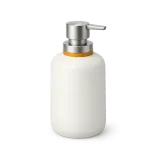 Refill the hand soapHand soap100%
 X4Restock the coffee capsulesCoffee capsules10
 Leave the welcome giftWelcome gift1
Built from your checklist
Switch tracking on: every restock task becomes an item, with its starting quantity.
More detailsSmall welcome gifts, chocolates, a candle or a bottle of wine, are tracked in exactly the same way as consumables.
The buffer stock, in the property
A central stock at the manager’s office is useless if the cleaner is on site at 11am and discovers something is missing. Always keep a buffer stock in each property, sized for two stays, in a locked cupboard if necessary.
This stock contains the critical consumables, those whose absence is a showstopper: toilet paper, bin bags, dishwasher tablets, sponges, washing-up liquid. The rest can be kept in central stock.
Two common mistakes: stock that is too large, which ties up cash and goes out of date, and stock accessible to guests, which empties much faster than expected. A locked cupboard is not about mistrust, it is about proper sizing.
The cleaner’s kit
Do not confuse the property’s consumables, intended for guests, with the cleaner’s kit, which leaves with them. Mixing them up means microfibres and gloves disappear at the rate of stays.
The typical kit, to be restocked like everything else:
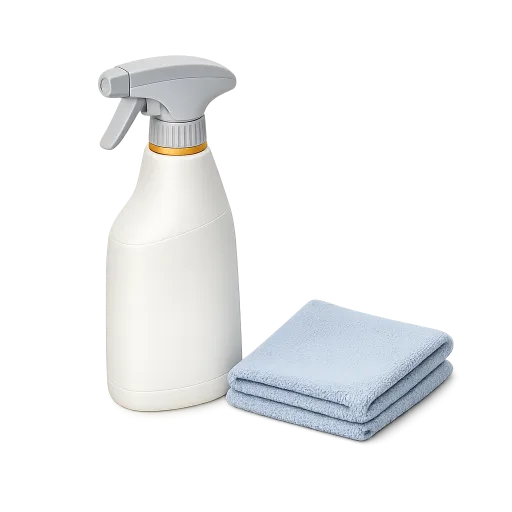
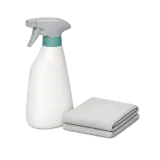
Multi-purpose spray and floor cleaner
Refilled at each visit.

Microfibre cloths
By colour code, in sufficient quantity to never reuse a dirty cloth.

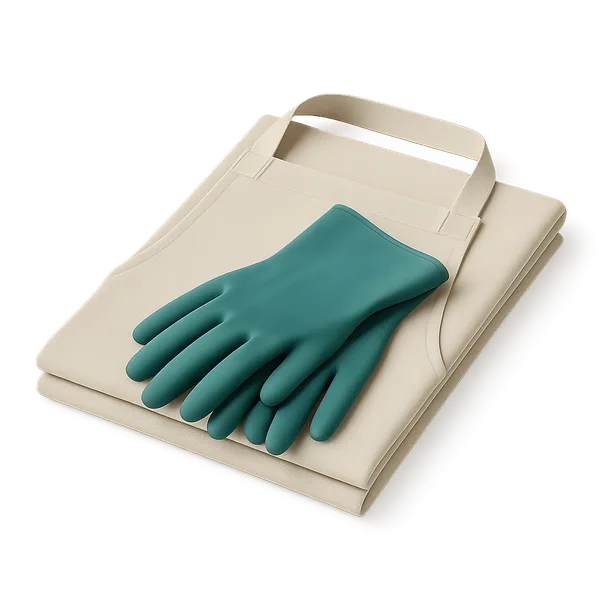
Cleaning gloves
Replaced regularly.

Bin bags
For their own use.
These tasks appear in the checklist just like the others, because a cleaner who arrives without product cannot do the planned cleaning.
Calculating your consumables budget
The calculation is done in three steps, once, then updates itself:
- List the itemsAnd their family (night, stay, period).
- MultiplyBy your monthly volume: guest nights for the first family, number of stays for the second, deadlines for the third.
- Relate to guest nightThe only indicator comparable from one property to another.
This cost per guest night is what you should track, not the gross monthly spend: it immediately reveals any drift, for example a property where dispensers empty twice as fast as elsewhere, which usually signals a leak or a badly adjusted pump. The reports in the CleanClac Menu show, over a month or a year and property by property, the most supplied consumables: this is the starting point for this calculation, without a spreadsheet. For the overall organisation of replenishment, see also Airbnb Supplies: Manage Your Stock Without Ever Running Out.
Detailed quantities for bathroom and kitchen are given in Bathroom consumables: what to provide and how much and Kitchen Consumables: The Complete List for a Rental, and for welcome drinks in the breakfast guide.
Tracking that survives a change of cleaner
Three pieces of information must exist at property level, never in someone’s head: the list of consumables with their reference quantity, the alert threshold for each, and the date of scheduled tasks (toilet block, diffuser, filters). A replacement who takes over a property at short notice must be able to do exactly the same visit without calling anyone.
Your questions
How do you calculate the quantity of consumables for a rental?
Calculate consumption per guest per night for purchasing. For placing, two options: the property’s maximum capacity, simple but costly in stock, or a quantity calculated from the number of guests for the stay, which the cleaner reads directly in their checklist when stocks are tracked.
What is an alert threshold for a consumables stock?
A minimum quantity, expressed in number of stays, below which you restock. Two stays’ worth is a good benchmark. The cleaner does not count anything: they simply report when the stock drops below a visible marker, a line or a dedicated box.
Should consumables be stored in the property or centrally?
Both. A buffer stock for two stays in each property for critical consumables (toilet paper, bags, tablets, sponges), and a central stock for the rest. A purely central stock is useless when the cleaner discovers a shortage on site.
How do you prevent guests from emptying the replenishment stock?
By keeping it in a locked cupboard, separate from what is put out for use. This is not about mistrust: an accessible stock is used at the rate of normal domestic use, which skews all your calculations and empties the reserve before the planned date.
How do you track scheduled tasks like the toilet block?
They must be managed by a system, never by memory. The toilet block comes back every two weeks, the diffuser every two months, the charcoal filter in an extractor every six to twelve months. A checklist with spaced tasks brings them back up automatically, whoever the cleaner is.
What indicator should you track for the consumables budget?
The cost per guest night, not the gross monthly spend. It is the only figure comparable from one property to another, and it immediately reveals any drift: a property where dispensers empty twice as fast as elsewhere usually has a leak or a badly adjusted pump.

Written by Janik Thoisy
Janik Thoisy manages short-term rentals day to day and shares her cleaning and organisation methods here.
Published on August 13, 2026 · Updated on November 8, 2026
Read next
Bathroom consumables: what to provide and how muchToilet paper, soap, shower gel, kits, diffuser: what to provide in a rental bathroom, in what quantity, and how to never run out.Checklists and quality Kitchen Consumables: The Complete List for a RentalWashing-up liquid, dishwasher tablets, sponges, bin bags, coffee, salt, pepper, olive oil: what to provide in a holiday let kitchen, and how much.Checklists and quality
 Wifi, hot water, batteries: pre-arrival checksWifi, hot water, batteries, key box, clocks, detectors: technical checks to carry out during cleaning to avoid first-night messages.
One property free to put all of this in place, for as long as it takes.