Noise sensors and smart devices: legal monitoring
Noise detectors, thermostats, smart sensors: equip your short-term rental while respecting the law, GDPR, and Airbnb rules.
It’s Friday night and your neighbour calls: music blaring in your flat, thirty people on the balcony, and you’re 250 miles away. The next day, cigarette butts in the sink, a complaint to the building manager, and double the cleaning. Every host who lets remotely dreads this scenario, and the temptation to “keep an eye” on the property is strong. Bad idea with a camera: it’s banned indoors. Good idea with sensors that measure without recording: noise, temperature, door opening. Here’s how to equip your rental legally.
Why hosts use sensors
The market is moving towards remote management. Platforms recorded 951.6 million overnight stays in the EU in 2025, up 11.4% year-on-year according to Eurostat, and France has around 1.31 million active Airbnb listings. Many of these properties are managed without any physical presence, especially as 67% of guests prefer self check-in: the host no longer meets their guests and only discovers problems after the fact.
And problems are costly: extra cleaning, damaged furniture, neighbour complaints that can reach the building management or even the local council. Sensors address three specific needs:
- Detecting a party or over-occupancy while there’s still time to intervene, not the next day.
- Protecting the property itself: frozen pipes, water leaks, heating left on full with windows open.
- Reassuring the neighbours: saying “I get real-time alerts if there’s noise” changes your relationship with neighbours and the building manager.
The red line is simple: measuring, yes; listening or filming, no.
Noise detectors: how they really work
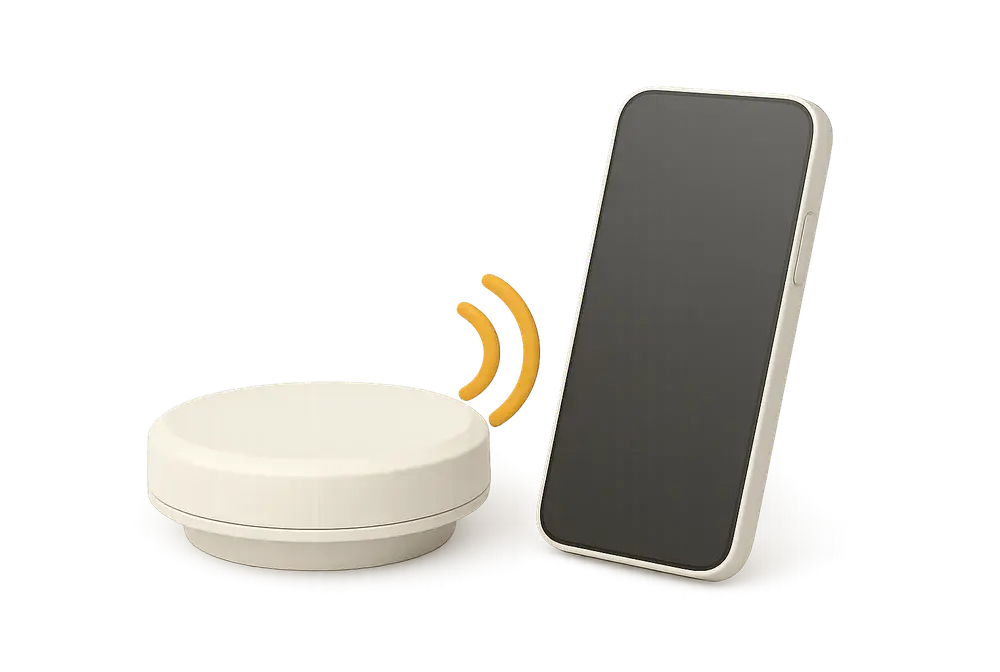
A noise detector for short-term rentals is not a microphone. It measures a sound level in decibels, continuously, without recording or transmitting any audio. You cannot listen in on what’s happening in the property, and that’s precisely what makes the device legal: no conversation is captured, no content is stored.
In practice, you set a decibel threshold (for example, 70dB) and a time window (for example, 10pm to 8am). If the level exceeds the threshold for several minutes, you get a notification. Some devices act automatically: first breach, message to the guest; if it continues, alert to the host or a local contact.
The two main brands in the sector:
- [Minut](https://www.minut.com): a discreet ceiling or wall sensor that measures noise in decibels without recording, also monitors temperature and humidity, and can send an automatic first message to the guest before bothering you.
- [NoiseAware](https://noiseaware.com): focused on noise, with indoor sensors and an outdoor version for terraces and pools. The system calculates a nuisance score over time rather than just a single spike, which avoids false alerts from a door slamming.
These devices require a subscription, on top of the sensor price. Before buying, check three things: the device does not record any sound (the legal requirement), it works on the property’s WiFi, and it lets you set different thresholds for day and night to avoid false alerts at aperitif time and blind spots at 3am.
Indoor cameras: total ban, no exceptions
This is the most important point in this article. Since 30 April 2024, Airbnb has banned all cameras inside properties, including in shared spaces like the living room, even if unplugged or covered. The rule is detailed in the Airbnb Help Centre, and Booking and Vrbo have similar policies. If an indoor camera is found, it means a report, possible listing suspension, and a refund for the guest.
French law is just as strict. The rented property becomes, for the duration of the stay, the guest’s home. Filming or listening to someone in a private place without their consent is a breach of privacy, protected by article 9 of the civil code and punishable under criminal law. Even without the platforms, a camera in the living room would still be illegal.
What is still allowed, under strict conditions:
- Outdoor cameras (entrance, car park, façade): allowed if they are declared in the listing, visible, and do not film inside the property, private areas, public roads, or shared areas of the building.
- Video doorbells: allowed on the front door, must also be declared.
- Decibel noise detectors: allowed indoors, precisely because they do not record anything, but their presence must be stated in the listing.
The golden rule: any monitoring device present in the property must be declared in the listing before booking. A hidden sensor, even if legal, becomes a source of dispute as soon as it’s discovered.
GDPR: what you must actually do
GDPR applies as soon as you process data relating to an identifiable person. A timestamped sound level, linked to a named booking, falls under this. For a host, compliance comes down to four habits.
- MinimisationOnly collect what serves a clear purpose (preventing nuisance, protecting the property). A decibel sensor is proportionate; an audio recording never is.
- InformationMention the devices in your listing and welcome booklet: “This property is equipped with a sound level detector (no audio or video recording) and a smart thermostat.”
- Retention periodKeep data from a stay only as long as needed in case of a dispute (a few weeks to a few months), then delete it. Reputable manufacturers do this automatically.
- Restricted accessLimit the dashboard to yourself, your co-host, or your property manager. Don’t share noise graphs with the neighbour: give them your phone number, not your data.
For property managers, one more habit: specify in the contract who is responsible for the sensor data, in two clear lines to avoid any ambiguity.
Thermostats, water and door sensors: other allies for your property
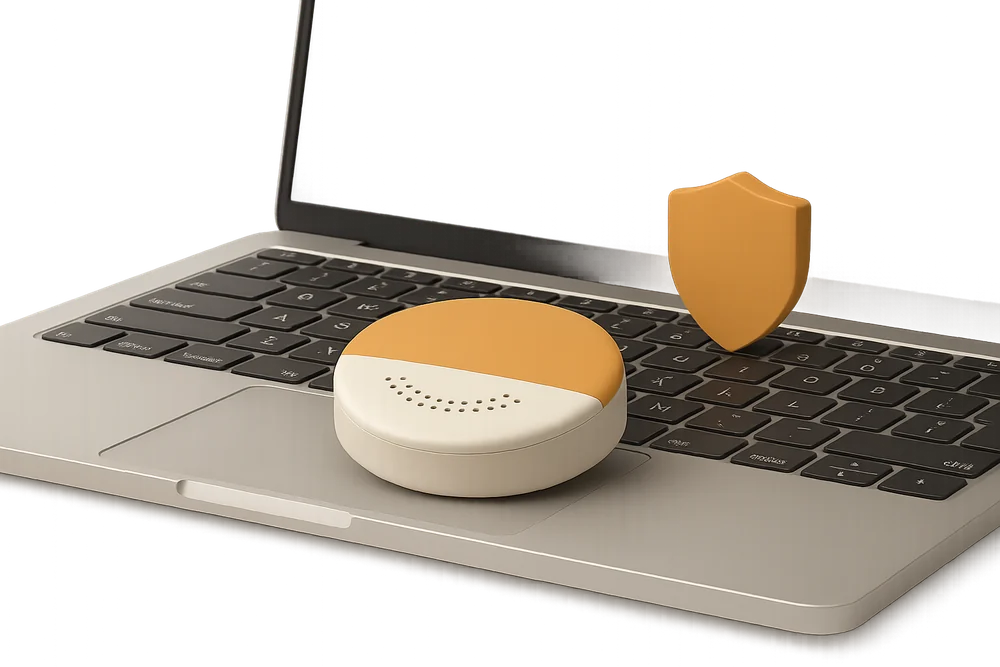
Noise is only part of the picture. Three other types of smart devices are useful for short-term rentals, all legal as they monitor the building, never the people.
The smart thermostat
This is the quickest investment to pay for itself. A remotely controlled thermostat (Netatmo, tado°, Nest and similar) lets you heat just before arrival and switch off after departure. With an average occupancy rate of around 63% in France, more than a third of nights are empty: not heating them means real savings every winter. Some models also detect open windows and switch off the radiator.
Water leak and frost sensors
A small sensor under the sink, behind the washing machine or near the hot water tank alerts you at the first drop. In the mountains, a temperature alert below 5°C prevents water damage from frozen pipes, one of the most expensive claims in seasonal lets.
Door opening sensors
Paired with a smart lock or an electronic key box, they show when the guest has entered and that the door is closed after departure. They also check that a property meant to be empty stays that way. For locks, we’ve compared the options in Smart lock for short-term rentals: how to choose well.
Before smart tech, the basics: a smoke detector is compulsory in every property in France, and a carbon monoxide detector is strongly recommended wherever there’s a combustion appliance.
- Smart thermostat: set an “arrival” mode 3 hours before check-in and an “eco” mode at departure.
- Leak sensor: place one under every hidden water point, where a leak could go unnoticed for days.
- Door sensor: fit one to the front door and to the owner’s cupboard.
What to do when an alert goes off: the 4-step protocol
A sensor without a response plan is useless: an alert at 11:30pm with no plan is just more stress. Write your procedure in advance.
- Immediate message to the guestPolite and factual: “Good evening, our sound level detector shows high volume for the past 30 minutes. Please turn the music down, the building requires quiet after 10pm.” Some tools send this automatically, as described in Automatic Airbnb Messages, Without Losing the Human.
- Phone callIf the noise continues 15 to 20 minutes after the message. Speaking directly changes everything: most situations stop here.
- Local contactIf the call has no effect: co-host, trusted neighbour, property manager. This is where a local network is invaluable, especially when you manage remotely.
- Report to the platformAs a last resort, with the timestamped alert history. A dated decibel graph is much stronger than “the neighbours said so”.
Also document the aftermath. If the party happened anyway, the state of the property at the next clean is your evidence: dated photos, condition report, actual cleaning time. Enough to activate the platform’s guarantee with a solid case.
Integrating sensors into your daily operations
Sensors monitor the stay; they don’t replace the human who enters the property after each departure. The winning combination: sensor during the stay, cleaner after. The noise detector tells you something happened; the cleaner tells you what state the property is actually in.
This is where a cleaning management tool completes your smart setup. In CleanClac, the cleaner gives a property condition rating on arrival (1 to 5 stars): sensor goes off Saturday night, rating drops to 2 stars on Sunday, you have confirmation and context. End-of-clean photos timestamped by the server, with GPS position, are the other half of your evidence in a dispute: impossible to backdate. The Airbnb, Booking, and Vrbo iCal sync also creates the clean automatically after each departure, as detailed in Automating Your Short-Term Rental: The 2026 Guide: after a noise alert, notify the day’s cleaner via the integrated messaging so they allow extra time.
Final tip: mention your equipment in the house rules and welcome booklet, in a positive tone. “Sound level detector to protect neighbourly peace, no audio recorded” puts off partygoers at booking and reassures respectful guests. A declared sensor deters bad guests before they even book: that’s its first and most profitable effect.
Your questions
Is a noise detector legal in an Airbnb rental in France?
Yes, under two conditions: the device only measures sound levels in decibels, without recording audio, and its presence is declared in the listing before booking. Airbnb explicitly allows these sensors. By contrast, any device that records conversations or images inside the property is banned, both by the platforms and by French law.
Can I install a camera in the entrance or living room “for security”?
No. Since April 2024, Airbnb bans all indoor cameras, even in shared spaces, even switched off. Under French law, the rented property is the guest’s temporary home: filming them without consent is a privacy breach. Only outdoor cameras declared in the listing and visible are allowed.
Does the noise detector record my guests’ conversations?
No, and that’s what makes it legal. Devices designed for short-term rentals, like Minut or NoiseAware, measure decibels: a timestamped number, never audio content. You see there was 82dB at 1am, not what was said. Check this before buying.
What if a guest refuses the sensor?
If they ask before booking, explain how it works: decibel measurement only, no recording, aim is neighbourly peace. If they discover an undeclared sensor during their stay, you’re in the wrong and the platform may side with them. Hence the rule: always declare in the listing, before booking.
How much does it cost to equip a property with sensors?
Budget for a noise sensor with a monthly subscription from specialist providers, a smart thermostat between £85 and £210 depending on heating, and a few tens of pounds for leak or door sensors. With an average annual income of around £9,600 per host in France, the whole setup pays for itself with the first party prevented.

Written by Jonathan
Published on August 7, 2026 · Updated on August 18, 2026
Read next
 iCal Sync: Airbnb, Booking.com and Your CleaningAirbnb iCal sync with Booking.com: what the .ics file contains, real refresh times per platform, troubleshooting, and wiring up your cleaning rota.Tools and automation
 Automating Your Short-Term Rental: The 2026 GuideMessages, pricing, check-in, cleaning, reviews: what can really be delegated to tools in 2026, how much time you save, and where to start.Tools and automation
 Cleaning Management Apps: The Criteria That MatterSync calendars, checklists, photo evidence, team management: the key criteria for choosing your Airbnb cleaning management app, and how to calculate ROI.
Move from theory to practice.
One property free to put all of this in place, for as long as it takes.