
Airbnb Consumables: Manage Your Stock Without Running Out
Template list, quantities per stay, restocking and role allocation: the guide to managing consumables stock for your short-term rental.
A missing toilet roll, an empty shower gel bottle, no coffee pods left: rarely a major incident, but exactly the details that trigger an annoyed message at 10pm, or worse, a comment in the public review. Managing consumables is the classic blind spot in short-term lets: everyone thinks about cleaning, almost no one formalises the stock, and you discover you’re out an hour before check-in.
The good news: a reliable system only needs four things, a template list, quantities calibrated per stay, a buffer stock, and a clear rule on who orders what. Here’s the complete method.
Why consumables matter more than you think
Guests don’t rate your logistics, they rate their experience. According to a Vrbo survey in 2026, 78% of travellers cite spotless cleanliness as the top sign of quality, and 86% would pay more for a higher-quality property (Vrbo / Businesswire). An empty soap dispenser or a worn-out sponge sends the opposite message, even in a perfectly cleaned flat.
Among the most reported issues in short-term rentals, insufficient maintenance accounts for 38% and lack of cleanliness for 33% (ConsumerAffairs). Many of these complaints come from items not being replaced: blown lightbulb, missing bin bag, empty washing-up liquid.
There’s also the operational challenge: cleaning a one-bedroom flat takes about 60 minutes; an unexpected supermarket run throws off the whole day’s schedule, especially with Same-day turnover: how to nail same-day cleaning.
The template consumables list, category by category
First step: set a single reference list per property: without a written list, everyone improvises and things get forgotten. Here’s a base to adapt:
Bathroom:
- Toilet paper (the number one item to run out)
- Hand soap, shower gel, shampoo
- Bin bags for the bathroom bin
Kitchen:
- Washing-up liquid, dishwasher tablets
- Sponges and cloths
- Kitchen roll, bin bags, cling film
- Coffee, tea, sugar, salt, pepper, oil (the “starter kit”)
Cleaning products:
- Multi-purpose cleaner, glass cleaner, bathroom disinfectant
- Descaler, floor cleaner
- Gloves, microfibre cloths
Technical and safety:
- Lightbulbs (note the types used)
- Batteries (remotes, key boxes, detectors)
- Filters (extractor hood, ventilation as fitted)
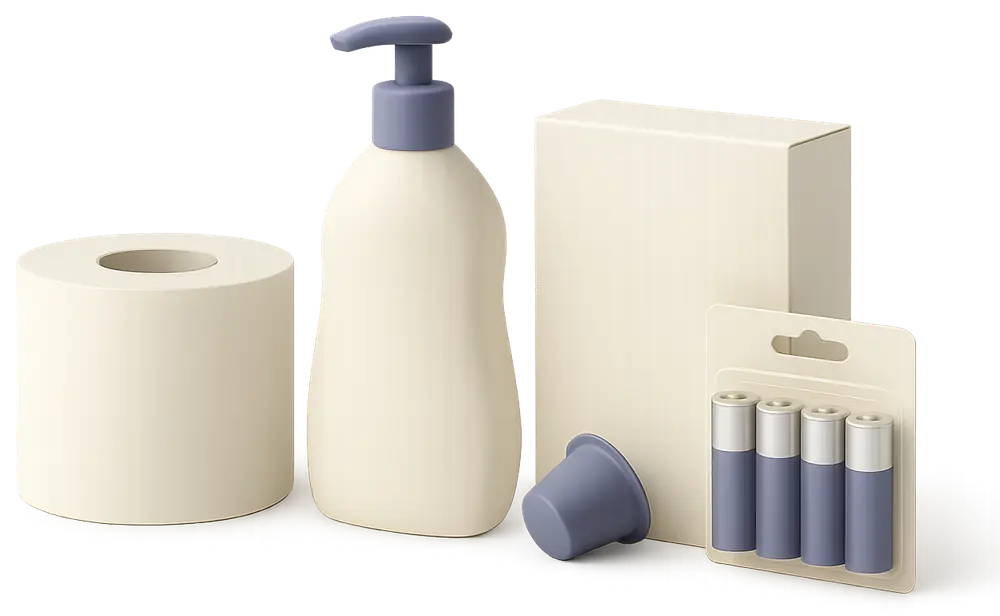
Pro tip: distinguish guest consumables (provided, visible) from cleaning consumables (for staff only), they run out at different rates and are stored separately.
What quantities should you provide per stay?
The answer is a simple rule: provide enough for the stay, plus a 50% safety margin. A guest should never have to ration, but you don’t need to fund their next three weeks either.
Some tried-and-tested benchmarks from management companies:

Toilet paper
1 roll per person for every 2 nights, minimum 2 rolls per toilet for any stay.

Soap and shower gel
A pump bottle filled two-thirds covers a week for 4 people; if below a third, refill.

Dishwasher tablets
1 per day of stay + 2 extra.

Bin bags
1 per day + 2, in the drawer under the sink.

Coffee/tea
2 servings per adult per day for the first 2 days; after that, it’s a welcome gesture, not an obligation.
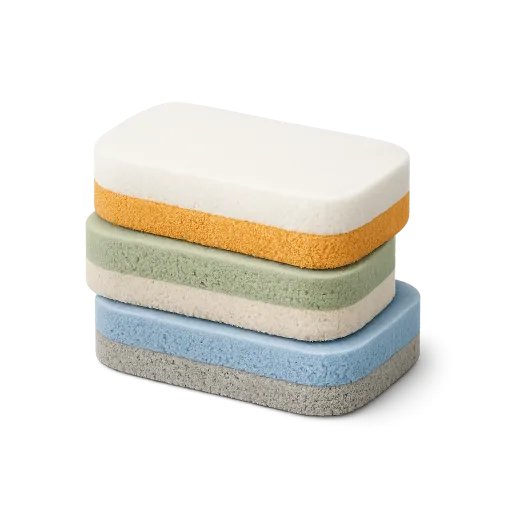
Sponge
a new one for every stay: less than 50p for a strong hygiene signal, on the same logic as linen, which is always fully changed between guests (Direct Hôtellerie).
Document these quantities per property in your instructions: a studio for a couple and an 8-bed house have different ratios, and your staff should never have to guess.
Organising storage: the buffer in the property, the main stock centrally
A good stock system has two levels:
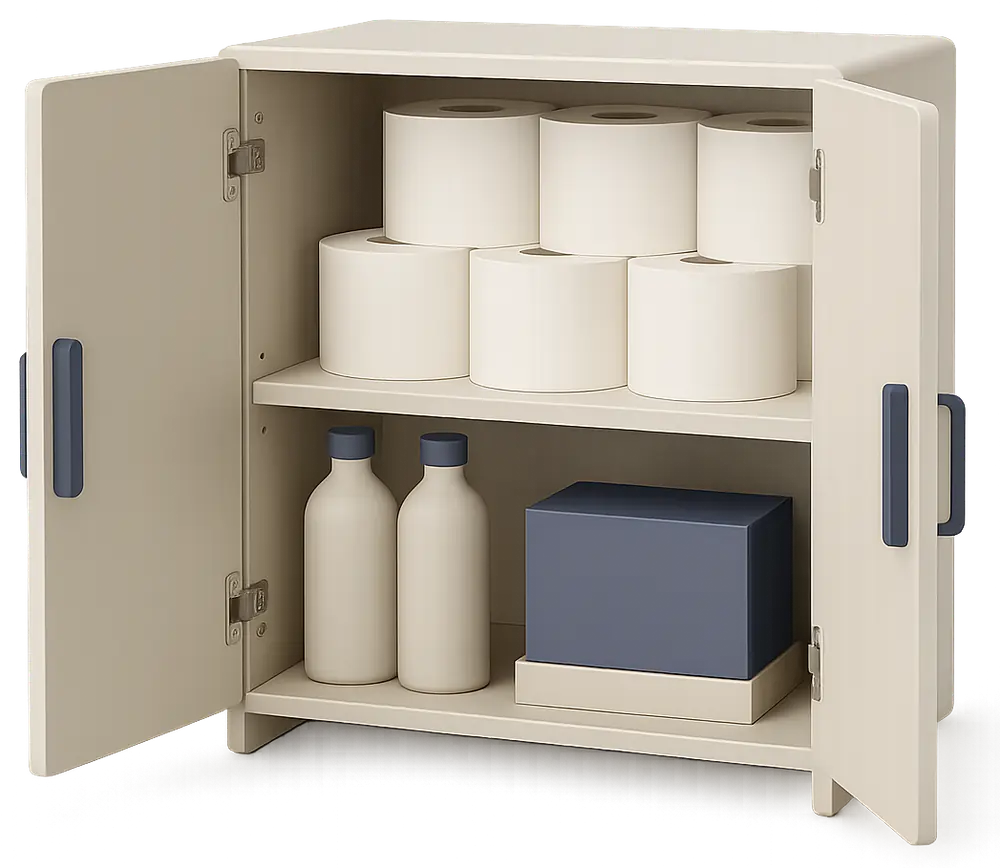
Level 1, the buffer stock in the property. Enough for 2 to 3 full stays, stored somewhere guests can’t access: a lockable cupboard, bench chest, or utility room. The cleaner finds everything needed to restock without carrying supplies.
Level 2, the central store. At your place, in a garage or dedicated room: bulk purchases are kept here, and each round you take what’s needed to top up the buffers. If you manage several properties, this store quickly becomes strategic, see our guide on Cleaning for Multiple Properties: How to Scale Up.
Three storage rules that make all the difference:
- A fixed place for each item, labelled: a stand-in should find things in 30 seconds.
- First in, first out rotation for perishables, expiry dates at the front.
- A visual threshold marker: line on the shelf with a marker, or a rule like “if fewer than 4 rolls, report it”.
Restocking: the min/max method that prevents running out
The heart of the system is restocking triggered by threshold, not by guesswork. For each item, set two values:
- The minimum threshold: the quantity that triggers an order (for example, 6 toilet rolls in the buffer).
- The maximum level: the target quantity after restocking (for example, 16 rolls).
The process is then automatic: at each clean, the cleaner checks the levels at the end, one checklist point, takes 2 minutes. If anything drops below the threshold, they report it straight away, with a photo. Orders are grouped weekly or fortnightly, never last minute.
Consumables checks are thus built into the end-of-clean checklist, just like checking linen or equipment. For a full process overview, our article Organise your cleaning between bookings without stress explains the whole system.
Two pitfalls to avoid:
- Overstocking: 6 months’ worth of products ties up cash and lets things expire. The right buffer covers 2-3 stays, not a whole season.
- Verbal reporting: a “we’ll need more washing-up liquid” said on the phone gets lost. Reports must be written, time-stamped, and linked to the property.
Who does what? Clarify roles once and for all
Most shortages come from unclear responsibility: the host thinks the cleaner manages it, the cleaner thinks the host orders. Set out the split in black and white:
| Task | Recommended responsible party |
|---|---|
| Set the template list and thresholds | Host / property manager |
| Check levels at each clean | Cleaner (checklist point) |
| Report thresholds reached | Cleaner, in writing with photo |
| Order / purchase | Host or manager, in bulk |
| Refill buffer stock | Cleaner, on the next round |
For remote hosts, this split is even more critical: without being there, photo proof is your only real check. A photo of the stock cupboard at the end of a clean lets you confirm levels without visiting.
If you use a management company, check the contract: some include consumables in their management fee (usually 15 to 25% of rent in France, according to Propulse by Crédit Agricole), others charge per item. In all cases, demand a record of quantities used.
Controlling the budget without cutting quality
Professional ballpark: cleaning an 80m² property costs about €1,000 to €1,200 per year in cleaning products, not counting extra consumables (L'Hôtellerie Restauration). In short-term lets, expect £2 to £5 of consumables per stay for a standard property, factor this into your cleaning fee.
Three ways to optimise:
- Buy non-perishables in bulk (toilet paper, bin bags, tablets): professional packs cut unit costs by 20 to 40%.
- Switch to refillable pump bottles for soap and shower gel: cheaper per use, less waste, more upmarket feel. Choose products with an official eco-label, the ADEME publishes reliable guides to environmental labels.
- Standardise products across all your properties: same items everywhere, bulk buying, no confusion for staff.
One point to watch: keep chemicals in their original packaging, separate from food and out of children’s reach. ANSES regularly warns of the risks of mixing cleaning products (especially bleach + descaler): your storage instructions should cover this.

The complete system in five steps
- Write the template listFor each property, separating guest and cleaning consumables.
- Set quantities per stayAnd min/max thresholds for each item.
- Install double storageLocked buffer in the property, central store for bulk buys.
- Add level checks to the end-of-clean checklistWith written/photo report if a threshold is reached.
- Group ordersAt set intervals and refill buffers on the next round.
Once in place, this system runs almost by itself: 2 minutes per clean, no more shortages. Your guests won’t notice a thing, and that’s exactly the point: in a well-run rental, consumables are invisible because they never run out.
Your questions
Which consumables must you provide in an Airbnb rental?
No law sets a precise list, but market standards are as good as mandatory: toilet paper, soap, washing-up liquid, bin bags and basic cleaning essentials are expected by all guests. Airbnb recommends providing basic necessities, and their absence is a common cause of negative reviews (Airbnb Help Centre). The coffee/tea kit isn’t compulsory but is almost always provided in the UK.
How many toilet rolls should you provide per stay?
The practical rule: about 1 roll per person for every 2 nights, with at least 2 rolls visible per toilet, even for a single night. For 4 people over a week, leave 12 to 14 rolls accessible, and keep a buffer stock hidden in the property so the cleaner can top up without a trip.
Who should pay for consumables: the host or the management company?
It depends on the contract. Some management companies include them in their fee (often 15 to 25% of rent), others bill them separately with receipts. Both models work, as long as it’s written down and you get a record of quantities. If self-managing, the host buys and includes the cost in the cleaning fee.
How do you stop guests using up all the stock?
Split the stock in two: the stay’s quantities, visible and calibrated (length of stay + 50% margin), and the buffer stock, kept in a locked cupboard or staff-only area. Guests use what’s provided; if the buffer is out of sight, it stays untouched. Don’t under-provide though: a perceived shortage costs more in reviews than an extra roll.

Written by Janik
Published on August 7, 2026 · Updated on August 12, 2026
Read next
 Organise your cleaning between bookings without stressCheck-out/check-in window, scheduling, multi-property prioritisation, plan B: the complete method to organise your Airbnb cleaning without stress.Managing turnovers
 Remote Cleaning Management for Short-Term RentalsNon-resident host? Local team, photo checks, iCal sync, handling the unexpected: the complete method for managing your Airbnb cleaning remotely.Managing turnovers
 Same-day turnover: how to nail same-day cleaningCheck-out at 11am, check-in at 3pm: flawless same-day turnover cleaning with precise timing, ready linen kit, team organisation and handling surprises.
Move from theory to practice.
One property free to put all of this in place, for as long as it takes.