Same-day turnover: how to nail same-day cleaning
Check-out at 11am, check-in at 3pm: flawless same-day turnover cleaning with precise timing, ready linen kit, team organisation and handling surprises.
Saturday, 11:02am. Your guests have just handed back the keys. The next ones arrive at 3pm, after a six-hour drive. In between: a property to restore to perfection, linen to change, and zero room for error. Welcome to same-day turnover, the most dreaded challenge in short-term rentals, and the most common in peak season, when stays run back-to-back from Saturday to Saturday. The good news? It’s always a success when prepared like a timed operation. Here’s how: timing, ready-to-go kit, team and back-up plans.
Why same-day turnover leaves no room for error
A standard cleaning gone wrong can be fixed the next day. A same-day turnover gone wrong is immediately and publicly punished: the guest arrives to a property that isn’t ready, and their review will reflect it. The numbers speak for themselves: 81% of guests say cleanliness is their number one factor when choosing accommodation (Hospitable / AHLA), and a cleanliness rating below 4.8/5 leads to around 20% fewer bookings.
There’s a financial side too: refusing back-to-back bookings means leaving a night empty between each stay. At the average UK nightly rate of £118, one empty night per week adds up to over £6,000 lost income per year.

The 11am, 3pm window: building a realistic schedule
The first mistake hosts make: thinking a 4-hour gap means 4 hours of cleaning. Your usable window is shorter, as you need to allow for the cleaner’s travel time, the initial inspection, the final check, and a non-negotiable safety margin.
Typical breakdown for an 11am check-out / 3pm check-in:
- 11:00, 11:15: quick inspection. Walk through the property to spot damage, forgotten items and missing linen, nasty surprises are found now, not at 2:30pm.
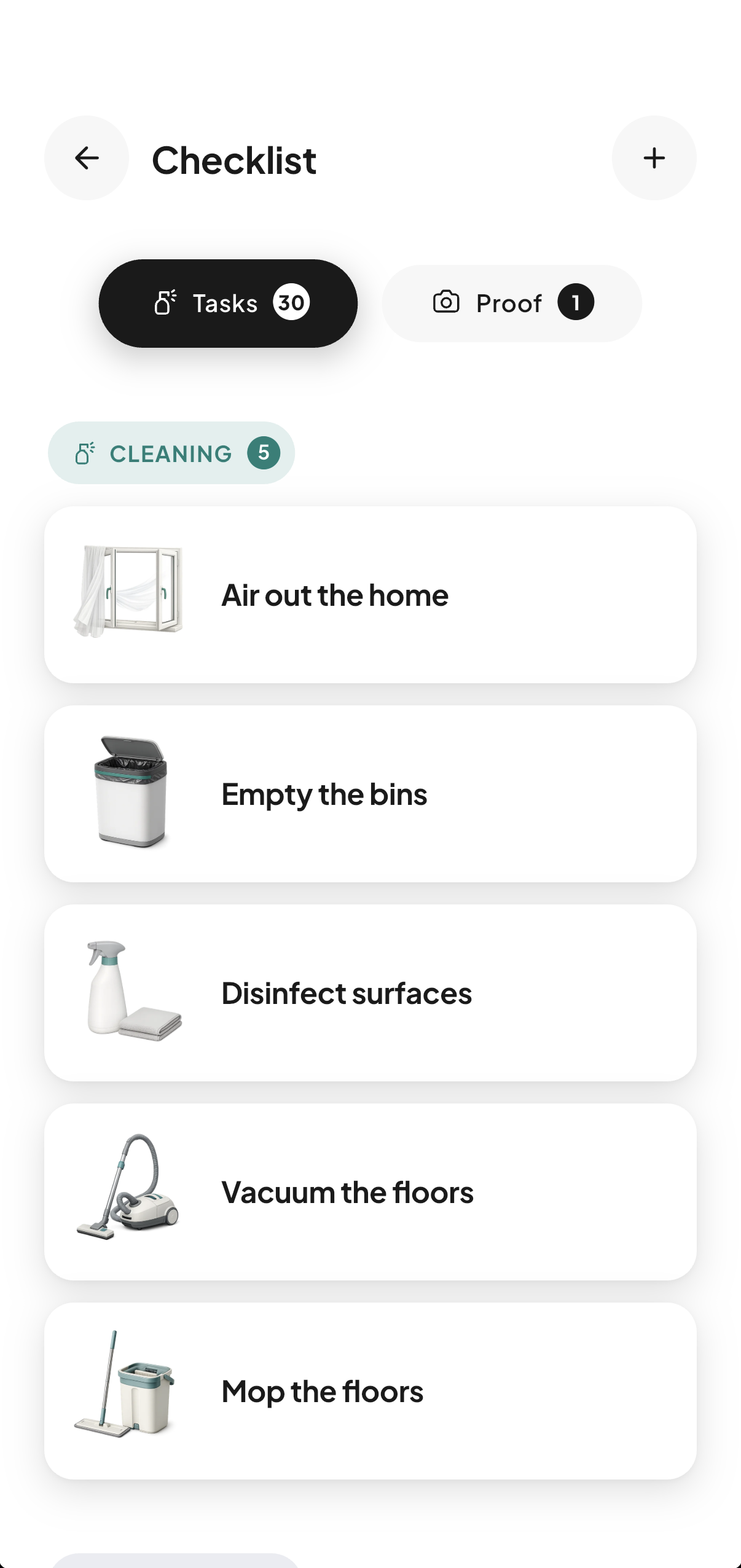
- 11:15, 13:30: full clean. Start the washing machine first, empty bins, then clean room by room.
- 13:30, 14:00: quality check and photos. Checklist ticked off, photos taken, final staging (bed, towels, welcome touches).
- 14:00, 15:00: safety margin. This absorbs stubborn stains, late departures or a temperamental tumble dryer.
Cleaning times should be tailored to your property: 35 to 45 minutes for a studio, around 60 minutes for a one-bedroom, 100 to 120 minutes for a 100-125m² house. For more detail, see our guide How long does Airbnb cleaning take? The real numbers.
Golden rule: if cleaning takes more than half your window, plan for two cleaners or adjust your timings (check-out 10am, check-in 4pm), which you can set in your listing, see the Airbnb Help Centre and Booking.com Partner Hub.
The ready-to-go kit: the secret weapon for smooth turnovers
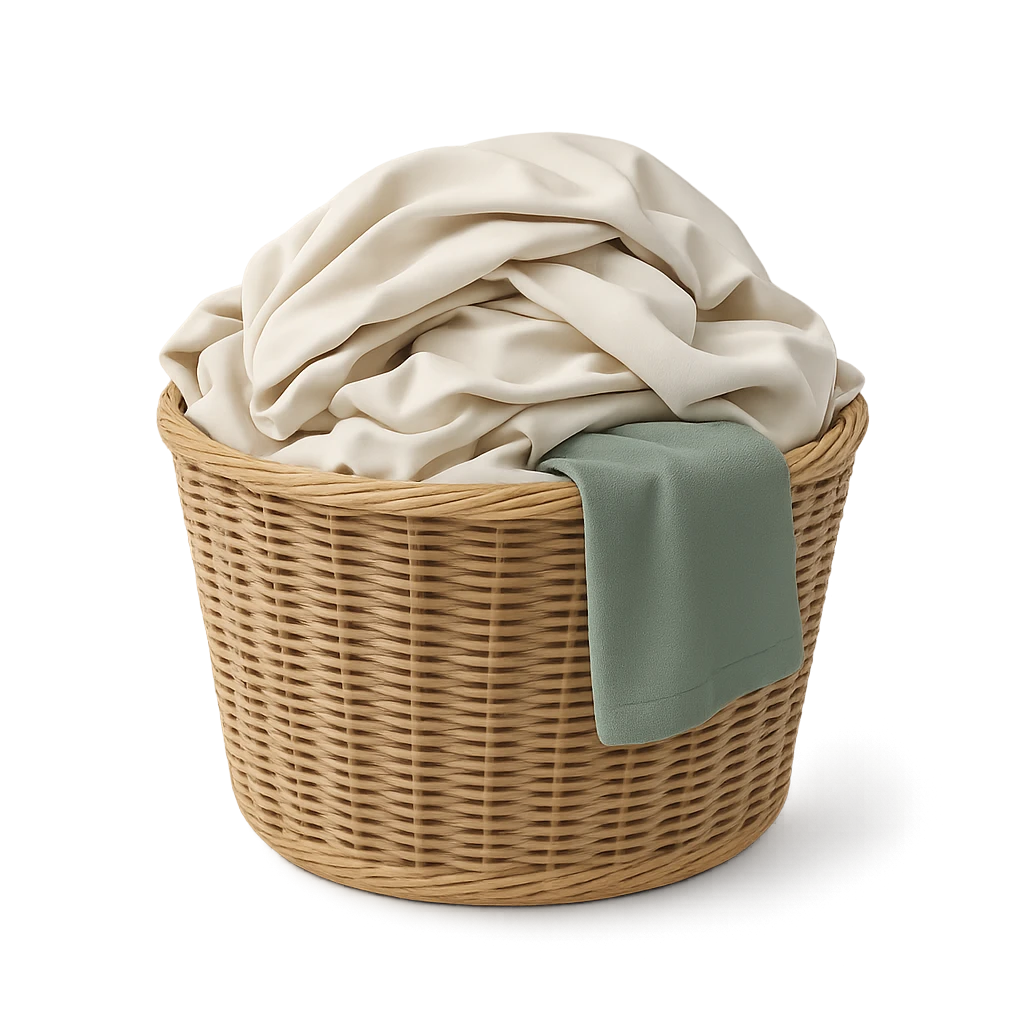
Same-day turnover doesn’t allow time to wash and dry linen between guests. Do the maths: a cotton wash cycle takes 1.5 to 3 hours (Rester Connecté), plus 40 to 60 minutes in the tumble dryer (Pako Wash). Up to 4 hours, your entire window, swallowed by one load.
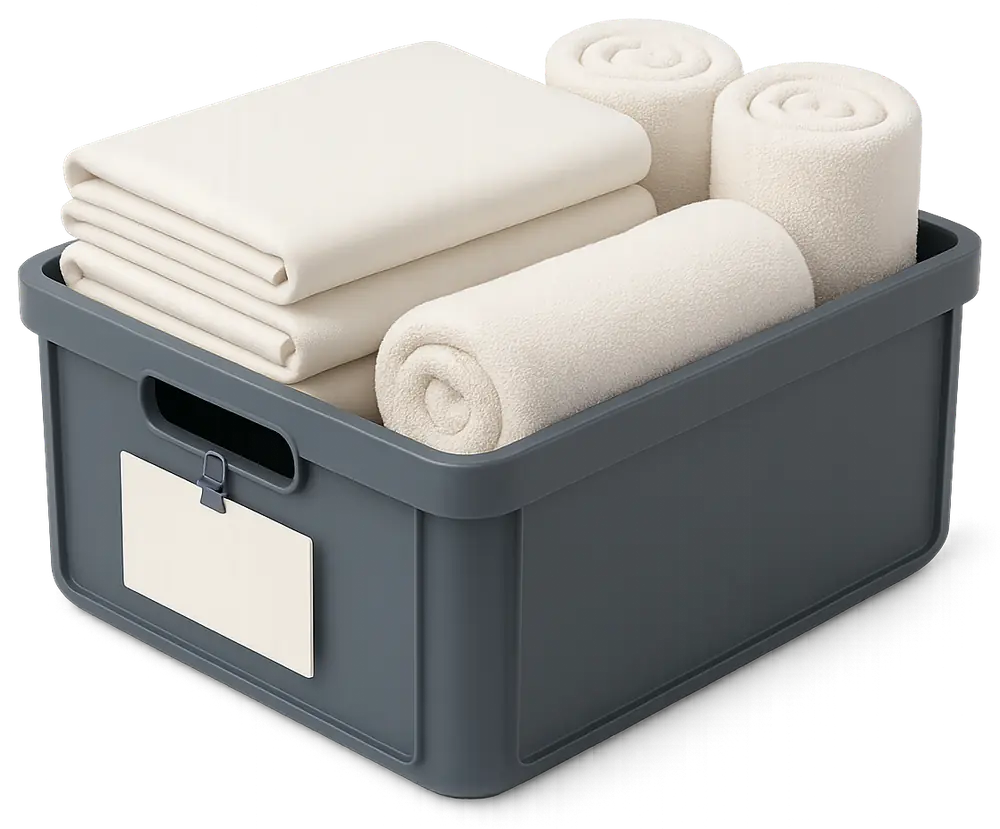
The solution: the ready-to-go kit: a full set of clean, folded linen, prepared before the cleaner even arrives. In practice:
- 3 sets of linen per bed: one on the bed, one clean in reserve, one being washed, the minimum rotation for stress-free turnovers.
- One box or bag per property, prepared the day before: sheets, duvet covers, towels, bath mats, tea towels, counted and checked.
- A consumables kit: toilet paper, soap, new sponges, welcome products, coffee pods.
- A buffer stock in the property (locked cupboard) so you’re never reliant on a last-minute dash.
With this system, dirty linen is washed after check-in, with no pressure: it’ll be used for the next turnover. The professional standard is a 60°C wash cycle for bedding, which kills dust mites and bacteria (Direct Hôtellerie); for tips on keeping energy bills down with frequent washes, see the ADEME.
Organising the team: who does what, and crucially, when
A solo same-day turnover is possible for a studio. Beyond that, or if several properties turn over on the same Saturday, team organisation becomes critical. Three principles keep things running smoothly:
- Notify early, confirm the day before.The cleaner should know about Saturday cleans as soon as the booking is made, not by text on Friday night. A confirmation the day before (time, property, instructions) eliminates 90% of misunderstandings.
- Assign by area, not habit.Two properties 10 minutes apart: same cleaner does both. Opposite sides of town: two people. Travel is the hidden cost of turnover.
- Work in pairs for large properties.Two cleaners splitting upstairs/downstairs almost halves the time, vital when the window is tight.
And because a cleaner can fall ill on a July Saturday, always have a back-up plan: a trained stand-in, or at the very least a quick checklist so anyone can cover the basics. We detail these scenarios in Last-minute cleaning: managing absent cleaners and surprises.
The optimal cleaning order for speed
For same-day turnovers, the order of operations saves real minutes. The principle: start everything that works by itself first, then clean from dirtiest to finishing touches.
- On arrivalStart washing machine and dishwasher, air out, spray products that need time to work (oven, seals, toilet).
- Strip all bedsDirty linen into a dedicated bag, never in contact with clean linen, a basic rule of the RABC method used in hotels (FHOR).
- Kitchen then bathroomThe two longest and most scrutinised rooms.
- Bedrooms and loungeDust top to bottom, floors last, working back towards the door.
- Finishing touchesBeds made perfectly, towels folded, check for smells, final “guest’s eye view” from the front door.
This sequence avoids the classic trap: spending 40 minutes on the lounge while the oven cleaner sits unused.
Handling the unexpected: 4 scenarios to plan for
A successful same-day turnover isn’t one where nothing goes wrong, it’s one where every problem already has a solution.
- Guest lingers after check-out. Prevention: automatic message the day before reminding them of check-out time. Every minute lost after 11am eats into your safety margin.
- Early check-in request. Standard reply: “We’ll do our best, confirmation at 1pm.” Never promise before the quality check. 67% of guests actually prefer self check-in (Touch Stay): a key safe or smart lock lets you open access as soon as the property is ready.
- Damage discovered at 11:10am. Take timestamped photos immediately, report to the platform, then decide fast: quick repair, goodwill gesture or rehouse if it’s a showstopper.
- Not enough or stained linen. This is where your buffer stock saves you, never a last-minute dash to the laundry at 1pm on a Saturday.

Quality control without wasting time
The paradox of express turnover: it’s when you rush that things get missed, and 95% of guests mention cleanliness in their review. Quality control should never be skipped, but it must be quick.
The tried-and-tested method used by management companies: the photo checklist. The cleaner ticks off each task as they go and photographs key points at the end, bed, bathroom, kitchen, overview. Triple benefit: nothing is missed, the host can check remotely in 2 minutes, and in case of dispute you have timestamped proof of the property’s condition at check-in. We explain this system in Cleaning Quality Control: Always Require Photos.
Final check before sending “your property is ready”: the 5 things guests check first: smell, bedding, bathroom, bins, dishes. Thirty seconds that protect your rating.
In summary: same-day turnover is won before the day itself
A successful same-day turnover rests on four pillars: a well-timed schedule with a safety margin, a ready-to-go linen kit, a team notified in advance, and a systematic photo quality check. It’s all about preparation, Saturday is just execution.
That’s exactly what Cleanclac automates: with iCal sync to Airbnb and Booking, each booking automatically schedules cleaning in the right window, notifies your cleaner and provides the property checklist with end-of-clean photos. You check quality remotely and confirm check-in with peace of mind, see how at cleanclac.com.
Your questions
How much time do you need between check-out and check-in on the same day?
Allow at least your property’s cleaning time plus a 30 to 50% buffer. For a one-bedroom cleaned in about 60 minutes, a 3-hour window is comfortable; for a house, aim for 4 hours or work in pairs. The standard 11am, 3pm window suits most flats with a well-drilled routine.
How do you handle linen when there’s no time to wash it between guests?
Use the 3-set rotation per bed: one on the bed, one clean in reserve in the property, one being washed. On turnover day, the cleaner puts on the clean set and takes away the dirty, which is washed later with no rush. For more than 3-4 properties, outsourcing laundry often becomes more cost-effective than doing it in-house.
Can you allow early check-in during a same-day turnover?
Yes, but never blindly. Say you’ll confirm in the early afternoon, once cleaning is checked. With self check-in, you can grant access as soon as the end-of-clean photos are validated, sometimes an hour before the official time, which delights guests with no risk to you.
What if the cleaner cancels on the morning of the turnover?
Activate your back-up plan in order: a stand-in already trained on the property, a local cleaning company as emergency cover, or yourself with the quick checklist. If a delayed check-in is unavoidable, notify incoming guests early: a proactive message with a new precise time is always better received than arriving to an unready property.
Does a same-day turnover cost more than standard cleaning?
Often, yes: the restricted Saturday slots mean many providers charge extra, and seasonal destinations typically add 15 to 30% surcharge. This extra cost is still far less than the loss from blocking a night between each stay.

Written by Janik
Published on August 7, 2026 · Updated on August 7, 2026
Read next
 Organise your cleaning between bookings without stressCheck-out/check-in window, scheduling, multi-property prioritisation, plan B: the complete method to organise your Airbnb cleaning without stress.Managing turnovers
 Remote Cleaning Management for Short-Term RentalsNon-resident host? Local team, photo checks, iCal sync, handling the unexpected: the complete method for managing your Airbnb cleaning remotely.Managing turnovers
 How long does Airbnb cleaning take? The real numbersStudio, one-bed or house: the real durations for Airbnb cleaning, the factors that affect them, and how to estimate and plan your changeovers.
Move from theory to practice.
One property free to put all of this in place, for as long as it takes.