Descaling Appliances in Your Rental: The Guide
Kettle, coffee machine, washing machine, dishwasher: how often to descale and step-by-step methods for appliances in your short-term rental.
A guest makes themselves a cup of tea and finds white flakes floating in their mug. Another tries the espresso machine and gets a trickle of lukewarm, bitter water. In short-term rentals, a scaled-up kettle or a dirty coffee machine goes straight into the Airbnb or Booking.com review. Limescale works quietly, stay after stay, and regular cleaning never tackles it, surfaces get wiped, but circuits are never descaled.
The numbers are clear: poor maintenance is the second most reported problem by guests (38%), ahead of lack of cleanliness (33%), according to a survey shared by ConsumerAffairs. This guide gives you, appliance by appliance, the right descaling frequency for a rental property and concrete methods, with the right product and timing.
Why limescale is costly in short-term rentals
In a busy rental, the kettle is used by 30 to 60 different groups of guests per year: and each expects it to look brand new. Three reasons to take this seriously:
- Impact on reviews: about 95% of guests mention cleanliness in their review, and if your cleanliness rating drops below 4.8, you could lose around 20% of bookings. Visible limescale is seen as dirt.
- Impact on appliance lifespan: a scaled-up heating element has to work harder. Regular descaling makes appliances last much longer, and replacing a washing machine in a rush between bookings is a logistical nightmare.
- Impact on energy use: limescale insulates the heating element from the water, increasing energy consumption every time it heats up. The ADEME reminds us that regular appliance maintenance is one of the simplest ways to save energy day to day.
The golden rule: base your descaling schedule on the number of stays, not the calendar. A property with 8 bookings a month will scale up its appliances much faster than a holiday home rented only in summer.
Kettle: the most visible, fastest-scaling appliance
This is the appliance almost every guest uses in the first hour, and where limescale is instantly visible.
Recommended frequency in rentals: visual check at every clean (open the lid, look at the element and base); full descale every 5 to 10 stays in hard water areas, once a month in soft water.
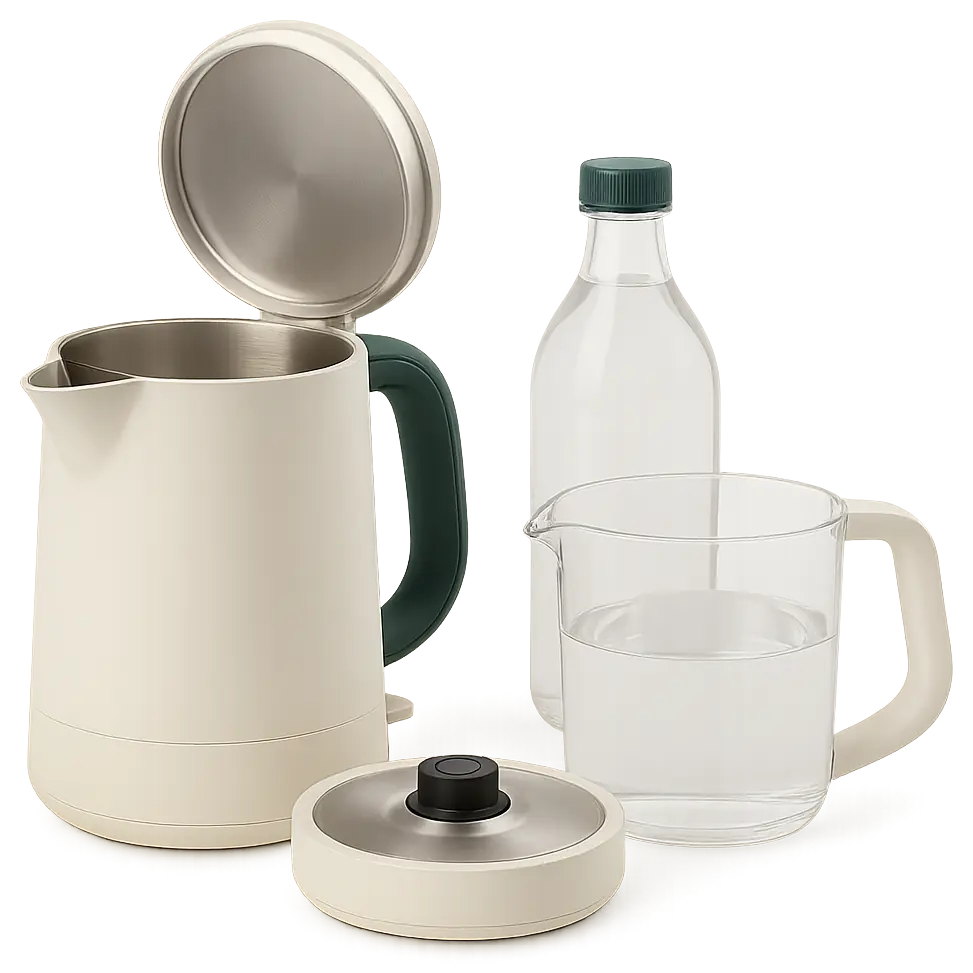
White vinegar method (10 minutes, almost free):
- Fill the kettle halfway with a 50% white vinegar / 50% water mix.
- Bring to the boil, then leave to soak for 30 minutes to 1 hour (overnight if the build-up is old).
- Empty, scrub the base with a non-abrasive sponge if any residue remains.
- Rinse by boiling plain water twice and discarding itEssential to remove any vinegar smell before the next guest arrives.
Citric acid (1 tablespoon in 500ml boiled water) works just as well and leaves less smell. Both are part of the basic kit described in 15 essential cleaning products for short-term rentals.
Classic mistake: descaling just before check-in without a proper rinse, vinegar-flavoured tea is as bad for your reviews as a scaled-up kettle. Start descaling at the beginning of the clean, rinse at the end.
Coffee machine and espresso maker: taste, flow, hygiene
The coffee machine is the most scrutinised appliance in the kitchen. Limescale affects three things: taste, flow (slow extraction, cold coffee), and hygiene (forgotten wet grounds go mouldy in 48 hours).
Filter coffee machine: descale once a month with heavy rental use:
- Pour a mix of 1/3 white vinegar, 2/3 water into the reservoir.
- Run a half cycle, stop the machine and let it soak for 30 minutes.
- Finish the cycle, then run 2 full cycles with plain water.
- Wash the filter holder and jug with washing-up liquid (or in the dishwasher if suitable).
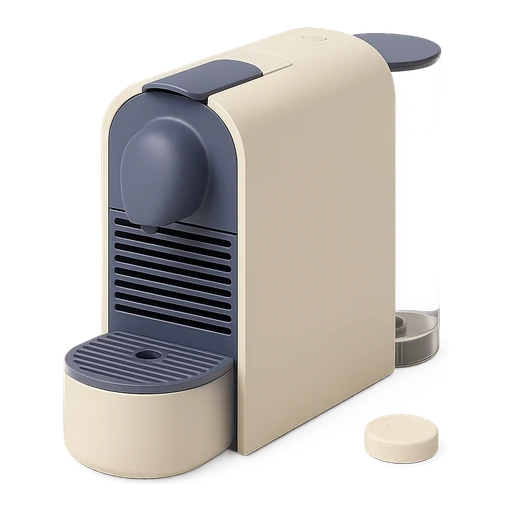
Capsule or pod machine: use the manufacturer's descaler or a citric acid-based product (pure vinegar can damage seals), following the machine's descaling programme, every 2 to 3 months or as soon as the warning light comes on. At every clean: empty the capsule bin, rinse the reservoir, wipe the nozzle.
Bean-to-cup machine: add weekly cleaning of the grounds bin and drip tray, which go mouldy quickly. For safety, follow ANSES advice on cleaning products: never mix products, always rinse food circuits thoroughly.
Pro tip: leave the water reservoir empty and dry between stays if there’s a gap of several days, stagnant water breeds biofilm.
Washing machine: the hardest-working, most neglected appliance
If you do laundry on site, the washing machine is the most used appliance: sheets and towels after every checkout, often at 60°C. Each cycle uses about 50 litres of water and 1kWh of electricity on a modern machine, according to Rester Connecté, and a scaled-up drum increases this consumption.
Monthly routine (20 minutes’ work):
- Empty hot cycle at 90°CWith 500ml white vinegar in the drum: dissolves limescale and detergent residue.
- Detergent drawerRemove and scrub under hot water, a hotspot for black mould.
- Door sealWipe the fold with a vinegar-soaked cloth; this is the number one source of musty smells on sheets.
- Drain filterUnscrew above a mop, remove fluff and forgotten items, every 2 months.
At every clean: leave the door and detergent drawer slightly open to dry the drum. A musty-smelling machine transfers the odour to laundry, and then to the next guest’s bed.
Dishwasher: filter, spray arms and salt, the neglected trio
A poorly maintained dishwasher leaves a white film on glasses and a bad smell when opened, two things guests notice immediately as they settle in.
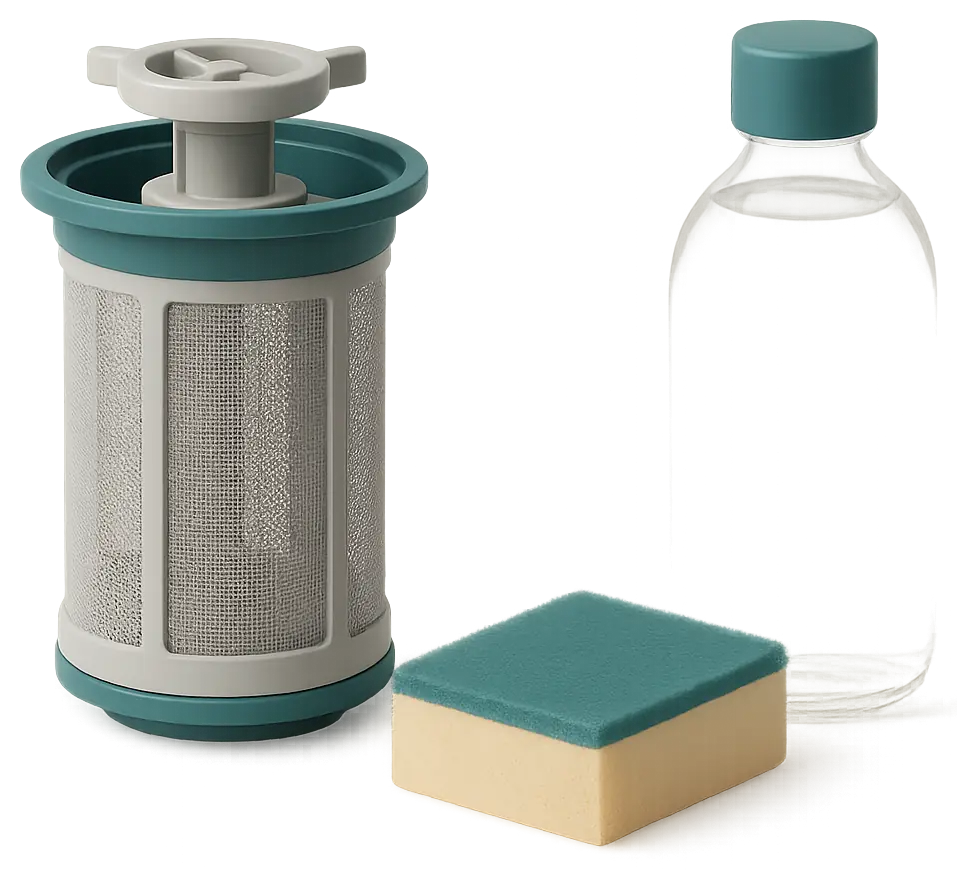
At every clean (2 minutes): check the central filter and remove any debris; make sure no “clean” but dubious dishes have been put away by guests, this deserves its own checklist line, as detailed in How to Clean a Holiday Let Kitchen Between Stays.
Once a month:
- FilterUnscrew, scrub with washing-up liquid, rinse.
- Spray armsUnclip and clear the jets with a cocktail stick (limescale blocks them one by one).
- Empty hot cycleWith a bowl of white vinegar on the top rack.
- Salt and rinse aidCheck levels, in hard water, a dishwasher without salt will scale up in weeks.
Door seal: wipe around with a vinegar-soaked cloth once a month to prevent black deposits.
Microwave, toaster, vacuum: 10 minutes that save your reviews
Three appliances less affected by limescale, but just as visible:
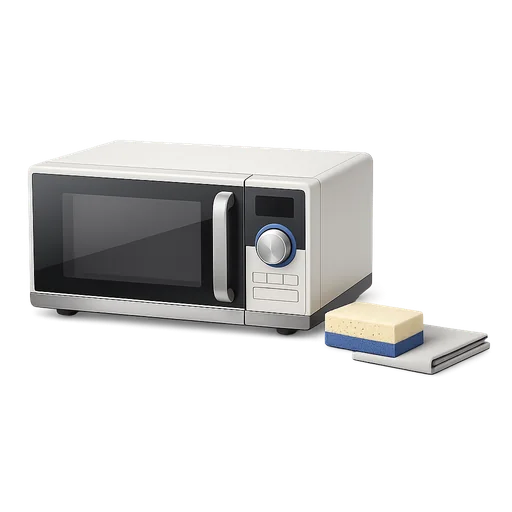
Microwave
At every clean, heat a bowl of water with lemon for 2 minutes; the steam loosens splatters, a quick wipe is enough.
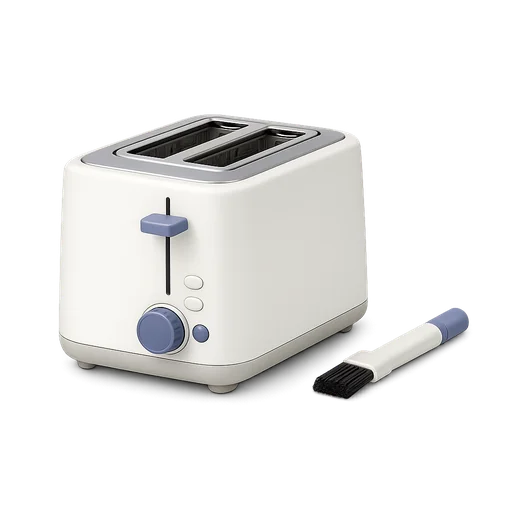
Toaster
Empty the crumb tray at every clean: burnt smell, pests, even fire risk.
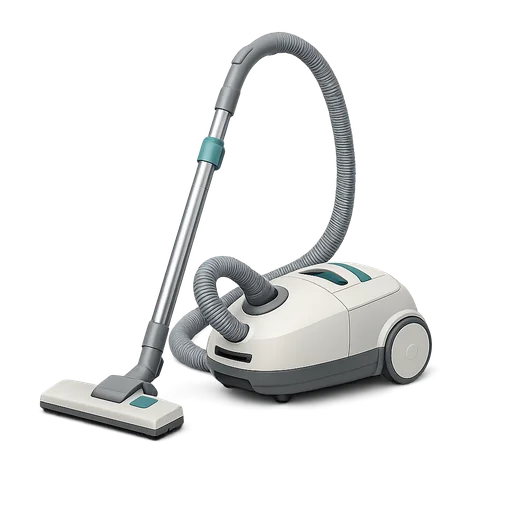
Vacuum cleaner
Empty the dust bin after every use, wash the filter once a month (24h drying), a clogged filter blows hot dust smell through the whole property.
Budget-wise, white vinegar, citric acid and specialist descalers are a tiny part of your costs: for reference, L'Hôtellerie Restauration estimates the cleaning product budget for an 80m² rental at about €1,000 to €1,200 per year, all products included. Descaling is just a few dozen euros, for appliances that cost hundreds to replace.
Turning these frequencies into a system: the two-level checklist
The real challenge isn’t the method, it’s keeping up the routine when cleans come thick and fast. The solution used by professional management companies: two levels of tasks.
Level 1, at every clean (part of the standard checklist):
- Visual check of kettle + rinse.
- Empty capsule bin and reservoir of coffee machine.
- Dishwasher filter: check and remove debris.
- Crumb tray, microwave lemon steam.
- Leave washing machine door and drawer ajar.
Level 2, scheduled periodic tasks (monthly or by number of stays):
- Descale kettle and coffee machine.
- Empty hot cycle washing machine at 90°C + seal + drawer.
- Empty hot cycle dishwasher + spray arms + salt.
- Vacuum and extractor hood filters.
Level 2 is the first to disappear when everyone is busy: if no one is “responsible” for descaling, no one does it, until a review mentions the kettle. Assign each periodic task to a specific date and person, ask for a photo as proof (clean element, cleaned filter), and link major jobs to the quarterly deep clean protocol described in Deep Seasonal Cleaning for Short-Term Rentals. It’s worth it: 81% of guests rate cleanliness as their number one factor when choosing accommodation, according to the AHLA study cited by Hospitable.
Conclusion
In short-term rentals, descaling isn’t a once-a-year chore: it’s a short, scheduled, checkable routine that protects your reviews, your appliances and your electricity bill. With Cleanclac, your property checklists include appliance checks at every clean, periodic tasks are assigned to your team, and end-of-clean photos prove remotely that the kettle is as spotless as the rest of the property. Discover cleanclac.com and never let limescale write your reviews for you.
Your questions
How often should you descale a kettle in a short-term rental?
Visually check the element at every clean and do a full descale every 5 to 10 stays in hard water areas (roughly every 2 to 4 weeks for a busy property). In soft water, monthly is enough. The most reliable guide is what you see: as soon as a white film appears, descale before the next check-in.
White vinegar or commercial descaler: which to use?
White vinegar (or citric acid) is enough for kettles, filter coffee machines, washing machines and dishwashers: effective, cheap, eco-friendly. For capsule and bean-to-cup machines, use the descaler recommended by the manufacturer, pure vinegar can damage some seals and void the warranty. In all cases, rinse food circuits thoroughly.
Can limescale really lower my Airbnb ratings?
Yes. Around 95% of guests mention cleanliness in their review, and limescale in the kettle or a white film on glasses is seen as a cleanliness issue. A cleanliness rating below 4.8 can cost you about 20% of bookings: appliances are a key part of the overall impression.
Who should do these tasks: the host or the cleaning team?
Micro-checks (kettle, dishwasher filter, crumb tray) are for the cleaner at every visit, via the standard checklist. Monthly descaling must be scheduled and specifically assigned, to the team with extra paid time, or to the host during a dedicated visit. If it’s not planned and assigned, it won’t get done.
Should you install a water softener in your rental?
It’s rarely worth it for a single property: expect several hundred to a few thousand pounds installed, plus salt maintenance. In very hard water areas, intermediate solutions are enough: a filter jug, keeping up with dishwasher salt, more frequent descaling. Reconsider if you have 2-3 properties in the same building.

Written by Janik
Published on August 7, 2026 · Updated on August 12, 2026
Read next
 Complete Airbnb Cleaning Checklist: Never Miss a SpotRoom-by-room Airbnb cleaning checklist: optimal order, commonly missed spots, final checks. The method for a spotless property at every turnover.Cleaning tips
 Clean an Airbnb in 1 Hour Flat: The MethodMinute-by-minute method to clean an Airbnb in 1 hour: room order, equipment, timing per area and pro tips to keep to the clock.Cleaning tips
 15 essential cleaning products for short-term rentalsComplete cleaning kit for your Airbnb: the 15 must-have products, their specific uses, annual budget, and where to store them in your property.
Move from theory to practice.
One property free to put all of this in place, for as long as it takes.