Self check-in: key safe or smart lock?
Key safe, smart lock, secure box: comparison of self check-in solutions, security, costs, and coordination with cleaning teams.
It's 10:30pm, your guest has just landed two hours late, and you're 250 miles from the property. Without self check-in, this common scenario turns into a stressful evening: missed calls, a neighbour roped in, a guest annoyed before they've even set down their suitcase. With a well-configured key safe or smart lock, it goes unnoticed. But you still need to choose the right solution for your security, budget, and cleaning team coordination. Here’s the comparison to help you decide.
Why self check-in is now the standard
This is no longer a “nice to have” but a basic expectation: 67% of guests want self check-in (Touch Stay, 2024). And arrival is the number one friction point of any stay: in an analysis of 37,359 guest conversations, check-in was the second most common question to hosts (3,822 queries), just behind WiFi, and 88.7% of guests expect detailed arrival instructions (Touch Stay, 2025).
Tangible benefits for hosts: no more time constraints (late arrivals and delayed trains no longer disrupt your schedule), fewer last-minute messages, easier access for cleaning teams without handing over keys, and a great first impression that puts guests in a positive frame of mind for their stay, and for their review. On the flip side, a failed check-in is one of the biggest triggers for bad reviews: 69% of guests say the quality of communication affects their likelihood of leaving a positive review (Touch Stay, 2024).
The key safe: the simple, budget-friendly solution
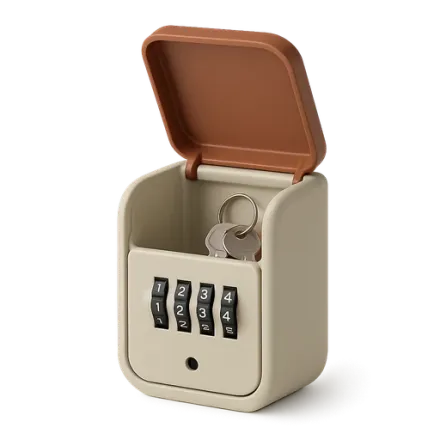
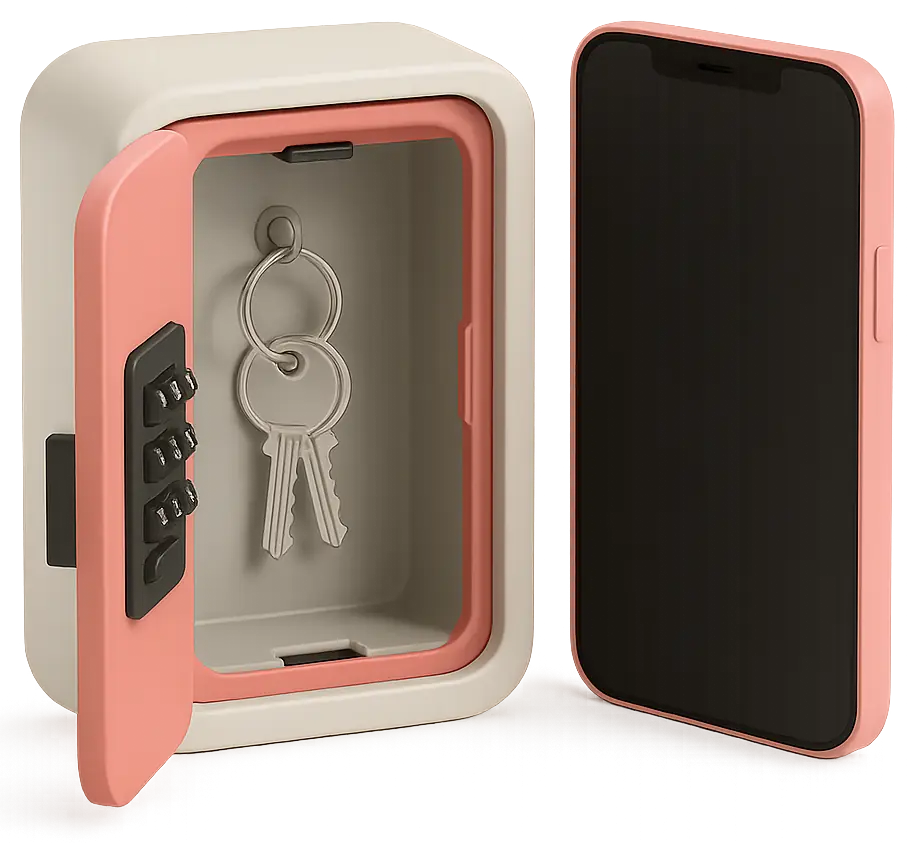
This is the entry point to self check-in: a metal combination box, fixed to a wall or support, containing the property keys.
Strengths:
- Unbeatable price: around £25 to £80 for a quality model, with no subscription or professional installation.
- No technical dependency: no batteries, no WiFi, no app. Works at -10°C or during an internet outage.
- 15-minute installation with two wall plugs, on your door or in an authorised spot.
Limitations:
- The code is static on most mechanical models: unless you change it, all previous guests know it. Golden rule: change the code after every stay, ideally during cleaning.
- Moderate security: a cheap box can be forced or ripped off. Choose a reinforced model, fixed into a solid wall, and out of sight from the street.
- No traceability: you can't know who opened it, or when.
- Possible local restrictions: some blocks of flats ban fixing anything to communal areas, and some cities regulate key safes on street furniture. In Italy, the Ministry of the Interior even challenged key boxes by requiring in-person guest identification, the rules can change quickly. In the UK, check your building’s rules and local council regulations, and consult the requirements for holiday lets on GOV.UK.
Best for: New hosts, single properties, tight budgets, or as a backup solution (see below).
The smart lock: temporary codes and traceability
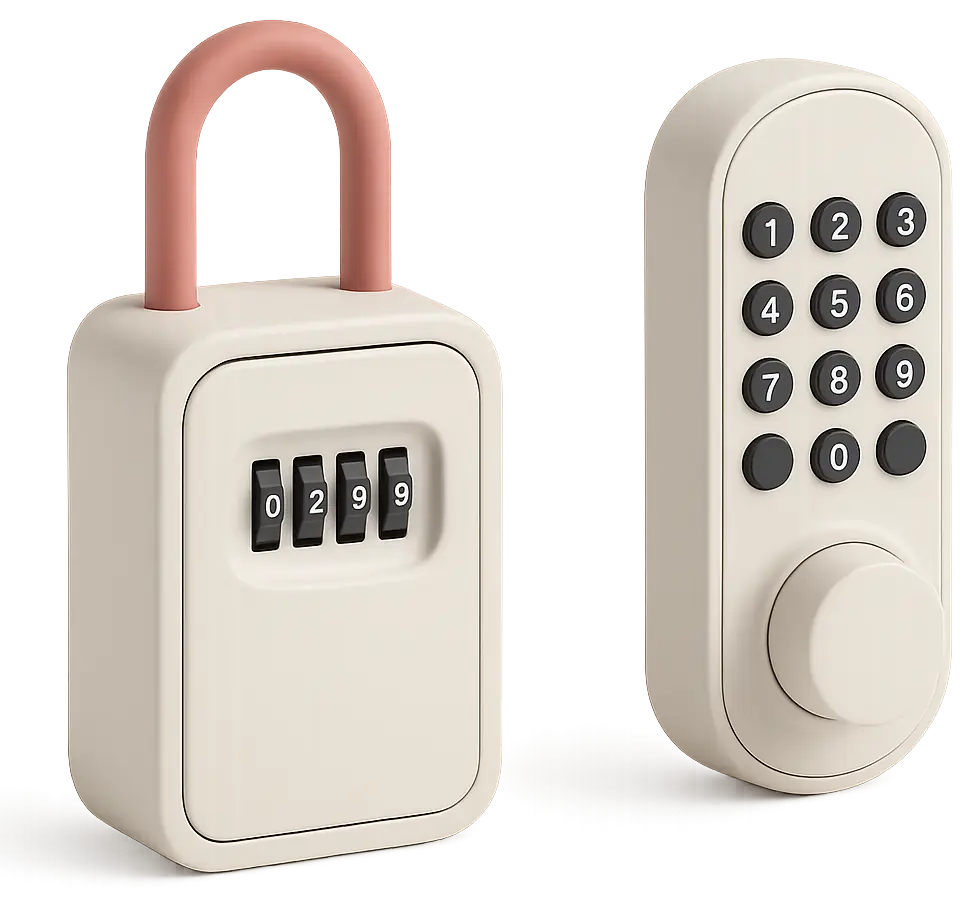
A smart lock (or electronic keypad) replaces the physical key with a PIN code, fob, or smartphone access.
Strengths:
- Temporary codes per stay: a unique code for each guest, valid only from check-in to check-out. No one “keeps” access after leaving.
- Dedicated codes for your team: cleaner, maintenance staff, and you each have a separate code. No more key handovers.
- Access history: you know who entered and when, invaluable for checking cleaning happened on time or documenting a dispute.
- Remote control (WiFi models): create or revoke a code in 30 seconds from your phone.
Limitations:
- Cost: £100 to £150 for a basic keypad, £200 to £500 for a full smart lock, sometimes with a subscription for remote features.
- Battery dependency: check batteries at every clean (6 to 12 months’ life) and have a mechanical backup.
- Door compatibility: cylinder, thickness, security doors… check before buying; some installations need a locksmith.
- Building access: the main entrance is often the weak link; you may need to combine a smart lock (flat door) with a smart intercom or a key safe for the entry fob.
Best for: Remote hosts, multiple properties, management companies, whenever physical key management becomes unmanageable.
Other options to know
Three complementary solutions worth having in your toolkit:
- Key drop at a partner shop: your keys are left at a local business with extended hours. Handy in city centres where key safes are banned, at the cost of a few pounds per pick-up and an extra trip.
- Smart intercom: to unlock the main building door remotely, alongside a smart lock on the flat door. The smoothest combo for blocks of flats.
- In-person handover… by choice: justifiable for high-end properties, as long as you have a self check-in backup for late arrivals. The personal touch can come via a welcome note in the property.
Decision table: which solution for which host?
| Criteria | Key safe | Keypad | Smart lock |
|---|---|---|---|
| Upfront cost | £25-£80 | £100-£150 | £200-£500 |
| Unique codes per stay | No (manual) | Often | Yes, automatic |
| Access history | Sometimes | ||
| Battery/network dependency | None | Batteries | Batteries + WiFi (optional) |
| Cleaner access | Shared code | Dedicated code | Dedicated code + time stamp |
| Best for | 1 property, tight budget | 1-3 properties | Multiple lets, remote management |
Many experienced hosts use a dual strategy: smart lock as the main solution, discreet key safe with a spare set, the duo that avoids guests locked out at midnight.
Security and compliance: rules to follow
A poorly secured self check-in can backfire. The basics:
- Never send the code too early: share it the day before or on the day of arrival, never at booking. Airbnb’s self check-in process is explained in the Airbnb Help Centre.
- Always change codes: new guest code for every stay, new team codes whenever someone leaves.
- Check your insurance: a ripped-off key safe with keys inside can complicate burglary claims.
- Respect building and local rules: get permission for anything fixed to communal areas, and note that several cities ban key safes on street furniture.
- Have a backup plan: neighbour, emergency locksmith, second access point. If things go wrong anyway, answer within the hour and name a fix with a time on it: what ends up in the review is the reaction, not the incident.
Arrival instructions that answer 90% of questions
The best lock in the world is useless with confusing instructions. The gold standard:
- A structured message sent the day beforeExact address, transport/parking, code or access link, floor and door, WiFi. Prepare it once in your Guest Communication: 8 Ready-to-Use Message Templates.
- Photos or a short videoThe building entrance, key safe location, the exact action (“turn the dial after entering the code”). A 30-second video saves dozens of calls.
- The fallback planWhat to do if the code doesn’t work, who to call, what’s the backup.
- Follow-up in the welcome bookCheck-out instructions, where to leave keys on departure.
And stay responsive despite automation: 56% of guests expect a reply within an hour if there’s a problem (Vrbo, 2026). Self check-in removes your physical presence, not your availability.
The forgotten link: syncing self check-in and cleaning
A blind spot in most comparisons: self check-in only works if the property is ready when the code is active. A guest walking into an uncleaned flat at 3pm is a recipe for disaster. Three key habits:
- Align cleaning slots with access times: check-out at 11am, check-in at 3pm, and a cleaning schedule triggered automatically with every booking, even last-minute. As a guide: 35 to 45 minutes to clean a studio and 100 to 120 minutes for a 100-125m² house, plus laundry.
- Give your team proper access: dedicated code per cleaner, and make sure to change the guest code during cleaning.
- Confirm the property is ready before giving the green light: a cleaning completion confirmation, ideally with photos, before the guest uses their code. This also secures early arrivals, see how Early check-in and late check-out, without stress.
Without this trio, self check-in adds risk. With it, it’s an asset: flexible arrivals, autonomous team, relaxed host.
Conclusion
Key safe to start, smart lock as soon as you manage remotely or have multiple properties, and in all cases: codes changed regularly, clear instructions, and cleaning finished before check-in time. This coordination is what makes self check-in a lever for 5-star reviews.
That’s exactly where Cleanclac comes in: iCal sync with Airbnb and Booking automatically schedules a clean for every booking, your cleaner is notified, and checklists with photos confirm the property is ready before the guest arrives. See how to make your self check-ins reliable at cleanclac.com.
Your questions
Is self check-in allowed everywhere in the UK?
Yes in principle, but with local limits: blocks of flats may ban fixing anything to communal areas, and some councils fine key safes attached to street furniture. Always fix the box on your own property or with permission, and check building rules before installation.
Which key safe should I choose for an Airbnb?
Go for a reinforced model (thick metal body, hardened shackle), with at least a 4-digit combination, between £40 and £80. Fix it into a solid wall with suitable plugs, out of sight. Avoid cheap £15-£20 models: they can be opened in minutes with a basic tool.
Should I change the code for every guest?
Yes, always. With a mechanical key safe, make code changing part of your cleaning checklist after every stay. With a smart lock, generate a unique code per booking, valid only between check-in and check-out: this is the main security argument for these devices.
How does the cleaning team access the property?
The best way: a permanent, dedicated code per cleaner on the smart lock, revocable at any time, with time-stamped entries. With a key safe, the team uses the same box as guests, so it’s vital to change the code after each stay and to track interventions another way, for example with end-of-clean photos.
What if the smart lock fails?
Have three safety nets: check batteries at every clean, mechanical backup access (key in a discreet key safe or with a neighbour), and an emergency contact in the arrival instructions. A problem solved in 10 minutes is just a hiccup; a guest locked out for an hour is a one-star review.

Written by Janik
Published on August 7, 2026 · Updated on August 7, 2026
Read next
 25 little touches that transform your guests’ stay25 little touches, sorted by budget (£0, under £5, under £20), to impress your Airbnb guests and earn more 5-star reviews.Guest experience
 Welcoming Families with Children in Short-Term RentalsCot, safety, toys, family-friendly listing: the complete guide to welcoming families with children and earning 5-star reviews.Guest experience
 Business travellers: what your Airbnb rental must offerWifi, workspace, flexible check-in, invoicing: the complete guide to attracting business travellers to your short-term rental.
Move from theory to practice.
One property free to put all of this in place, for as long as it takes.