Early check-in and late check-out, without stress
Early check-in and late check-out: clear policy, pricing, coordination with your cleaning team. The method to say yes without sacrificing cleanliness.
"Hello, our train arrives at 9am, can we get into the property earlier?" If you manage a short-term rental, you get this message several times a month. Every time, the same dilemma: say yes and put your cleaning team under pressure, or say no and start the stay with frustration. Properly managed, early check-in and late check-out are both a driver of guest satisfaction and a source of extra income: as long as you coordinate them seriously with cleaning.
Why these requests are so common (and will only increase)
Arrival and departure times are one of travellers’ top concerns. An analysis of 37,359 conversations between hosts and guests shows that check-in is the 2nd most asked-about topic (3,822 questions), just behind WiFi (Touch Stay, 2025). The same study reveals that 88.7% of guests expect detailed arrival instructions: codes, parking, exact times.
It’s logical: transport times almost never match your slots. A flight landing at 8am, an overnight train, a late Sunday departure… guests arrive when they arrive. Add high expectations for responsiveness, 56% of guests expect a host’s reply within an hour if they have a question (Vrbo, 2026), and improvising every time is no longer sustainable. The real question isn’t “should I accept?”, but “under what conditions can I accept without compromising cleaning quality?”
The real cost of an unprepared “yes”
Before promising an arrival at 1pm, consider what this means for cleaning: allow 35 to 45 minutes for a studio, about 60 minutes for a one-bedroom flat, and 100 to 120 minutes for a 100-125m² house. And this time doesn’t start at the guest’s theoretical departure, but when the cleaner arrives on site with equipment and fresh linen.
On a standard turnover (check-out 11am / check-in 4pm), the cleaning window is already tight. Allow a late check-out at 1pm and an early check-in at 2pm on the same day, and you’re asking the impossible: a house cleaned, checked and staged in an hour. The predictable result: rushed cleaning and a review mentioning cleanliness. And a cleanliness rating below 4.8 stars means about 20% fewer bookings.
The golden rule: never agree to early check-in without checking three things: the actual departure time of the previous guest, confirmed availability of the cleaner, and the cleaning time needed for that specific property.

Step 1: write a clear policy (before the first request)
The worst approach is case-by-case, depending on your mood. Set a simple, written policy, applied by you and your team:
- Standard times displayed everywhere: listing, welcome book, automated messages. For example, check-in 4pm / check-out 11am. Airbnb lets you set these times and your conditions in your listing (Airbnb Help Centre); on Booking.com, enter them precisely in the extranet (Booking.com Partner Hub).
- Template “conditional yes” reply: “We confirm the day before at 6pm, depending on the cleaning schedule.” You stay in control without causing frustration.
- Turnover day rule: early check-in and late check-out are never guaranteed when another guest is leaving or arriving the same day. They’re easy to grant when the property is empty the night before or after.
- Only one per changeover day: if the outgoing guest leaves late, the incoming guest can’t arrive early. Never both.
Prepare these replies in your saved messages, exactly the same principle as for your other standard communications Guest Communication: 8 Ready-to-Use Message Templates.
Key point: a written policy also protects your rating. A guest who knows the rule from booking doesn’t see a refusal as unfair.
Step 2: monetise these requests smartly
Hotels have known for years: early arrivals and late departures are a product, not a favour. In a hotel case study, early check-in and late check-out made up 68% of upsell sales, with an average spend of about $35 for early arrival and $37 for late departure, or +28% revenue per affected night (Revenue Hub, 2021).
For short-term lets, adapt the principle with three tiers:
- Free when it costs nothingProperty empty the night before, cleaning already done and checked → offer early check-in and say so. It’s a zero-cost gesture that guests remember.
- Charge when it takes effortCleaning schedule reorganised, cleaner rescheduled → charge, for example £15 to £30 depending on property size. The extra covers the logistical effort, it doesn’t “punish” the guest.
- Polite refusal when quality is at stakeTight same-day turnover, no cleaner available → politely refuse and offer an alternative (see below). A well-explained refusal is always better than an unready property.
The half-night is another option for very late departures (after 5-6pm): 50% of the nightly rate if the calendar allows, often more profitable than a free late check-out.

Step 3: coordinate with your cleaning team (the crucial link)
This is where most hosts fail: they say yes to the guest… and tell the cleaner at the last minute, by text, the night before. To make it work:
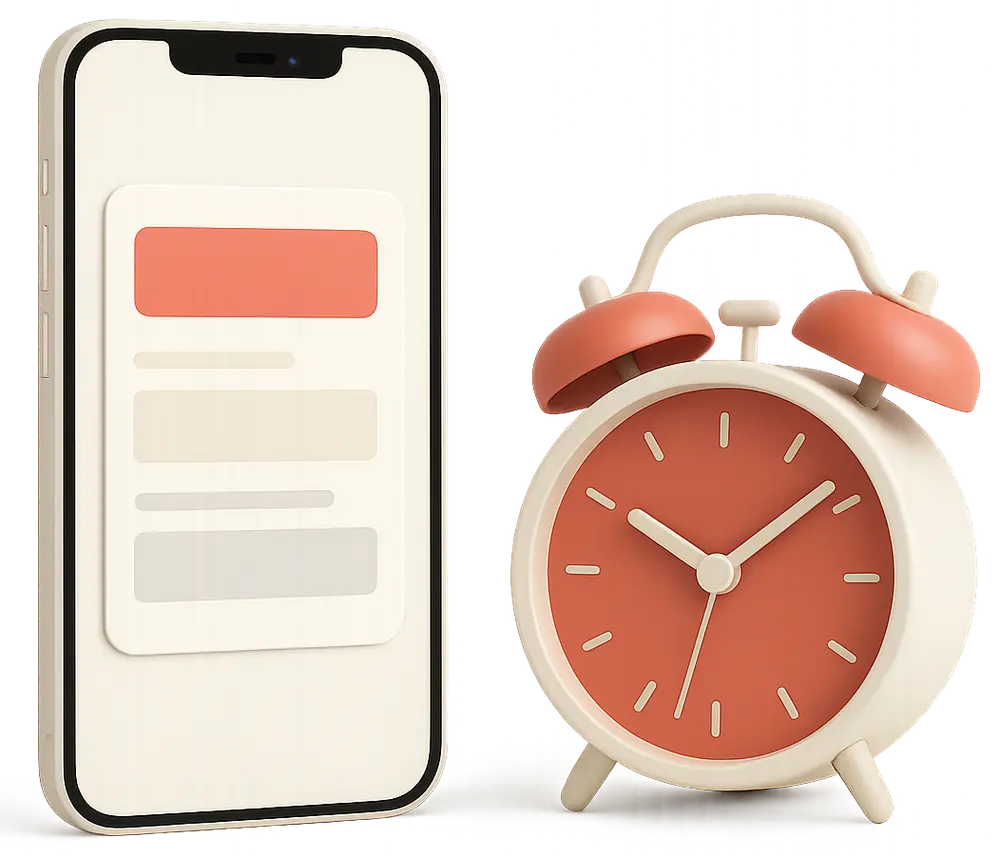
- Tell your team as soon as the time changes, not the night before. An early check-in granted = instant notification to the cleaner, with the new cleaning finish time.
- Set a “early arrival” cleaning order: bedrooms and bathroom first, kitchen and finishing touches after. If the guest drops bags at 1pm and returns at 3pm, the key rooms are already spotless.
- Allow time for checks: the end-of-cleaning checklist (with photos) must be done before the promised time, not at the promised time. Keep a 15-20 minute buffer.
- Block impossible requests in advance: if no cleaner can move the cleaning earlier, the answer to the guest is no, and you know this before replying.
For late departures, the logic is the same: a late check-out at 1pm delays the whole round for a cleaner working several properties. With a portfolio of several lets, granting an extra hour without coordination can disrupt three cleans in a row.
Alternatives that save the day when it’s a no
Refusing early access doesn’t mean leaving your guest on the pavement with their bags. Three solutions turn a “no” into a service:
- Luggage drop-off: a locker in the entrance, a dedicated room, or a partner service in town. The guest explores the area hands-free, your cleaning window remains intact.
- Partner café: “The café down the road will offer you a drink while you wait, on us.” Almost no cost, memorable effect.
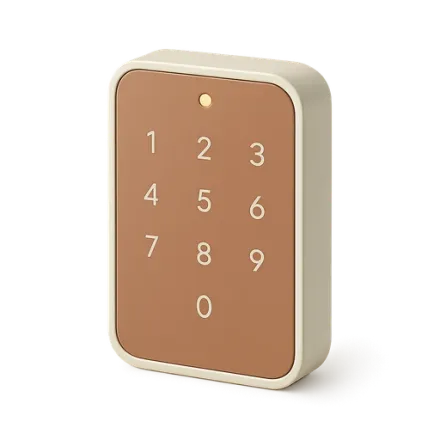
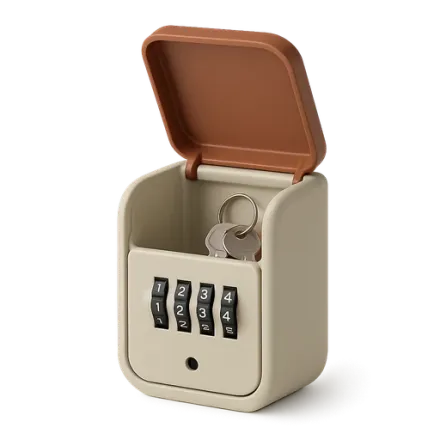
- Self check-in with notification: with a key safe or smart lock, notify the guest as soon as cleaning is done, “the property is ready, you can enter”. 67% of guests prefer self check-in anyway (Touch Stay, 2024), and the right equipment makes all the difference Self check-in: key safe or smart lock?.
This last option turns a constraint into an advantage: instead of a fixed time, you offer check-in “as soon as it’s ready”, without ever having promised the impossible.
The 5 mistakes that cost you dearly
- Promising before checking the scheduleThe guest remembers the promise, not your constraints.
- Allowing early check-in and late check-out on the same dayFor the same property: impossible cleaning window.
- Not confirming the time in writingIn case of dispute, you have no record.
- Forgetting to tell the cleanerThey take the pressure, and team turnover is fuelled by this kind of disorganisation.
- Refusing bluntly with no alternativeA curt “no” at the start of a stay often ends up in the review.
In summary: a rule, a price, an informed team
Early check-in and late check-out are only a problem when they’re improvised. With a written policy, a simple grid (free / charged / refused with alternative), and a cleaning team notified in real time, these requests become a competitive advantage: more perceived flexibility, extra income, and cleanliness never sacrificed.
With cleanclac.com, your Airbnb and Booking calendars sync via iCal and each clean is scheduled automatically between bookings; when you grant an early check-in, the adjusted time is instantly notified to your cleaner, who confirms the clean with a photo checklist. You can confirm to the guest with peace of mind, because you know the property will be ready.
Your questions
Should I charge for early check-in and late check-out?
Only charge when the request creates a real logistical cost: schedule reorganised, cleaner brought in earlier or later. £15 to £30 is common in the UK. When the property is empty the night before and already ready, offer it for free: the impact on your reviews is worth more than a few pounds.
How do I reply to an early arrival request without committing myself?
Use a “conditional yes” template: “We’ll do our best! It depends on the previous guests’ departure time and the cleaning schedule. We’ll confirm the day before at 6pm.” You show goodwill, keep control of the schedule, and the guest knows what to expect.
What standard times should I choose for check-in and check-out?
The most common pair is check-out 11am / check-in 4pm: it leaves a comfortable cleaning window, even for a house needing 100 to 120 minutes of cleaning plus checks. A 3pm check-in is possible for a studio or one-bed, but avoid going earlier than 2pm if you have same-day turnover.
What if the outgoing guest overstays their check-out time?
Remind them of the time the night before in your departure message. On the day, if they’re still there, contact the guest politely and immediately inform your cleaner to reorganise the schedule. Record the actual departure time: if they overstay significantly, platforms allow you to request compensation.
Can early check-in really improve my reviews?
Yes, especially when offered proactively. Arrival times are the 2nd most asked-about topic for guests, just after WiFi. A message “good news, your property is ready early” creates a wow effect from the first minute, as long as cleaning has genuinely been checked before you send it.

Written by Janik
Published on August 7, 2026 · Updated on August 12, 2026
Read next
 25 little touches that transform your guests’ stay25 little touches, sorted by budget (£0, under £5, under £20), to impress your Airbnb guests and earn more 5-star reviews.Guest experience
 Self check-in: key safe or smart lock?Key safe, smart lock, secure box: comparison of self check-in solutions, security, costs, and coordination with cleaning teams.Guest experience
 Welcoming Families with Children in Short-Term RentalsCot, safety, toys, family-friendly listing: the complete guide to welcoming families with children and earning 5-star reviews.
Move from theory to practice.
One property free to put all of this in place, for as long as it takes.