Cleaning a Rental Mattress: Stains, Odours, Dust Mites
Stain removal, disinfection, dust mites, mattress protectors: the complete protocol for spotless mattresses in short-term rentals, and when to replace them.
Changing a sheet takes two minutes. A stained mattress, on the other hand, can cost you a public comment like “questionable bedding”, visible for months. The mattress is the most intimate piece of equipment in the property, yet it’s almost always the blind spot of cleaning between bookings: the bed is made, the duvet cover is pulled tight… and no one checks what’s underneath.
The figures are clear: 78% of guests cite impeccable cleanliness as the number one sign of quality in a listing, and 77% specifically mention the bedding, according to a Vrbo survey of 1,758 travellers. Here’s the full protocol: stain removal, disinfection, dust mites, protectors and replacement.
Why the mattress is the blind spot of rental cleaning
Between stays, cleaning focuses on what’s visible: floors, bathroom, kitchen, a perfectly made bed. The mattress, under its clean fitted sheet, seems “done”. In reality, it accumulates sweat, humidity and dust mites stay after stay, especially as it sees dozens of different sleepers a year, compared to one or two for a domestic mattress.
But guests do check: lifting the fitted sheet is increasingly common, especially due to bed bug fears. Find a stain on the first night and it’s a downward spiral: complaint, negative review, cleanliness rating drops. A cleanliness rating below 4.8 can mean losing around 20% of bookings. The mattress deserves its own protocol, just like the details that give away a rushed clean listed in 10 cleaning mistakes that cost you bad reviews.
Regular maintenance protocol: vacuuming, airing, rotation
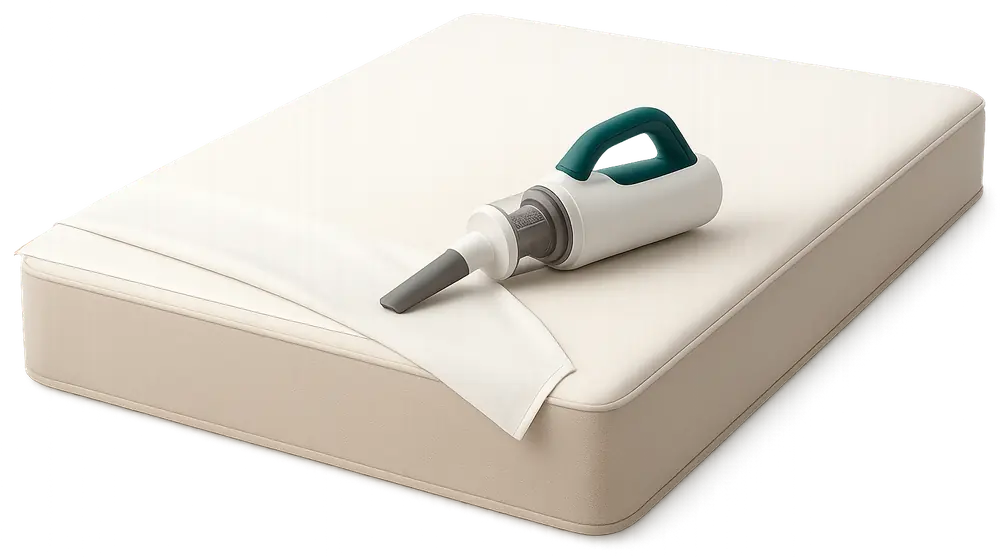
The best way to avoid emergency stain removal is prevention. Bedding specialists recommend a deep clean once a month, and vacuuming every fortnight for allergy-prone guests, always with a washable mattress protector (Lelit.fr). In short-term rentals, adapt this to your turnover:
- At every guest change: quick visual inspection (30 seconds) when stripping the bed. Stain, mark, odd smell? Deal with it immediately, not at the next stay.
- Once or twice a month: thorough vacuum with the brush attachment, including all sides, seams and tufts, seams collect dust and mites, then air the room with windows wide open for at least 30 minutes, mattress bare.
- Every 3 months: flip the mattress head-to-toe (or turn it over if double-sided) to spread wear, plus wash the mattress topper, quarterly is the standard in hospitality (Direct Hôtellerie).
Add these steps directly to your cleaning checklist: a line for “inspect mattress” at each turnover, a scheduled monthly “vacuum mattress” task. For the full room-by-room version, see Complete Airbnb Cleaning Checklist: Never Miss a Spot.
Removing mattress stains: method by stain type
Golden rule: as little liquid as possible. A soaked mattress dries badly, goes mouldy and smells. Use a barely damp microfibre cloth, dab (never rub, which pushes the stain deeper), working from the outside in.
Organic stains: blood, urine, sweat
- Blood: Cold water only (hot water sets the stain) with soap, or a little 3% hydrogen peroxide for old stains. Dab, rinse, dry.
- Urine: Blot with paper, dab with a mix of lukewarm water and white vinegar (half and half), then sprinkle with bicarbonate of soda, leave for 4 to 6 hours and vacuum. Bicarbonate neutralises odours deep down.
- Sweat marks: Paste of bicarbonate and water, apply for 30 minutes, then dab with diluted white vinegar and dry thoroughly.
Greasy and cosmetic stains
Make-up, sun cream, fake tan: sprinkle Sommières clay or bicarbonate to absorb grease (2 to 3 hours), vacuum, then dab with a little diluted washing-up liquid. For stubborn foundation, a few drops of household alcohol on a white cloth, after testing on a hidden area.
Drinks: coffee, wine, fizzy drinks
Act fast: blot, dab with cold soapy water, then diluted white vinegar on any remaining coloured marks. For a dried stain, dampen slightly before treating.
After any stain removal, drying is non-negotiable: dry cloth, then extended airing or a hairdryer on a warm setting at 20cm. Never put bedding back on a damp mattress, that’s a guaranteed musty smell for the next check-in.

Disinfecting and deep odour removal
A mattress can look clean but still smell musty, of smoke or damp. The go-to treatment: bicarbonate of soda over the whole surface (about 250g for a double mattress), leave for 6 to 8 hours: ideally overnight when vacant, then vacuum thoroughly and air.
For deeper disinfection (pet stay, organic accident), a steam cleaner is the most effective tool: steam over 100°C kills bacteria and dust mites without chemicals. Go slowly, then allow several hours to dry. Avoid spraying strong disinfectants directly on the mattress: besides the risk of setting stains, the ANSES reminds us that cleaning and biocidal products should be used with care indoors, especially on surfaces in prolonged contact with skin.
Dust mites and bed bugs: prevention and detection
Dust mites thrive in warm, humid environments and are the leading cause of household allergies. Three levers: keep the room below 50% humidity and around 18-19°C, vacuum the mattress regularly, and above all wash bedding at the right temperature, a 60°C wash kills dust mites, bacteria and most pathogens, the professional standard in hospitality (Direct Hôtellerie). Mattress protectors and covers should be machine-washed to the same standard.
Bed bugs are a different, and much more serious, risk for your business: an infestation means blocking your calendar for several weeks. Santé publique France documents the rise of the problem and best practices. Early detection is key: at every clean, inspect mattress seams, bed base, headboard and skirting boards for black dots (droppings), blood spots on sheets or brownish insects 5 to 7mm long. Train your team for this 60-second check, with immediate photo reporting at the slightest doubt.
Mattress protectors: your best bedding insurance
The maths is simple: a waterproof, breathable protector costs £15 to £30, a quality mattress costs £300 to £800. In short-term rentals, a protector is not optional: every bed must have one, including sofa beds.
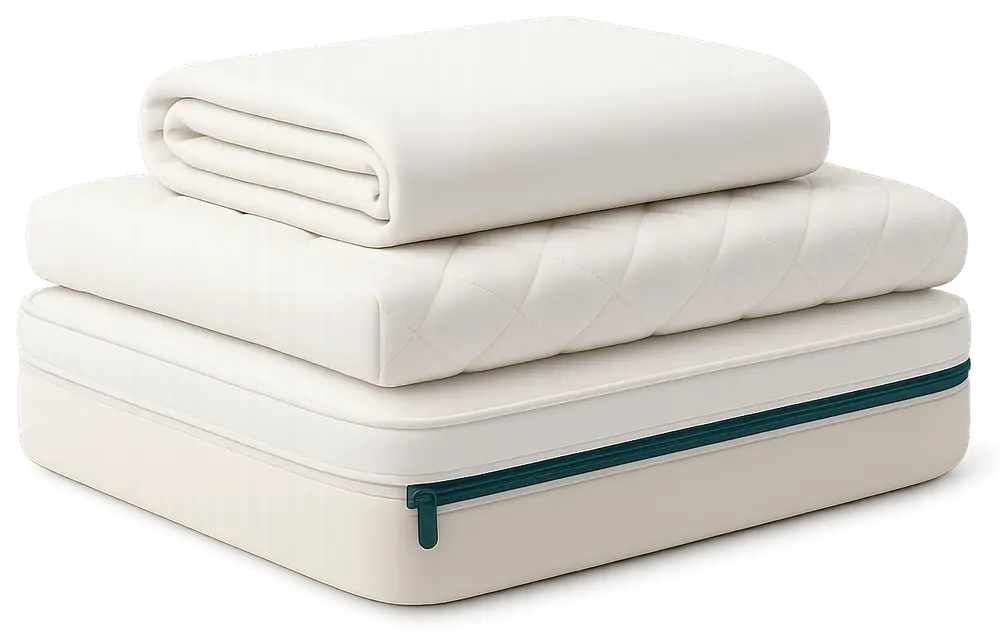
Choose a waterproof yet breathable model (polyurethane membrane, never PVC which makes you sweat and rustles), either a full fitted sheet or zipped encasement, the latter also provides a physical barrier against bed bugs and dust mites. Have at least two protectors per bed: while one is in the wash, the other is on the bed.
Care: wash after every departure if in doubt, and at least once a month in heavy use, the same frequency as duvets and pillows, which are washed monthly as standard in hospitality (Direct Hôtellerie). Replace any protector that’s yellowed, stiffened or lost its waterproofing without hesitation.
When to replace a mattress (and how to plan for it)
Even perfectly maintained, a rental mattress has a shorter lifespan due to heavy use: expect 5 to 7 years, compared to around 10 years for a domestic mattress. Some signs can’t be fixed by cleaning:
- Visible sagging or a dip in the centre: guests will notice on the first night.
- Set-in stains or multiple marks that resist cleaning: even if clean, the mattress looks dirty.
- Persistent odour after bicarbonate and steam treatment.
- Noticeable springs, collapsed edges, squeaking.
Rather than facing an emergency replacement 48 hours before check-in, plan ahead: note the year of purchase for each mattress in the property file, stagger replacements across properties, and use your seasonal deep clean to assess each bed, the kind of check to include in the protocol described in Deep Seasonal Cleaning for Short-Term Rentals. Tip: a quality mattress topper (£60 to £120) extends the life of a sound mattress, boosts the “hotel bedding” feel and is much cheaper to replace. It’s worth it: cleanliness and bedding directly impact guest ratings, as detailed in the Airbnb Help Centre.
Spotless mattresses, stay after stay
A clean mattress goes unnoticed, but a neglected one shows up in your reviews. With a simple protocol (inspection at every turnover, immediate stain removal, protectors on every bed, planned replacement), bedding hygiene becomes routine, never an emergency.
To make sure this protocol is followed at every clean, Cleanclac includes mattress inspection in checklists with mandatory photos: your team ticks off each point and you check the bedding remotely, with proof. Discover cleanclac.com and turn your hygiene standards into team reflexes.
Your questions
How often should you clean a mattress in a short-term rental?
Visual inspection at every guest change, full vacuum once or twice a month, and a deep clean with bicarbonate once a month, the frequency recommended by bedding specialists. For allergy-prone guests or very heavy use, vacuum every fortnight, always with a washable mattress protector.
How do you remove a yellow ring from a mattress?
Apply a paste of bicarbonate of soda and water for 30 minutes, then dab with a cloth soaked in diluted white vinegar. Rinse with a damp cloth and dry thoroughly (airing or warm hairdryer). For old marks, repeat the process rather than soaking the mattress all at once.
Does a steam cleaner kill dust mites and bed bugs?
Yes: steam over 100°C kills dust mites, bacteria and bed bugs at all stages, including eggs, as long as you go slowly over the whole surface, seams included. It’s the ideal complement to washing bedding at 60°C. Allow several hours to air before putting the protector and sheet back on.
Should every bed in a holiday rental have a mattress protector?
Absolutely, including sofa beds. A waterproof, breathable protector at £15-30 protects a mattress worth ten to twenty times more, blocks liquids and allergens, and is machine washable between stays. Have two protectors per bed for rotation, and choose a full zipped encasement for a bed bug barrier.
When should you replace a mattress in a short-term rental?
Expect 5 to 7 years in heavy rental use, compared to around ten years domestically. Replace immediately if there’s central sagging, set-in stains that resist cleaning, persistent odour or noticeable springs. Note the purchase year in each property’s file to plan and spread out the renewal budget.
A guest reports a stain on the mattress: what should you do?
Respond quickly, apologise and offer an immediate solution: cleaning team visit, fresh protector and linen, or even a goodwill gesture. Document with before/after photos, treat the stain according to type, then feedback to your team to understand why the inspection missed it.

Written by Janik
Published on August 7, 2026 · Updated on August 12, 2026
Read next
 Complete Airbnb Cleaning Checklist: Never Miss a SpotRoom-by-room Airbnb cleaning checklist: optimal order, commonly missed spots, final checks. The method for a spotless property at every turnover.Cleaning tips
 Clean an Airbnb in 1 Hour Flat: The MethodMinute-by-minute method to clean an Airbnb in 1 hour: room order, equipment, timing per area and pro tips to keep to the clock.Cleaning tips
 15 essential cleaning products for short-term rentalsComplete cleaning kit for your Airbnb: the 15 must-have products, their specific uses, annual budget, and where to store them in your property.
Move from theory to practice.
One property free to put all of this in place, for as long as it takes.