How to Dust and Disinfect a Rental: Room-by-Room Method
How to dust properly in 6 steps, room by room from ceiling to skirting boards, then disinfect touch points: contact time, colour-coded cloths, mistakes.
15 min read
Cleaning and disinfecting are not the same task, and confusing the two is the most common mistake in short-term rental cleaning. Spraying disinfectant onto a dusty surface does not disinfect anything: it just sticks the dust down. Wiping a handle with a dry cloth does not remove any germs. The order matters, the contact time matters, and above all, the list of surfaces to treat is not what you might expect. This guide shows how to dust properly, room by room, then how to disinfect the points that guests actually notice.
How to Dust Properly: the 6-Step Method
- Air the room first and switch off fans and air conditioning: the dust you lift should not travel from room to room.
- Work from top to bottom: ceiling and lights, then shelves and tops of furniture, then surfaces at hand height, and skirting boards last.
- Go round the room in one direction, starting from the door: you always know where you are, and no surface is missed.
- Use a slightly damp microfibre cloth folded in four, and turn it as soon as a side goes grey.
- Lift objects rather than wiping around them: the dust guests notice is under the lamp, the remote and the photo frame.
- Vacuum only afterwards, and the floor at the very end: it picks up whatever the cloth knocked down.
Disinfecting touch points comes next, with its own rules, detailed further down.
The Two Steps and What They Involve
| Task | Frequency | What it covers |
|---|---|---|
| Dusting | Every clean | Horizontal surfaces, furniture, decor |
| Disinfecting surfaces | Every clean | Touch points, bathrooms, kitchen |
| Vacuuming corners | Every clean | Corners, skirting boards, under furniture |
| Dusting the TV | Every clean | Screen and remote control |
| Dusting light fittings | Monthly | Lampshades, pendants, bulbs |
| Cleaning light switches | Every 4 cleans | The most-touched point in the property |
| Cleaning doors | Every 4 cleans | Especially around the handle |
| Cleaning skirting boards | Monthly | The dust line at floor level |
| Removing cobwebs | Monthly | Ceilings, corners, under furniture |
| Dusting artificial flowers | Monthly | Dust shows up quickly here |
| Wiping inside cupboards | Every 4 cleans | Shelves and wardrobe, before hangers go back |
| Cleaning inside drawers | Every 4 cleans | Crumbs and forgotten items at the back |
| Cleaning chairs | Every 4 cleans | Seat, back and rungs |
| Cleaning furniture legs | Monthly | Dust and mop marks |
| Dusting radiators | Monthly | Between sections, before heating season |
| Dusting the fan | Monthly | Blades and grille, unplugged |
| Removing marks from walls | Every clean | Fingerprints, suitcases, chair backs |
These frequencies are the default suggested by the library; each manager adjusts them to their property. The order, however, is unchanging: air out, dust, then disinfect, then do the floors. Each step dirties the previous one if you reverse them. The initial airing, which starts the clean, is detailed in the departure round, and floor care, which finishes it, in the floor cleaning method.
All these tasks exist in the library, with their visuals and advice. The benefit of having them separated rather than grouped under a single “dusting” task: each one gets ticked off, and any omission is obvious.
 Air the room
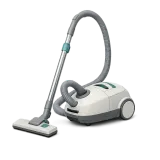 Vacuum the floors
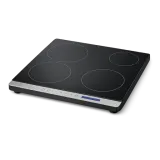 Clean the hob
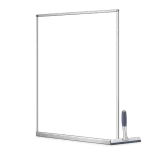 Clean the shower screen
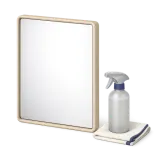 Clean the mirrors
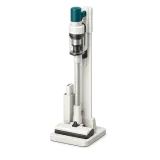 Check the stick vacuum
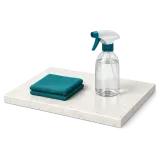 Clean the worktop
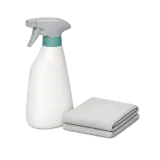 Disinfect surfaces
150+ illustrated tasks
On the manager side, you build the checklist by ticking illustrated tiles, sorted by family, ready in seven languages.
More detailsDusting: Dry or Damp, Never In Between
Dust is not removed, it is captured. A traditional feather duster just puts it back into the air, and it settles again twenty minutes later on what you have just cleaned.
A slightly damp microfibre cloth is the best tool for almost all surfaces: it traps dust instead of moving it around. Damp, not wet: folded in four, it gives you eight clean sides, and you change side as soon as one is loaded.
Three exceptions to treat dry:
- Screens, including the TV, with a dry or barely damp microfibre and plain water. Never use any product, alcohol or ammonia, which damage the anti-glare coating.
- Raw or oiled wood, which absorbs water.
- Fabric lampshades, to be vacuumed with the brush attachment.
The order in the room follows that of the whole property: top to bottom. Light fittings, high shelves, tops of furniture, worktops, and only then the floors.
Dusting Room by Room
Each room has its dust traps and its classic oversights. Use the table as a guide for a changeover clean; the rhythm of deeper tasks is given above.
| Room | Where dust builds up | What is often missed |
|---|---|---|
| Living room | TV unit, shelves, coffee table, frames | Top of the TV, window sills, plant leaves |
| Bedroom | Bedside tables, headboard, chest of drawers, lamps | Under the bed, top of the wardrobe, lampshades |
| Kitchen | Tops of wall cupboards, extractor hood, top of the fridge | Greasy dust: a dry cloth just smears it |
| Bathroom | Shelves, ledges, extractor grille | Top of the bathroom cabinet, heated towel rail |
| Hallway and entrance | Console table, shoe cabinet, door frames | Tops of doors, light switches, key box |
| Home office | Desk, screen, lamp, shelves | Cables, printer, underside of the desk |
In the kitchen, dust mixes with cooking grease: a dry cloth turns it into a smear. Use a damp microfibre cloth with a drop of washing-up liquid, then rinse with clean water.
Ceilings, Walls and Lights: Dusting Up High
Ceilings are rarely dusted, yet they quickly give away a poorly kept rental: cobwebs in the corners, fluff above the lights, a grey veil around the extractor vent. The tool is the same as for cobwebs, a telescopic pole with a microfibre head, or a flat mop fitted with a clean, dry cloth.
- Start the room with the ceiling, before making the bed, so nothing falls on the clean linen.
- Switch off the lights and let the bulbs cool before wiping them, always dry.
- Only do the walls when needed, dry, in vertical strips from top to bottom.
Once a month is enough in most properties; more often in a country house or in autumn, when cobwebs come back within days.
Touch Points: The Real List
This is where the difference lies between a clean property and a healthy one. The surfaces we look at are not the ones we touch, and it is the latter that transmit germs.
The list to treat with disinfectant at every departure:
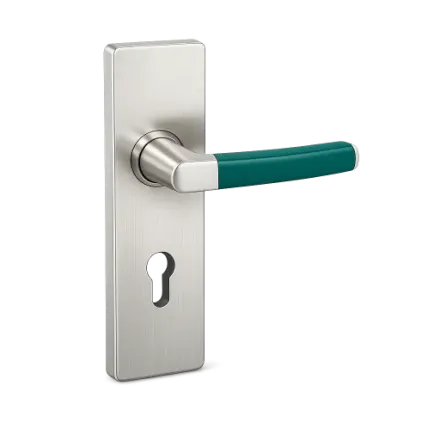
Door handles, both sides
Including the front door and cupboard handles.
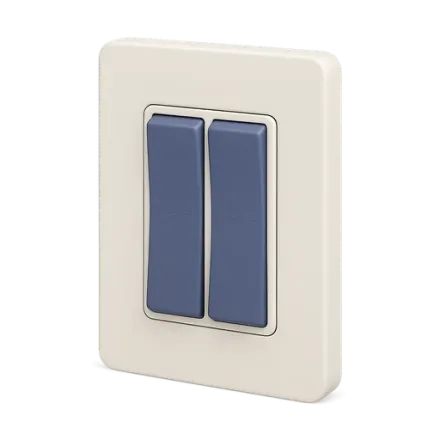
Light switches and sockets
The most-touched and least-cleaned surfaces in the property.
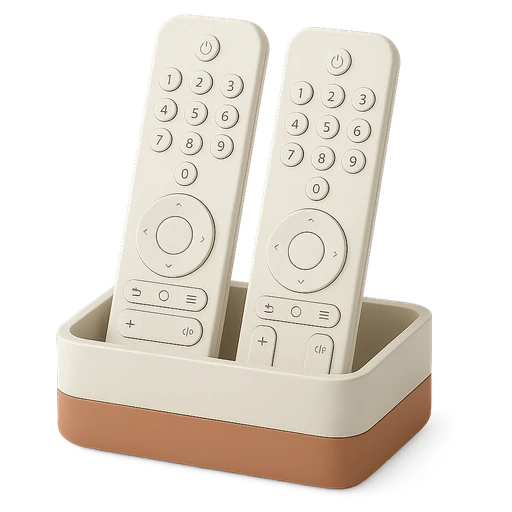
Remote controls
For the TV and air conditioning. They are handled throughout the stay.
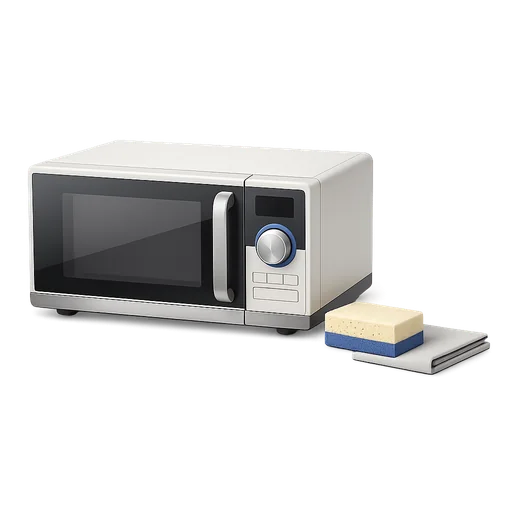
Appliance handles
Oven, fridge, dishwasher, microwave.
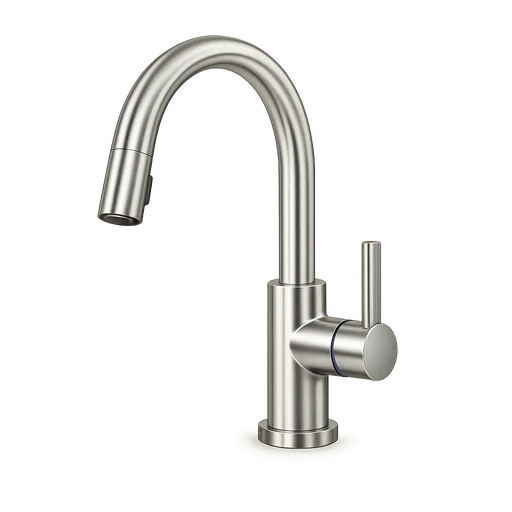
Taps and flush buttons
Including levers.
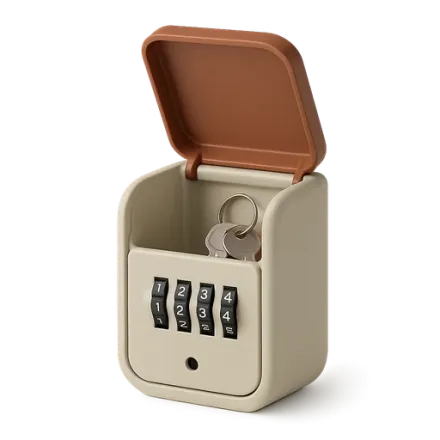
Stair rails, roller shutter buttons, keys and key box.
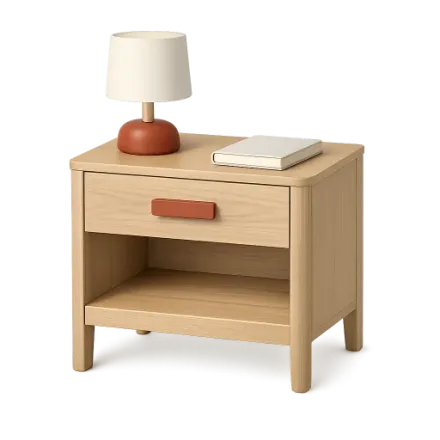
Bedside tables and headboards
Often touched, rarely wiped.
A remote control should be cleaned with a wipe or a microfibre dampened with disinfectant, never sprayed directly: liquid seeps between the buttons and ruins it.
High and Hidden Areas
These are the surfaces a rushed cleaner does not look at, and which the guest discovers lying on the bed or putting away their suitcase.
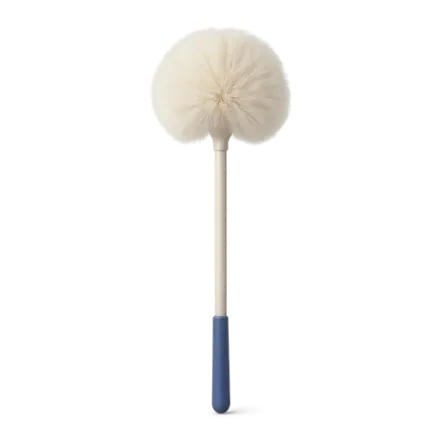
Cobwebs
In ceiling corners, behind curtains, under furniture and around outdoor lights. A soft broom head on a telescopic handle, used once a month in normal rotation and more often in a country house or in autumn, when they reappear in days.
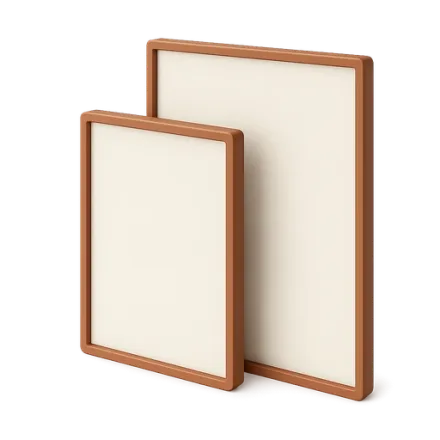
Tops of doors, wardrobes and picture frames
Invisible when standing but obvious from a high bed or mezzanine.
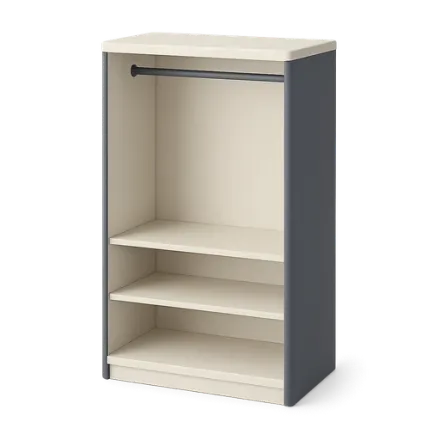
Inside cupboards
Shelves and wardrobe rails, kitchen and hallway cupboards, wiped before hangers and crockery are put back: guests put their clean clothes here, and a hair or crumb is immediately visible.
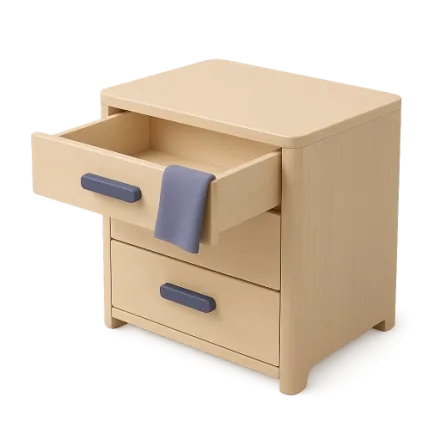
Inside drawers
Bedside tables, chests of drawers, kitchen, bathroom. First remove anything left behind: crumbs, receipts, hair ties, forgotten items to be set aside, then wipe with a damp microfibre right into the corners and leave the drawer slightly open for a minute to dry. A guest who finds the previous guest’s things in a drawer will judge the cleaning more harshly than anything else in the room.
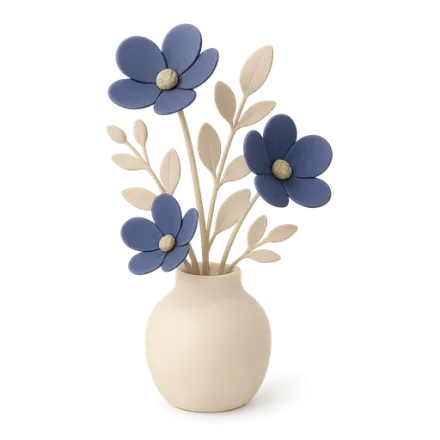
Artificial flowers and plants
Which quickly gather a visible grey dust in natural light. A dry cloth, or a blast of cold air from a hairdryer for delicate arrangements.
The doors themselves
Especially around the handle and at the bottom, marked by feet and suitcases.
Chairs and Furniture Legs
Chairs and table legs live at floor level, where the eye does not go during cleaning but immediately falls when you sit down. Dust clings here, the mop leaves a grey line, and a single crumb stuck to a seat is enough to cast doubt on the rest.
Chairs, every four cleans, more often in properties that host families:
- Fabric seats and backs: vacuum with the brush attachment, paying special attention to the join between seat and back, where crumbs collect. Treat stains immediately with a damp cloth and mild soap, blotting rather than rubbing.
- Wood, metal and plastic: damp microfibre, then dry wipe. For oiled or waxed wood, no detergent: a barely damp microfibre is enough.
- Rungs and the underside of the seat, which no one looks at but everyone touches when pulling out the chair. Turn the chair upside down on the table if easier, then put it back in place.
Furniture legs, once a month: tables, chairs, sideboards, bed frames. A damp cloth all the way down, then the bottom, where each pass with the mop leaves a little product and dust. Check the felt pads as you go: a missing pad will scratch the floor in a single stay, and is far easier to replace than a floorboard.
Radiators and Fans
These two appliances move the air in the room, and what they collect, they send back out. A dusty radiator gives off a burning smell the first time it is switched on; a fan with grey blades blows dust onto the bed as soon as it is turned on. Both should be dusted once a month, with the appliance off and cold, and unplugged for the fan.
- Radiator: a radiator brush, long and thin, or the vacuum’s crevice tool, between the sections and from top to bottom. Place a damp towel underneath to catch what falls. Finish with the front and top, damp microfibre. The most important clean is before winter: do it before turning the heating back on, not after.
- Fan: both sides of the blades, then the grille, with a damp microfibre. If the front grille unclips, remove it, wash it in soapy water and let it dry before putting it back. The base and cable of a pedestal fan should be dusted too.
- Ceiling fan: use a stable stepladder, never stand on a bed. Slip an old pillowcase over each blade and pull it off: the dust stays in the case instead of falling on the bedding.
Marks on Walls
Walls always get marked in the same places: around light switches, along corridors at suitcase height, behind chairs, above the headboard. At every clean, a glance at these areas is enough, preferably in raking light, which reveals what direct light hides.
The method goes from gentlest to strongest, and stops as soon as the mark is gone:
- A barely damp microfibreNo product: most fingerprints come off this way.
- A drop of mild soapIn water, dabbed on, then wiped with clean water.
- A damp magic spongeFor shoe and suitcase marks. It is a very fine abrasive: rub without pressing, on a small area.
Always test in a discreet corner. On matt paint, rubbing and the magic sponge leave a shiny patch, more visible than the original mark; on non-washable wallpaper, even water alone can leave a ring. In these cases, a touch-up with a brush is better than rubbing: keep a small pot of the property’s paint, with its reference written on the lid.
A mark that will not come off, a dent, a hole or flaking paint is no longer a cleaning issue: it is damage, to be photographed and reported the same day, as detailed in the guide to damage.
Contact Time: The Step Everyone Skips
A disinfectant does not work instantly. It acts for the duration stated on the label, usually between thirty seconds and five minutes depending on the product. Spraying and wiping immediately is just cleaning, not disinfecting.
The method that saves time instead of wasting it: spray all surfaces in an area first, do something else, then come back to wipe. In a bathroom, spray the sink, taps, toilet and screen, go and work in the bedroom, then come back to wipe. The contact time runs while you are working elsewhere.
Two safety rules that are non-negotiable:
- Never mix two products, especially bleach and descaler or vinegar: the reaction releases chlorine gas, toxic in enclosed spaces.
- Ventilate while using disinfectant products, which cleaning already does if you start by opening the windows.
General recommendations for cleaning products and ventilation are detailed by ADEME and ANSES. For bathrooms, which require their own equipment and order, see the bathroom, sink, mirrors and glass guide.
Colour Coding for Cloths
Using a single cloth for the whole property transfers germs from the toilet to the kitchen worktop. Colour coding is the simplest solution, used throughout professional cleaning:
- Red: toilets and surrounds.
- Blue: sink, shower, bathroom surfaces.
- Green: kitchen and worktops.
- Yellow: furniture, general surfaces.
The exact convention does not matter as long as it is consistent from property to property and cleaner to cleaner. Make sure you have enough microfibres accordingly, and wash them with tea towels, never with bath linen.
Equipment and Products to Keep On Site
A well-equipped property saves more time than a fast cleaner. The minimum for surfaces:
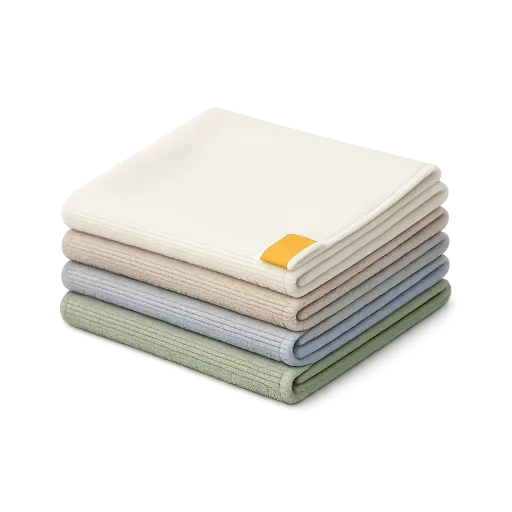
Eight to ten microfibres
In the code colours, washed at 60°C;
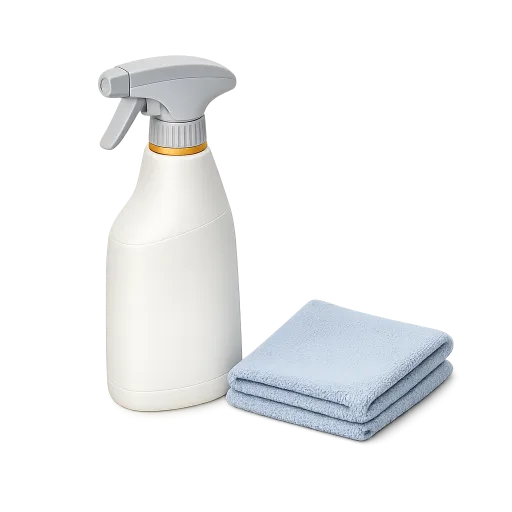
A multi-purpose spray
For general cleaning: spray, leave to act, wipe;
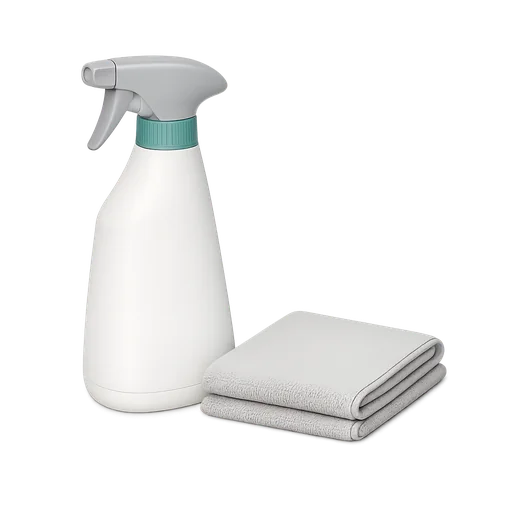
A surface disinfectant
With a contact time that fits your cleaning routine;
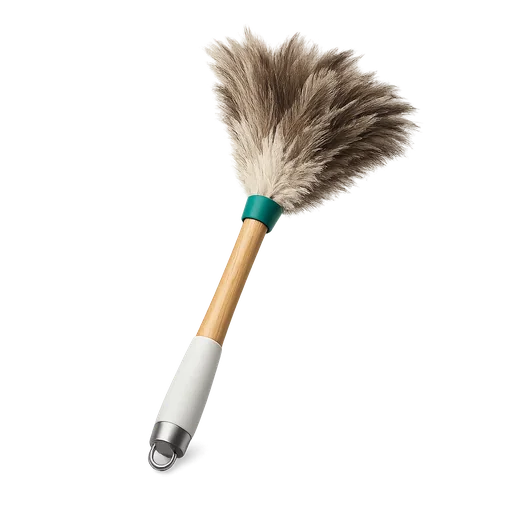
A soft, telescopic duster head
For ceilings and light fittings;
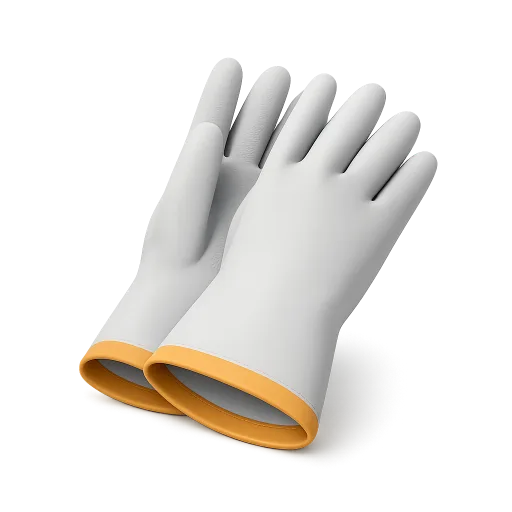
A pair of cleaning gloves
For each regular cleaner.
These products always run out the day you need them. In CleanClac, the multi-purpose spray, generic disinfectant (“Cleaning products”), microfibre cloths and cleaning gloves can all be tracked in stock, bottle by bottle or as a single item: when the chosen threshold is reached, the property is flagged and an email summarises what needs to be restocked. The full list of useful products is in the 15 essential cleaning products.
 1


Warned before you run out
Below its threshold, the item turns red and the property is flagged in the app.
More detailsDelicate Surfaces
Three materials are damaged by standard products, and the guest will only notice once the mark is permanent:
- Brushed stainless steel: always wipe in the direction of the grain, with a dedicated product or a damp microfibre, then buff dry. Circular motion leaves visible swirls in raking light.
- Marble, travertine and limestone: no acidic products, neither vinegar nor descaler. Acid permanently etches the stone.
- Oiled wood: very little water, never alkaline detergent, treat with oil once a month.
Why Dust Comes Back So Fast, and How to Slow It Down
A large share of household dust is generated indoors: fibres from sheets, towels and rugs, dead skin, plus particles coming in through the windows and on shoes. In a rental where the linen changes with every stay, it is normal for dust to come back quickly. A few habits slow it down:
- A large doormat outside and another inside hold back a good part of what comes in on shoes.
- Fewer decorative objects on display means fewer surfaces to dust and less visible dust between two cleans.
- Dirty linen is rolled up without shaking it in the bedroom, and clean linen is not folded on the freshly made bed.
- Clogged ventilation grilles and air conditioning filters blow dust into the rooms: clean them at their own rhythm.
- A vacuum cleaner with a good filter keeps the dust in instead of blowing it back into the air.
The rest is method: a damp cloth rather than a feather duster, top before bottom, vacuum last.
Your questions
What is the difference between cleaning and disinfecting?
Cleaning removes visible dirt, disinfecting eliminates micro-organisms. The two steps follow each other and are not interchangeable: disinfectant applied to a dusty surface does not reach the surface. Clean first, disinfect after, do the floors last.
Which touch points should be disinfected at every departure?
Door and cupboard handles, light switches, sockets, remote controls, appliance handles, taps, flush buttons, rails, shutter buttons, keys and key box. These are the most-touched and least-wiped surfaces, so they really matter.
How long should disinfectant be left to act?
The time stated on the label, usually thirty seconds to five minutes. Spray a whole area, go and work elsewhere, come back to wipe: the contact time runs while you are working, and you do not lose a minute.
How do you clean a TV screen without scratching it?
A dry or barely damp microfibre with plain water, no product at all. Alcohol and ammonia irreversibly damage the anti-glare coating. For the remote, dampen the cloth with disinfectant rather than spraying it, or you risk flooding the electronics.
Should you use different coloured cloths?
Yes, it is the simplest way to avoid transferring germs from the toilet to the kitchen. One colour per area, the same convention for all your properties and all your cleaners. Wash these microfibres with tea towels, never with bath linen.
How do you remove a mark from a wall without damaging the paint?
Start with a barely damp microfibre, then a drop of mild soap, and only use the magic sponge as a last resort, without pressing. Always test in a discreet corner: on matt paint, rubbing leaves a shiny patch. A stubborn mark is better touched up with a brush than rubbed.
Can you mix bleach and vinegar?
No, never. The mixture releases chlorine gas, dangerous in enclosed spaces like a bathroom. The same caution applies to bleach and acidic descalers. Use one product at a time, rinse between two, and ventilate throughout the clean.
How do you dust properly?
Air the room, then work from top to bottom with a slightly damp microfibre cloth, going round the room in one direction and lifting objects. Turn the cloth as soon as a side goes grey, and vacuum only at the end, floor last.
Should you dust or vacuum first?
Dust first. Whatever falls from furniture and shelves ends up on the floor: if you have already vacuumed, you have to start again. Dust from top to bottom, disinfect the touch points, then vacuum and wash the floors last.
How do you dust a ceiling?
With a telescopic pole and a microfibre head, or a flat mop with a dry cloth, starting with the corners and around the lights. Do it before making the bed, with the lights off and cool, so the dust does not fall on the clean linen.

Written by Janik Thoisy
Janik Thoisy manages short-term rentals day to day and shares her cleaning and organisation methods here.
Published on August 13, 2026 · Updated on November 8, 2026
Read next
 Airbnb Cleaning Checklist: Room-by-Room List for HostsAirbnb cleaning checklist for every turnover: room-by-room list, cleaning order, a one-page version, Airbnb's 5 steps and the 10 spots everyone forgets.Cleaning tips
 Clean an Airbnb in 1 Hour: The Minute-by-Minute MethodClean an Airbnb in 1 hour: room order, timing by area, equipment kit, and the pitfalls that make the clock run over between guests.Cleaning tips
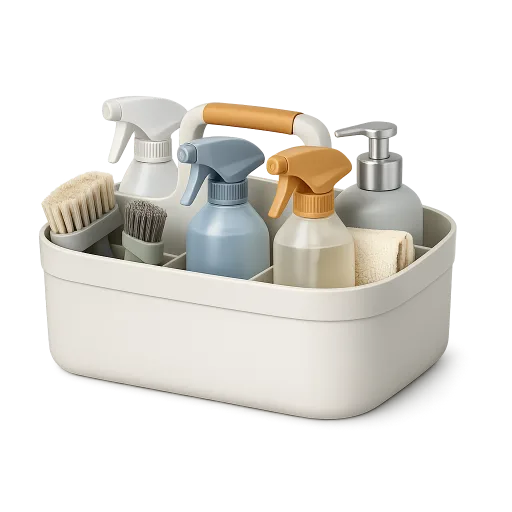 Airbnb Cleaning Supplies: 15 Essentials for Your KitAirbnb cleaning supplies: the 15 essential products for a short-term rental, their uses, annual budget, reserve to keep and stock tracking.
One property free to put all of this in place, for as long as it takes.