
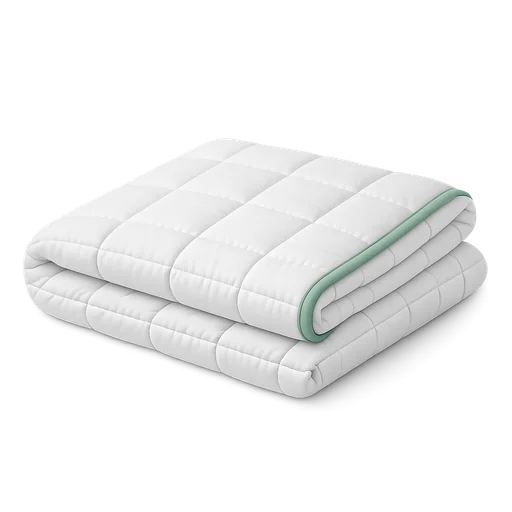
Duvet, mattress protector, pillows: care in short-term rentals
Bedding you don't change after every guest: how often to wash duvets, mattress protectors and pillows, and how to care for them without damage.
Under the fitted sheet and duvet cover, there's a layer that no one changes between guests and that many hosts never wash: the mattress protector, the duvet, and the pillows. Yet this is where the lifespan of your bedding is decided, and it's the first place a demanding guest will check by lifting a corner of the sheet. This guide gives you the real cleaning frequencies, the washing method for each item, and the signs that tell you it's time to replace rather than wash.
The invisible layer cycle
| Item | Recommended frequency | Replacement |
|---|---|---|
| Mattress protector | Every month | Every 2 to 3 years |
| Duvet | Every month | About every 5 years |
| Blanket or throw | Every month | When visibly worn |
| Pillow | Every 3 to 6 months | Every 2 years |
| Mattress (vacuuming) | Every month | 10 years |
These timings are for normal rotation. Two events override them and require immediate washing, no matter when you last did it: a stain that soaks through, and a stay with a pet or young child reported.
The mattress protector: the most cost-effective bedding item
It costs a few dozen pounds and protects a mattress worth several hundred. It's the only piece of bedding where skipping it has an instant cost: a stain on a bare mattress, and the mattress needs replacing.
Choose one that's waterproof and breathable, made of brushed cotton with a polyurethane membrane. Pure plastic waterproof types make you sweat and rustle loudly when you move, which guests will comment on.
Three washing precautions, as the membrane is delicate:
- 60°C maximum, and always check the label. Any hotter, and the membrane peels off, turning your protector into a plain sheet.
- No hot tumble drying. Dry on a low setting or air dry. High heat causes the membrane to blister, permanently.
- No fabric softener, which clogs the pores and removes breathability.
Have two mattress protectors per bed, not just one: when you need to wash one urgently after an incident, you won't have three hours to spare.
The duvet: wash or air
A duvet needs washing less often than you think, but airing much more often than most people do.
Monthly washing is fine for synthetic duvets, which can go in the machine at 60°C if the drum is at least 7kg for a 140cm duvet, and 9 to 10kg for a 240 x 260cm. Any smaller, and the duvet won't turn, won't rinse, and will come out with clumped filling.
The trick to keep it fluffy: two or three laundry balls in the drum, then a full tumble dry with the same balls. A half-dried duvet keeps a damp core that will go mouldy unseen.
Down duvets don't go in a domestic machine. Take them to a dry cleaner once or twice a year and air them in between.
Airing is the daily step that replaces half your washes: at every clean, fold the duvet down to the foot of the bed and let the room air out while you work. Twenty minutes with the window open is enough to clear out the night's humidity.
Pillows: the most neglected item
A pillow absorbs sweat, oils and hair through the pillowcase. After two years, it weighs noticeably more than when new, and that's not clean filling.
The fold test tells you everything in five seconds: fold the pillow in half and let go. If it springs back instantly, it's fine. If it stays folded, it's dead, and no wash will revive it.
For synthetic pillows, wash every three to six months at 60°C, two at a time to balance the drum, with laundry balls and a full dry. Down pillows follow the same routine as duvets: dry cleaner.
Add a pillow protector to each pillow. They're cheap, wash with your regular bedding, and extend the pillow's life by a year or two. It's the same logic as a mattress protector, but for pillows.
The mattress itself
No one washes a mattress, but everyone should vacuum it. Once a month, with the mattress protector off, vacuum the whole surface and the seams. That's where skin flakes and dust mites build up.
Two extra steps: flip or rotate the mattress every three months to spread the wear, and let it breathe by airing the room during cleaning instead of remaking the bed straight away.
When to replace instead of wash
Three clear signs, best dealt with before a guest points them out:
- A smell that returns after washing. The filling is affected, and washing won't reach it anymore.
- Flat patches or lumps in a duvet or pillow: the filling has shifted, and it no longer regulates temperature.
- A stain showing through a white cover. Even if clean, it will be visible from the bed.
For a busy rental, budget for replacement rather than being caught out: a duvet every five years, pillows every two years, a mattress protector every two to three years per bed. It's a predictable expense, to be included in your costs just like the consumables detailed in Changing Bed Linen in Rentals: The 8-Minute Method.
Your questions
How often should you wash a duvet in a short-term rental?
Once a month for a synthetic duvet, as long as the drum is big enough: at least 7kg for a 140cm duvet, 9 to 10kg for a 240 x 260cm. A down duvet goes to the dry cleaner once or twice a year, with regular airing in between.
How often should you change the mattress protector?
Wash it every month and replace every two to three years. Wash at a maximum of 60°C, no fabric softener and no hot tumble drying: high heat peels off the waterproof membrane and the protector loses all use.
How do you know if a pillow needs replacing?
Fold it in half and let go. If it springs back instantly, it's still good; if it stays folded, the filling is flat and no washing will fix it. For a holiday let, plan to replace every two years, with a pillow protector to extend its life.
Can you wash a duvet in a domestic machine?
Only if it's synthetic and the drum is big enough for it to move freely. Add two or three laundry balls, then dry thoroughly in the tumble dryer with the same balls. A duvet with a damp core will go mouldy inside, even if you can't see it.
Should you air the room at every clean?
Yes, it's the step that replaces half your washes. Fold the duvet to the foot of the bed and leave the window open while you clean: twenty minutes is enough to clear out the humidity from the previous guests' stay.
How often should you vacuum a mattress?
Once a month, with the mattress protector off, over the whole surface and in the seams where skin flakes and dust mites collect. While you're at it, rotate or flip the mattress every three months: wear is spread out and your bedding lasts several years longer.
Read next
 Changing Bed Linen in Rentals: The 8-Minute MethodSheets, duvet cover, pillowcases: the step-by-step method to remake a furnished rental bed in 8 minutes, fold a fitted sheet, and know how often to change everything.Linen and laundry
 Bath linen for holiday lets: quantities, folding and rotationHow many towels per guest, which weight to choose, how to fold and present them: the practical guide to bath linen for short-term rentals.Linen and laundry
 Washing rental linen: temperatures and processSorting, temperature, dosing, drying, ironing: the complete linen process for a holiday let, with tips to avoid musty smells and greying linen.
Move from theory to practice.
One property free to put all of this in place, for as long as it takes.