Toilets, basin, mirrors and windows: the finishing touches that show
Cleaning toilets without missing what matters, a basin with a spotless overflow, streak-free mirrors and windows: the practical guide to finishing touches.
Toilets and mirrors are the two surfaces a guest checks without thinking, within the first five minutes. A streaky mirror in side light, a mark under the toilet seat, and the impression of cleanliness is gone, even if everything else is spotless. These finishing touches take little time but need the right technique, because the wrong one leaves a mark worse than nothing.
What to do, and when
| Task | Frequency | The bit most often missed |
|---|---|---|
| Clean the toilet | Every clean | Hinges and base of the pan |
| Clean the basin | Every clean | Overflow and waste cover |
| Clean the mirrors | Every clean | Corners and bottom edge |
| Clean the windows | Monthly | Tracks and handles |
| Change the toilet block | Every 2 weeks | The date, not the look |
Toilets: in the order that avoids cross-contamination
A toilet is cleaned from the cleanest to the dirtiest, never the other way round, and with kit that is never used elsewhere. This is the one place in the property where colour-coded cloths are not a nicety but a necessity.
- Squirt the gel into the bowlAnd under the rim as soon as you enter. It works while you do the rest.
- Clean the cistern, flush button, then the top of the seat.
- The underside of the seatThen the seat ring, then the outer rim of the bowl.
- The base of the pan and the floor around itThe most neglected and smelliest area.
- Finally brush the bowlAnd flush.
Two details that set apart a truly clean toilet:
- The seat hinges, where a yellowish deposit builds up, visible as soon as you lift the seat. A toothbrush and vinegar will shift it, and many seats unclip for a proper clean.
- The waterline ring in the bowl. This is not dirt but stained limescale. Lower the water level by pushing it down with the brush, then apply hot white vinegar or a descaling gel and leave for an hour.
The toilet block should be changed every two weeks, by the date not the look: an exhausted block still looks like a block. Write the date on the back of the cistern rather than relying on memory.
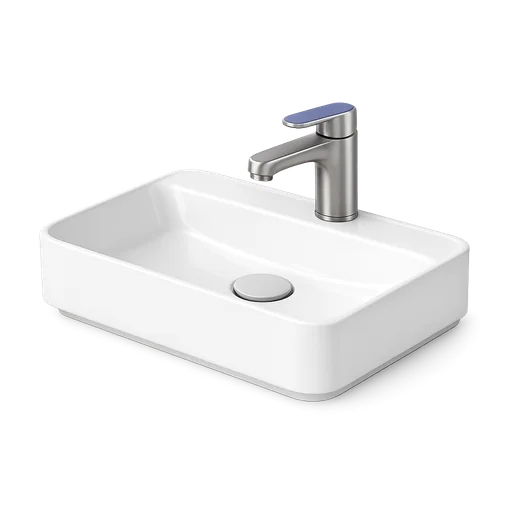
The basin and its overflow
The basin is quick to clean, but two areas are almost always missed:
- The overflow, that little opening under the rim. It contains a cavity that never dries out, and is a classic source of odour in an otherwise spotless bathroom. Pour in some bicarbonate of soda followed by white vinegar once a month, then rinse with hot water. On many models, the collar unscrews for a proper clean.
- The underside of the rim, where splashed toothpaste dries in white spots that no one sees from the front but everyone feels by touch.
For resin or composite stone basins, never use abrasives or acids: micro-scratches dull the surface and limescale then sticks.
Mirrors: not a single streak
Streaks on a mirror almost always come from too much product, not too little.
The reliable method:
- A barely damp microfibre cloth with plain waterOr water with a drop of vinegar.
- Wipe in an S shape, top to bottomNever going back over.
- Immediately buff with a second perfectly dry microfibreBefore the surface can air-dry.
It is the two cloths that make the result, not the product. A glass cleaner sprayed generously and wiped once will always leave a visible film as soon as the light hits from the side.
Always check the result from the side, never head-on: streaks only show in side light, exactly as the guest will see them on arrival.
Don't forget the bottom edge and corners of the mirror, where toothpaste splashes build up and where the cloth often stops three centimetres too soon.
Windows: once a month
Windows are done monthly, not at every clean: it's a long job and only lasts if the conditions are right.
Three rules that decide the result:
- Never in direct sun. The product dries before you can wipe and leaves a film that can't be fixed. Do it in the morning or on a cloudy day.
- Two directions: horizontal inside, vertical outside. If a streak appears, you know instantly which side it's on.
- Use a squeegee at an angle, wiping it after each pass, rather than a cloth that just moves the dirt around.
Don't forget the tracks and handles: that's where your attention shows, and on a patio door, a track full of sand jams the sliding mechanism, which is a real nuisance for guests.
Carpets and wall textiles, also monthly, are covered in Cleaning floors in a holiday let: order, tools, dosage.
Your questions
What order should you clean a toilet in?
From cleanest to dirtiest: cistern and flush button, then seat top, then seat underside and ring, then outer rim, then base and floor, and the bowl brushed last. Squirt the gel into the bowl as you enter so it works while you clean.
How do you remove the ring in a toilet bowl?
That ring at the waterline is stained limescale, not dirt. Lower the water level by pushing it down with the brush, apply hot white vinegar or a descaling gel, leave for an hour and brush. A brush alone will never shift it.
How do you clean a mirror without streaks?
A barely damp microfibre with plain water, wipe in an S from top to bottom, then immediately buff with a second perfectly dry microfibre. The two cloths make the result, not the product: too much cleaner is the main cause of streaks.
How often should you clean the windows in a rental?
Once a month is enough in most cases, more often by the sea or a busy road. Never do them in direct sun: the product dries before you can wipe and leaves a film. Don't forget the tracks and handles, which stand out as much as the glass.
How often should you change a toilet block?
Every two weeks, by the date not the look: a used-up block still looks the same long after it stops working. Write the date on the back of the cistern, it's the only reliable way when several people look after the property.
Where does the smell come from in a basin that looks clean?
The overflow, the little opening under the rim, which contains a cavity that never dries out. Pour in bicarbonate then white vinegar once a month and rinse with hot water. On many models, the collar unscrews for a proper clean.
Read next
 Complete Airbnb Cleaning Checklist: Never Miss a SpotRoom-by-room Airbnb cleaning checklist: optimal order, commonly missed spots, final checks. The method for a spotless property at every turnover.Cleaning tips
 Clean an Airbnb in 1 Hour Flat: The MethodMinute-by-minute method to clean an Airbnb in 1 hour: room order, equipment, timing per area and pro tips to keep to the clock.Cleaning tips
 15 essential cleaning products for short-term rentalsComplete cleaning kit for your Airbnb: the 15 must-have products, their specific uses, annual budget, and where to store them in your property.
Move from theory to practice.
One property free to put all of this in place, for as long as it takes.