

Dosing Consumables: The Method That Prevents Running Out
Calculate quantities per guest and per night, set an alert threshold, size the buffer stock and the cleaner's kit: the complete method.
Restocking is the most time-consuming part of running a short-term rental, and the least well-equipped. Most hosts go by feel: you look in the cupboard, you guess, you buy too much or not enough, and one day the cleaner calls because there’s no toilet paper left on a Sunday. This guide gives you a sizing method that works without a spreadsheet, whether you have one property or fifteen.
The principle: calculate per night, stock per capacity
Two concepts not to be confused.
Consumption is calculated per guest per night. This is the only unit that remains valid when the length of stays changes. A four-person property with twenty guest nights will use roughly the same amount in two one-week stays as in seven two-night stays, except for “per stay” consumables.
The quantity placed in the property is set to the maximum capacity. The cleaner never has to calculate, always puts out the same amount, and you’re not relying on a number of guests that’s often inaccurate.
These two logics work together: the first is for purchasing, the second for execution.
The three types of consumables
They behave differently and need to be stocked differently.
| Type | Used according to | Examples |
|---|---|---|
| Per night | Number of people × nights | Toilet paper, coffee, shower gel, pods |
| Per stay | Number of stays | Sponge, bin bags, welcome products |
| Per period | The calendar | Toilet block, diffuser, charcoal filter |
It’s the third type that causes problems, because you don’t see it coming: the toilet block every 2 weeks, the diffuser every 2 months, the extractor filter every 6 to 12 months. These deadlines must be managed by a system, never by someone’s memory.
The alert threshold rather than inventory
Counting the entire stock at every visit is unrealistic. The alert threshold is the only practice that works long-term: for each item, you define a minimum quantity expressed in number of stays, and you only check that.
The basic rule: a minimum equal to two stays’ worth of use, which gives you time to order and be delivered without ever running out.
In practice, the cleaner doesn’t estimate anything: they simply report when they go below the marker, for example a line drawn in the cupboard or a dedicated box. A binary signal, yes or no, is infinitely more reliable than asking someone to estimate a number when they have a clean to finish.
The buffer stock, in the property
A central stock at the manager’s place is useless if the cleaner is on site at 11am and discovers something is missing. Plan for a buffer stock in each property, sized for two stays, in a locked cupboard if necessary.
This stock contains the critical consumables, the ones whose absence is a blocker: toilet paper, bin bags, dishwasher tablets, sponges, washing-up liquid. The rest can be kept in a central stock.
Two classic mistakes: stock that’s too big, which ties up cash and goes out of date, and stock accessible to guests, which disappears much faster than expected. A locked cupboard isn’t about mistrust, it’s about proper sizing.
The cleaner’s kit
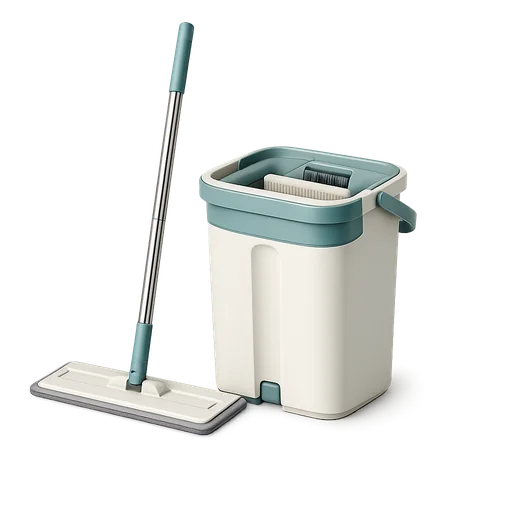
Don’t confuse the property’s consumables, meant for guests, with the cleaner’s kit, which goes home with them. Mixing them up means you’ll see microfibres and gloves vanish with every stay.
A typical kit, to be restocked like everything else:
Multi-purpose spray and floor cleaner
Refilled at every visit.

Microfibre cloths
By colour code, enough to never reuse a dirty cloth.

Cleaning gloves
Replaced regularly.

Bin bags
For their own use.
These tasks are on the checklist like any other, because a cleaner who arrives without product can’t do the clean as planned.
Calculating your consumables budget
Do the calculation in three steps, once, then it updates itself:
- List the itemsAnd their type (night, stay, period).
- MultiplyBy your monthly volume: guest nights for the first type, number of stays for the second, deadlines for the third.
- Work it out per guest nightThe only figure you can compare between properties.
This cost per guest night is what you should track, not the raw monthly spend: it immediately shows up any drift, for example a property where dispensers empty twice as fast as elsewhere, which usually means a leak or a badly adjusted pump.
Details of quantities per room are given in Bathroom Consumables: What to Leave and How Much and Kitchen Consumables: The Complete Holiday Let Checklist.
Tracking that survives a change of cleaner
Three pieces of information must live at property level, never in someone’s head: the list of consumables with their reference quantity, the alert threshold for each, and the date of scheduled tasks (toilet block, diffuser, filters). A replacement who takes over a property at short notice should be able to do exactly the same visit without calling anyone.
Your questions
How do you calculate the quantity of consumables for a rental?
Calculate usage per guest per night for purchasing, but always put out in the property the amount for maximum capacity. The cleaner then has nothing to estimate, and you’re not relying on a number of guests that’s often inaccurate.
What is an alert threshold for a consumables stock?
A minimum quantity, expressed in number of stays, below which you reorder. Two stays’ worth is a good marker. The cleaner doesn’t count anything: they simply report when the stock drops below a physical marker, a line or a dedicated box.
Should you store consumables in the property or centrally?
Both. A buffer stock for two stays in each property for critical consumables (toilet paper, bags, tablets, sponges), and a central stock for the rest. A central stock alone is useless when the cleaner discovers a shortage on site.
How do you stop guests emptying the restock cupboard?
By keeping it in a locked cupboard, separate from what’s provided for them. It’s not about mistrust: an accessible stock is used at a normal domestic rate, which throws off all your calculations and empties the reserve before the planned date.
How do you track scheduled tasks like the toilet block?
They must be managed by a system, never by memory. The toilet block is changed every two weeks, the diffuser every two months, the extractor filter every six to twelve months. Note the date at property level so it survives a change of cleaner.
What figure should you track for the consumables budget?
The cost per guest night, not the raw monthly spend. It’s the only figure you can compare between properties, and it immediately shows up any drift: a property where dispensers empty twice as fast as elsewhere usually has a leak or a badly adjusted pump.
Read next
 Bathroom Consumables: What to Leave and How MuchToilet paper, soap, shower gel, shampoo, toothpaste: quantities per guest and per night, choosing dispensers or individual bottles, and the regulations.Checklists and quality
 Kitchen Consumables: The Complete Holiday Let ChecklistWashing-up liquid, dishwasher tablets, sponges, bin bags, kitchen roll, coffee filters: what you really need to leave in a holiday let kitchen, and in what quantity.Checklists and quality
 Wifi, hot water, batteries: pre-arrival checks that matterTechnical checks during a short-term rental clean: testing wifi, hot water, batteries and detectors, and why they prevent most evening guest calls.
Move from theory to practice.
One property free to put all of this in place, for as long as it takes.