

Change Bed Sheets in a Rental: 8-Minute Method, Linen Card
Change bed sheets in a rental in 8 minutes: 7 steps, fitted sheet, duvet cover roll, how often to change linen, and a linen card for long stays.
15 min read
The bed is the first thing a guest sees, and the last thing they will rate you on. It is also the task that eats up the most minutes during a clean: between the fitted sheet that refuses to fit, the duvet cover turned inside out three times, and pillowcases put on the wrong way, a poorly managed bed can easily cost fifteen minutes. Done properly, the same bed takes eight minutes, with no wrestling. This guide shows how to change bed sheets step by step, in the right order, what needs changing and how often, and who should strip the beds.
How to change bed sheets: the 7 steps at a glance
- Air the room and lay the full set for this bed at its foot: fitted sheet, duvet cover and pillowcases.
- Strip the bed: remove forgotten items, roll the dirty linen inwards and put it straight into a dedicated bag.
- Check the bare mattress protector with the ceiling light on: one stain or ring, and it gets changed today.
- Fit the bottom sheet diagonally, top left corner then bottom right, and smooth it in a single sweep.
- Put the duvet cover on with the roll method, without ever lifting the duvet above your head.
- Slide on the pillowcases by turning your hands inside them, then plump the pillows with one firm shake.
- Finish: duvet flat, a crisp fold, cushions in place, and a photo of the bed if the clean is delegated.
Each step is detailed below, with the time it should take: once the method is learnt, a double bed is changed in eight minutes.
What to change, and how often
Not all bed linen follows the same cycle. Mixing them up means either washing unnecessarily or letting a guest sleep on the previous guest’s protection.
| Item | Recommended frequency | Why |
|---|---|---|
| Fitted sheet | At every clean | Direct contact with skin |
| Duvet cover | At every clean | Direct contact, night-time perspiration |
| Pillowcases | At every clean | Most exposed: sebum, hair, saliva |
| Mattress protector | Every month | Washable barrier, invisible but loaded |
| Duvet | Every month | Rarely soiled, but absorbs |
| Blanket or throw | Every month | Depending on use and season |
| Sofa bed | According to booking | Only if this bed is used |
The mental rule is simple: anything that touches the skin is changed at every departure, anything that protects the mattress is changed monthly. The mattress protector is the most forgotten of all, yet it is there to absorb what gets through the sheet. Its care, like that of the duvet and pillows, has its own guide: caring for duvets, mattress protectors and pillows.
The trap with monthly tasks is that they never fall on the same day as the rest: no one remembers that the last clean mattress protector was five weeks ago. This is exactly what a checklist with spaced-out tasks solves.
 Vacuum the floorsEvery cleaning
 Clean the fridgeEvery 4 cleanings
 Clean the ovenEvery 4 cleanings
Every task, its own rhythm
The oven every 6 cleanings, the air vents every 3 months: each task only shows up when its turn comes.
More detailsPrepare before stripping the bed
Time is lost in back-and-forth, not in the actions themselves. Before touching the bed, place the complete set for that bed on a chair or at the foot of the bed: fitted sheet, duvet cover, pillowcases, in that order of use. One set per bed, never a shared pile for the whole property, or you’ll be running back down three flights for a pillowcase.
Two habits that save time all season:
- A complete set stored inside one of its own pillowcases. Grab one bundle, you have everything, in the right size. No more pulling out a 140 sheet for a 160 bed.
- A marker sewn or marked on the long hem of the fitted sheet and duvet cover. A stitch, a label, a textile marker: you know by touch which way to present the item, and you no longer have to rotate it twice.
Stripping the bed without contaminating the clean linen
Stripping seems trivial, but this is where hygiene and much of the lost time are decided. Four steps, always in the same order:
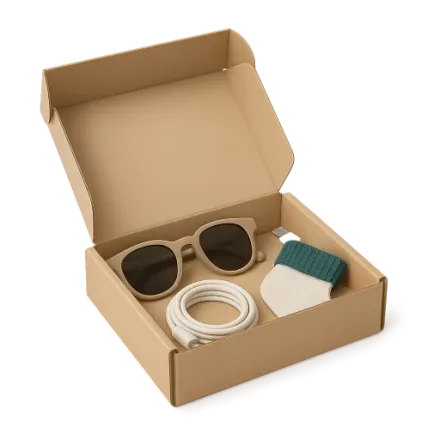
First remove any forgotten items
Phone under the pillow, sock at the foot of the bed, earring in the duvet cover fold. Once the linen is bundled in the bag, they’re lost, and it’s a guest message to deal with.
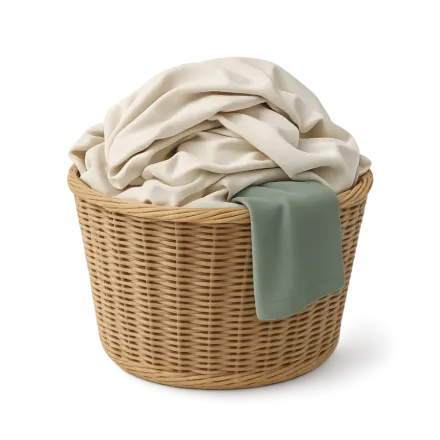
Roll the dirty linen inwards
Without shaking it: shaking a used sheet spreads dust, hair and skin flakes around the room you’ve just dusted.
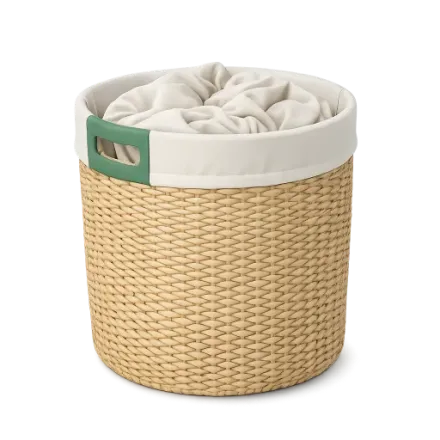
Put it straight into a dedicated bag or basket
Never on the floor or on clean linen. This is the “forward flow” principle from hospitality: dirty and clean never cross.
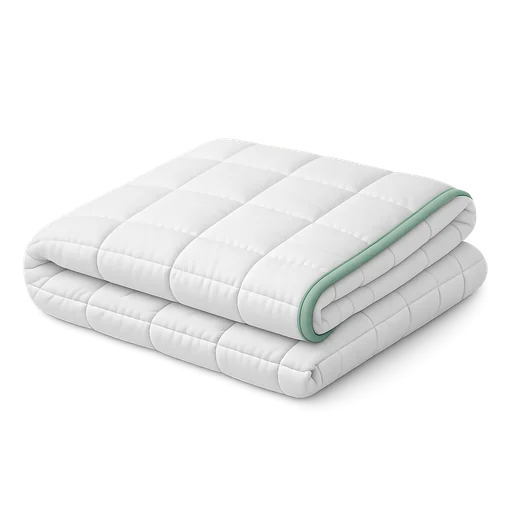
Inspect the bare mattress protector
With the ceiling light on: a stain, ring or hair visible means it must be changed immediately, not waiting for the monthly cycle.
Allow one minute for these four steps. This is the minute that avoids the “there was a hair in the bed” comment, one of the most damaging for cleanliness ratings.
The fitted sheet, in three steps
A fitted sheet is put on diagonally, not by walking around the bed. The sequence:
- Top left corner, then bottom right.By going diagonally, the sheet stretches itself and you never go over the same spot twice.
- The remaining two cornersStraight after.
- A flat hand smoothing the creaseFrom the centre to the edges, just once.
For a bed against a wall, always start with the two corners on the wall side: these are the only ones that require lifting the mattress, and you don’t want to do that once the rest is tight.
Folding a fitted sheet so it looks like a flat sheet
This is the move no one shows, but it transforms a holiday let cupboard. A balled-up fitted sheet takes the space of three, and is hard to spot in a pile.
- Put both hands into two adjacent cornersOn the same long side, with the wrong side of the sheet facing you.
- Turn one corner over the otherThe first covers the second, elastic inside elastic. You now have two nested corners on one hand.
- Take the two corners on the opposite sideAnd nest them the same way.
- Nest the first bundle with the second.All four corners are now inside each other, the elastic forms a neat L.
- Lay flat, tuck the elastic arcInwards to make a rectangle, then fold in three like a flat sheet.
Allow three tries before this feels natural. After that, it takes twenty seconds and your linen pile stands straight.
The duvet cover: the roll method
Turning a duvet cover inside out above your head is the slowest and messiest move: the cover sweeps the floor. The so-called roll method, or California method, avoids both.
- Turn the cover inside outAnd lay it flat on the bed, opening at the foot.
- Lay the duvet on topWell aligned, and attach the two top corners: your hand goes inside the cover corner and grabs the duvet corner, from inside.
- Roll the whole thing from top to bottomLike a sausage, keeping it taut.
- At the foot, flip the openingOver the end of the roll, both sides.
- Unroll.The duvet is inside, the right way, never having left the bed.
On a 240 x 260 duvet, this method saves two to three minutes per bed, and above all it’s reproducible: two different operators get the same result.
The 8-minute bed: step by step
The promised eight minutes is not just talk: it breaks down, step by step, for a double bed with two pillows, once the method is mastered.
| Step | Target time |
|---|---|
| Strip, forgotten items, inspect mattress protector | 1 min |
| Fitted sheet diagonally | 1 min 30 |
| Duvet cover, roll method | 3 min |
| Two pillowcases, fluff pillows | 1 min |
| Finishing: duvet flat, fold, cushions | 1 min 30 |
| Total | 8 min |
If a bed takes you much longer, check where the time goes: almost always on the duvet cover turned inside out at arm’s length, or a trip to fetch a pillowcase. For a property with four beds, the gap between a mastered method and a “by feel” bed is half an hour per clean, several hours a month for a busy property. This time directly impacts the total cleaning duration, with benchmarks detailed in How Long Does Airbnb Cleaning Take? 35 Min to 2 Hours.
Pillowcases, and the detail that betrays a rushed bed
Put on the pillowcase by turning your hands inside to grab the two corners of the pillow, then pull the case towards you rather than pushing the pillow in. The filling sits neatly in the corners first time.
Three finishing touches that set a professional bed apart from a home-made one:
- Pillowcase opening facing the outside of the bed, or tucked in if it’s an envelope style. Never facing the guest.
- Duvet folded flat, no ripples, with a neat fold at the top third if the property is high-end.
- Pillows fluffed with a sharp shake before placing, not just stacked. A flat pillow looks used, even in clean sheets.
The sofa bed: only if it’s needed
A sofa bed is prepared only if the booking includes this bed. Made up and open for two guests sleeping in the bedroom, it clutters the lounge and makes the property look like a dormitory; left unprepared for a family of five, it leaves a guest making their bed at 11pm. The rule is simple, and should be written in the task note “Prepare the sofa bed”, with the property’s own threshold, “from five guests” for example.
When it is needed, it is made like a real bed, which is what sets it apart from a spare bed:
- A mattress protector, always: a sofa bed mattress is thin, and rarely has a washable cover.
- A fitted sheet in the exact size, often different from the beds: measure the mattress once and note the size in the task note. A flat sheet simply tucked in won’t stay on a folding mattress.
- Duvet, pillows and pillowcases, counted in the stay’s linen just like a bed, and made up with the same method.
When not needed, it stays folded away as a sofa, its linen stored clean and handy, in a chest or the nearest cupboard, so a guest who needs it can find it easily. On departure, if the sofa bed was used, its linen goes to the wash with the bed linen, and the mattress is aired for a few minutes, unfolded, before being closed again: folded up still damp from the night, it smells musty for the next stay. Check the mechanism too: a leg that won’t lock or a bar that squeaks will show up before it fails under a guest.
Stripping the beds: the guest's job or the cleaning team's?
For years, many rentals asked guests to strip the beds before leaving, to save a few minutes on the turnover. On Airbnb, this is no longer possible: for bookings made from 20 November 2026, a host can no longer require a guest to strip the beds or start a wash, nor penalise them for not doing it. The details of these rules, and what you can still ask, are in our article on Airbnb's new check-out rules.
And when guests do strip the bed themselves, on a direct booking or out of goodwill, the team's work barely changes. Three checks remain essential:
- Count the linen they removed: a pillowcase left on a pillow or a fitted sheet stuck under the mattress often goes missing.
- Inspect the bare mattress protector anyway: it keeps the trace of an incident nobody reported.
- Search the balled-up linen for forgotten items: a phone or a charger hides in it more often than you would think.
So always include the time to strip the beds in the length of the clean: a schedule that relies on guests' goodwill overruns on the day they did not do it.
Bed linen: included, optional or bring your own?
Two models coexist. In the first, sheets are provided and beds are made on arrival: this is the platform standard and what most guests expect. On Airbnb, the "Essentials" amenity includes bed linen for every guest bed. In the second, common in rural cottages and weekly lets, linen is offered as a paid extra, or guests bring their own.
Whichever you choose, three rules prevent unpleasant surprises:
- Spell it out in the listing and in the booking confirmation message: a guest who finds bare mattresses at 10pm will not forgive it.
- If linen is optional, tell the cleaning team, stay by stay, which beds to make: the note on the "Change sheets" task is there for exactly that.
- If guests bring their own sheets, keep control of the mattress protector, duvet and pillows, which are still yours and get checked at every departure.
When linen is provided, the number of beds to make follows the number of guests on the stay, not the property's capacity: a couple in a house that sleeps eight only needs one bed made, the others stay under their throws. In CleanClac, linen tracked in stock shows "for X guests" based on the upcoming stay.
Long stays: changing the sheets mid-stay
Beyond a week, sheets that are never changed end up showing and smelling, even with a careful guest. The common practice in holiday rentals is to change the sheets once a week on long stays: offer it in the arrival message, without imposing it, and agree on a time slot with the guest.
In practice, it is an interim clean: beds remade with the same method, towels swapped, bins emptied, supplies topped up. In CleanClac, a clean outside a booking is scheduled by hand in the property's calendar, and the cleaner receives it like any other clean.
The linen change card. A linen change card is a small card left in the property for a long stay. It tells the guest when the linen is changed and how to ask for a change earlier. The guest knows what to expect, and you avoid the back-and-forth of messages halfway through the stay. Here is a text ready to copy, to adapt with your own day and place:
Welcome! Your sheets and towels are changed once a week, on [day]. If you would like a fresh change sooner, just send us a message and we will agree a time that suits you. Clean spare linen is kept in [place]. Enjoy your stay!
Print it, fold it, and leave it with the welcome book or on the bedside table.
Mistakes that cost a star
It’s not complicated moves that ruin a bed, but repeated oversights. The most common:
- Sheet in the wrong size. A 140 fitted sheet on a 160 mattress pops off at night, a 180 on a 140 makes creases. A size label on each bundle solves this once and for all.
- Bed remade over a stained mattress protector. The guest won’t see it on arrival, but will discover it when changing a sheet or looking for something. This is the hardest review to recover from.
- Cover inside out or twisted. Duvet corners are not in the cover corners, the duvet twists during the night.
- Dirty linen placed on clean bed while making up the next room.
- Pillows forgotten: the case is changed, but the pillow keeps the previous guest’s smell. A pillow is washed and replaced on its own schedule.
- Clean linen stored in a damp cupboard. It smells musty when taken out, even if washed the day before.
What’s behind the bed: stocks
A quick method is useless if the set is missing. The basic calculation for a busy holiday let: three complete sets per bed. One on the bed, one clean in reserve, one in the wash. With fewer, a delayed wash blocks a clean. This logic applies to all linen, detailed in Bath linen for rental: quantities, folding, and rotation.
Also note the bed sizes in the property file, not in your head. A replacement operator won’t guess that one of the two kids’ beds is 90 x 200 and the other 90 x 190. The simplest is to write this in the task note “Change sheets”, which the operator reads under the title when doing the task.
For washing, white cotton bed linen is washed at 60°C, and a standard quality sheet lasts about 80 washes, compared to 180 for professional quality. For a property turning over two or three times a week, the difference is clear by the second season. Temperatures, drying and linen circuits are detailed in Washing rental linen: temperatures and process.
If you track your stocks in CleanClac, the linen is displayed “for X guests” according to the upcoming stay, and the operator knows how many sets to take out without recounting.
 X2X4X5
Sized to every stay
In smart mode, the quantity to put out is worked out for each stay, from the guests and the nights.
More detailsYour questions
How often should you change sheets in a short-term rental?
At every guest departure, without exception, even for a single night and even if the bed looks untouched. Fitted sheet, duvet cover and pillowcases all go together. The mattress protector and duvet follow a monthly cycle, or immediately if there’s a stain or smell.
What temperature should you wash holiday let bed linen at?
60°C for white cotton bed linen: this is the commonly recommended temperature to kill dust mites and most bacteria. Coloured or blended-fibre linen is washed at 40°C, with thorough drying, as residual damp is the real cause of odour.
How many sets of sheets per bed should you have?
Three complete sets per bed is the minimum for a property with frequent turnovers: one in use, one clean in reserve, one in the wash cycle. With only two, any delayed wash or accident blocks the next clean.
How long does it take to remake a rental bed?
With the method, allow about eight minutes for a double bed with two pillows: one minute to strip and inspect, one and a half for the fitted sheet, three for the roll-method duvet cover, one for the pillowcases and one and a half for finishing. A single bed takes about five minutes.
Do you need to iron sheets in a rental?
It’s not compulsory, but a creased sheet is obvious in photos and in person. The best compromise is to take linen out of the dryer while still warm and fold it straight away: most creases fall out by themselves. Ironing is still useful for pillowcases and the top of the duvet cover, the two visible areas.
Which way round does a duvet cover go?
The opening always goes at the foot of the bed, never at the head. On a cover with buttons or a zip, this avoids the guest feeling the closure under their chin, and the duvet doesn’t slip out at night. A marker on the long hem saves unnecessary rotation on every bed.
Should guests strip the beds before they leave?
On Airbnb, no: for bookings made from 20 November 2026, a host can no longer require it or penalise a guest who did not do it. Elsewhere you can suggest it, but keep the time to strip the beds in every clean and always have the mattress protector and the removed linen checked.
Is bed linen provided in a holiday rental?
On the platforms it is the norm: beds are made on arrival, and Airbnb's "Essentials" amenity includes bed linen. Some cottages and weekly lets offer sheets as an extra or ask guests to bring their own. Either way, the listing must say so clearly.
How do you change a duvet cover on your own?
With the roll method: cover turned inside out and laid flat on the bed, opening at the foot, duvet placed on top and attached at the two head corners, then the whole thing rolled towards the foot. Turn the opening over the roll, unroll, and the duvet is inside without ever being lifted.
Should you change the sheets during a long stay?
Beyond a week it is recommended: the common practice is one change a week, offered to the guest with a time agreed together. Plan this interim clean in the schedule and in your linen stock, otherwise a set will be missing on the day of the next turnover.

Written by Janik Thoisy
Janik Thoisy manages short-term rentals day to day and shares her cleaning and organisation methods here.
Published on August 13, 2026 · Updated on November 16, 2026
Read next
 Bath linen for rental: quantities, folding, and rotationTowels per guest, weight, sets to provide, folding, bathrobes, and signs of wear: the practical guide to bath linen in short-term rentals.Linen and laundry
 Washing rental linen: temperatures and processSorting, 60°C or 40°C, dosing, cycle duration, drying, ironing, laundry service: the complete linen process for a rental, with no odours or greying.Linen and laundry
 Duvet, Mattress Protector, Pillows: Care in RentalsDuvet, mattress protector, pillows, throws, sofa covers: how often to wash them in short-term rentals, how to do it, and when to replace instead of wash.
One property free to put all of this in place, for as long as it takes.