

Local Recommendations: The Guide That Delights Your Guests
Local recommendations guide for your guests: curated addresses, paper or digital booklet, partnerships and updates to aim for 5-star reviews.
11 min read
It's 8pm, your guests have just arrived and the message comes in: "Do you know a good restaurant open tonight?" If your answer is a rushed Google search, you're missing out on one of travellers' biggest expectations, and a near-free lever for 5-star reviews. A hotel has a concierge; you have something better: real local knowledge. The key is turning it into a real tool: a tried-and-tested selection, a format guests can consult at any time, and local partnerships that benefit everyone. Here’s the complete method.
Why your local recommendations matter for your reviews
This isn’t just a hunch, it’s measured. According to a Booking.com survey of over 42,000 travellers in 33 markets, 55% of travellers expect their host to provide tips about the neighbourhood and local events, and 51% expect restaurant recommendations (Booking.com Click. Magazine). More than one in two guests see this as your job, just like providing a clean property.
The impact goes beyond the stay. According to the Guest Communication Study by Touch Stay (2,024 travellers surveyed), 69% of guests say the quality of host communication influences their likelihood of leaving a positive review (Touch Stay). Relevant recommendations sent at the right time are exactly what quality communication looks like.
It’s also a differentiator: between two similar flats, the one where the host knows “THE” local bakery, the Sunday market, and the hidden viewpoint gets the enthusiastic comment that convinces the next guests to book.
Building your selection: the 5-category rule
A good list of recommendations is not a directory. Aim for 15 to 25 addresses maximum, split into five categories, with 3 to 5 places in each:
- Restaurants and cafés: a local must-try, a budget option, a “special occasion” spot, somewhere open on Sunday evening (when most places are closed), a breakfast/brunch place.
- Shopping and essentials: the nearest convenience store with opening hours, the bakery, the market, the on-call pharmacy.
- Activities and sights: two or three classics, but above all one or two hidden gems off the beaten track: these are the ones that get mentioned in reviews.
- Practical: transport, reliable taxis/rideshares, launderette, doctor, cash machine.
- Depending on your area: beaches or slopes depending on the season, hiking trails, bike hire.
For each place, use the 3-information rule: why you recommend it (a personal note: “ask for a table on the terrace”), distance in minutes on foot, and the practical tip that avoids disappointment (closed on Mondays, booking advised). This level of detail turns a list into a local concierge.
Golden rule: only recommend what you’ve tried yourself. One disappointing place undermines your whole list, and it’s you the review will mention, not the restaurant.
The template for a recommendation card
To keep your guide consistent and easy to update, use the same structure for each place:
Chez Louise, bistro · 4 min walk
>
Our go-to for a relaxed evening: homemade daily specials, quiet terrace. Closed Mondays, book at weekends.
>
For you: complimentary coffee at the end of your meal, just mention us.
Name and type, distance, a personal note, the practical tip, and the partner perk if there is one: five elements, three lines. A guest reads a card in ten seconds and knows if it’s for them.
Which format: paper, digital, or both?
Each format has its use, and the best hosts combine both.
Paper format: the “personal touch” effect
A hand-annotated neighbourhood map, a laminated page in the welcome booklet or business cards from local artisans: paper has an emotional power that digital can’t match. It’s read over breakfast, slipped into a bag. The obvious downside: it’s hard to update and can’t be consulted before arrival.
Digital format: accessible even before check-in
A digital welcome booklet (web page, PDF, dedicated app) lets you send your recommendations before arrival, when guests are planning their stay. And the effect is proven: according to a 2025 Touch Stay study, 78.4% of guests say a professional digital welcome booklet would increase their confidence, and 77.4% say a complete booklet would positively influence their review (Touch Stay). Most striking: the same survey, among 1,365 hosts, found that only 35.3% use a digital booklet, giving you a clear opportunity to stand out.
To set this up without losing your weekend, our partner StyQR offers a digital welcome booklet shared by link or QR code: geolocated points of interest with photos, automatic translation for foreign guests, and instant updates with no reprinting. How to combine this with cleaning follow-up is detailed in StyQR + CleanClac: the duo for 5-star reviews.
On the platform side, use the built-in tools: Airbnb offers neighbourhood guides linked to your listing, visible before booking (details in the Airbnb Help Centre), and Booking.com encourages partners to enhance the on-site experience via its Partner Hub. These public guides are also a conversion tool before booking.
The winning combo: a complete digital guide sent a few days before arrival (ideally included in your guest message templates), plus a short paper version in the property with your top 10 favourite places.
What information, where?
Not everything should be everywhere. Spreading out the information avoids overly long messages and unreadable booklets:
| Where | What goes there | When the guest reads it |
|---|---|---|
| Listing and platform guide | 3 to 5 local highlights | Before booking |
| Instruction message (3 days before) | Link to digital booklet, access, parking | While planning their stay |
| Digital booklet | Full guide, recommendation cards, partner perks | Before and during the stay |
| Paper in the property | Your 10 favourite places, annotated map | At breakfast, heading out |
| Next-day message (Day 1) | A daily suggestion (market, event) | First morning |
Local partnerships: step up to concierge level
This is the step almost no one takes, yet it’s simple: offer the businesses you already recommend a small perk reserved for your guests. A free coffee, 10% off bike hire, a complimentary aperitif at a restaurant. The business gets quality customers all year, your guests feel like VIPs, and it costs you nothing.
The approach in three steps:
- Start with your regular placesWhere they know you. Give concrete numbers: “I host about 80 guests a year, and I already recommend you.”
- Keep it simpleA code or phrase (“we’re here on behalf of…”), a few business cards or flyers in the property, and a quick catch-up together every quarter.
- Track itAsk your partner how many guests have come. If a partnership isn’t generating visits, replace it.
The local economic impact is real: short-term rentals generated €43 billion in France in 2023 and support over 360,000 jobs, mostly in local businesses (PriceLabs). You’re bringing real customers, not asking for a favour. For multi-property managers, this local network even becomes a selling point for owners.
Tailor your recommendations to your guests’ profile
A single list for everyone is good. A tailored list is what triggers the “wow”. Three simple questions before arrival (reason for stay, who with, first visit or not) are enough to personalise:
- Families: restaurants with high chairs, parks and playgrounds, rainy day activities, pharmacy and on-call paediatrician.
- Couples: romantic table, sunset viewpoint, wine bar, walk for two.
- Business travellers: quiet café to work, late-opening restaurant, dry cleaner, day gym pass. What this clientele expects beyond addresses is detailed in our business traveller guide.
- Guests without a car: everything within 15 minutes on foot or by public transport, with last bus times.
In practice, create a base guide + blocks by profile to add depending on the booking: half an hour to prepare once, ten seconds to adapt for each stay. These targeted recommendations work hand in hand with your small guest touches.

Translate for international guests
A guide in French only leaves out a large part of your guests. Three simple rules:
- English first, then the languages most common in your bookings (check your last three seasons).
- Translate practical info, not names: “closed on Mondays” must be understood, “Chez Louise” stays “Chez Louise”.
- Have key info proofread: a translation tool or AI assistant saves time, but an error in an address or opening hours can be costly. Good practices (and limits) are listed in our article on AI for short-term rentals.
Keep your guide up to date (or it will backfire)
Nothing destroys your credibility faster than a guest crossing town to find a restaurant permanently closed. A recommendations guide is a living product:
- Quarterly review: opening hours, closures, change of ownership. Allow 20 minutes per quarter.
- Seasonal update: beaches and ice cream in summer, Christmas markets and cosy restaurants in winter. Two versions of the guide are enough.
- Guest feedback loop: in your post-stay message, ask “any place to add or remove?” Your guests are your best testers.
- Involve your on-the-ground team: your cleaners are in the area every week and spot closed shutters or new bakeries. Ask them to check, at every clean, that the paper booklet, map and flyers are clean, complete and in place.
This last point is the missing link for most remote hosts: the paper guide gets tatty, flyers run out, and no one notices until a guest mentions it in a public review. In CleanClac, the end-of-cleaning photo of the entrance or living room can include a precise description (“booklet and maps in place on the console”) and an optional reference photo: you see at a glance, with server timestamp, that everything is ready before arrival.
The welcome corner: one place for everything
When guests arrive, they look for three things: wifi, orientation, and proof the property was prepared for them. Group these on a single piece of furniture by the entrance: the QR code for the digital booklet, the annotated neighbourhood map, and a card showing the cleaning was done for them.
This is the role of the CleanClac guest card, a self-printable A4 PDF stand to place in the property. Its QR code, unique per property and never changing, opens the latest cleaning page with no app or account needed. The card folds in half and stands next to your welcome booklet: StyQR provides guest information, CleanClac shows cleanliness.
pour vous.
Scannez pour découvrir quand et par qui votre logement a été préparé.
just for you.
Scan to see when and by whom your stay was prepared.
Print, fold, done
An A4 PDF from the property page: fold it in half and it stands up.
More detailsBy scanning, the guest sees when cleaning was finished, by whom (if the cleaner agrees), the points checked, photos, and what was prepared for them. They can rate cleanliness from 1 to 5 stars; a score of 3 or less notifies you immediately, and the review is never shown publicly. You can see how it looks on the example page.

 Fresh sheets
 Fresh duvet cover
 Fresh pillowcases
- Surname
- Phone number
- Cleaning issue reports
- Access codes
What guests see
The last cleaning in detail: the time, the cleaner, the points checked, the linen and the little touches.
More detailsIn summary: become the best reason to return
A well-built local recommendations guide takes a few hours once, then 20 minutes per quarter, and works for you every stay: trust before arrival, memorable experience on site, reviews mentioning your places. Tried-and-tested selection, digital + paper format, win-win partnerships, tailored to guest profiles: you have the method.
Your questions
How many local recommendations should you include in your guide?
Between 15 and 25 addresses, split into clear categories (restaurants, shopping, activities, practical). More than that and you’re recreating a directory no one reads. Each place should have a personal note, walking distance, and a practical tip (closed, booking needed). A curated selection is better than exhaustiveness.
Is it better to have a paper guide or a digital booklet?
Both, with distinct roles. Digital can be sent before arrival, updated continuously and reassures guests: 78.4% say a professional digital booklet would increase their confidence (Touch Stay, 2025). Paper creates a personal touch in the property. Short version printed on site, full version online: this is the most effective format.
How do you propose a partnership to a local business?
Start with places you already recommend and where they know you. Share your volume (number of guests hosted per year), suggest a simple perk (free coffee, small discount) and a way to identify guests (“on behalf of…”). Review quarterly: a partnership should generate measurable visits for both sides.
Should you put your recommendations in your Airbnb listing?
Yes, partially. Airbnb lets you link a neighbourhood guide to your listing, visible to guests: it’s a conversion tool before booking. However, keep your best places and partner perks for the full guide sent after booking: this is a bonus for the stay, not a public selling point your competitors can copy.
How often should you update your local recommendations?
A full review every quarter (20 minutes is enough) and a seasonal update twice a year. Between reviews, rely on your cleaners, who are in the area every week, and on guest feedback after their stay. One closed or disappointing place can undermine your whole guide.
Do local recommendations really improve reviews?
Yes, measurably: 55% of guests expect local tips and 51% expect restaurant recommendations (Booking.com), and 69% say host communication quality influences their likelihood of leaving a positive review (Touch Stay). Hidden gems are among the most frequently mentioned elements in 5-star comments.
Should you translate your recommendations guide?
Yes, at least into English, then into the languages most common in your bookings. Translate practical info (opening hours, closed days, access) and keep place names as they are. A digital booklet with automatic translation covers most needs; just proofread key phrases, as a mistake in opening hours can send a guest to a closed door.

Written by Janik Thoisy
Janik Thoisy manages short-term rentals day to day and shares her cleaning and organisation methods here.
Published on August 7, 2026 · Updated on November 16, 2026
Read next
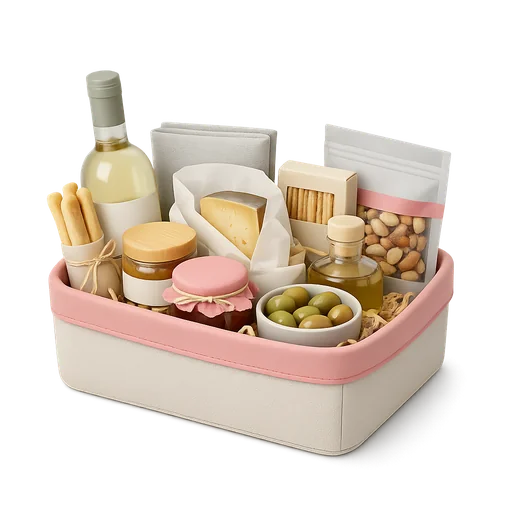 Airbnb Guest Touches: 25 Ideas That Transform a Stay25 guest touches for your Airbnb guests, sorted by budget (£0, under £5, under £20), and the method to offer them at every stay.Guest experience
 Self Check-in: Key Safe or Smart Lock?Self check-in for short-term rentals: key safe or smart lock, costs, security, mistakes to avoid, and coordination with cleaning teams.Guest experience
 Welcoming Families in Rentals: Equipment and Safety TipsWelcoming families with children in short-term rentals: baby equipment, safety, toys, enhanced cleaning, and family-friendly listings for 5-star reviews.
One property free to put all of this in place, for as long as it takes.