Digitising Your Airbnb Concierge: From Excel to New Tools
Is your management company overwhelmed by Excel, WhatsApp and post-its? Discover symptoms, a digital transformation plan, migration tips and budget.
11 min read
A Saturday in July, 10:30pm. You’re cross-referencing three Excel files to see who’s cleaning what tomorrow, scrolling through four WhatsApp chats to find a photo of a broken dishwasher, and a booking added on Thursday never made it onto the cleaning rota. This is daily life for most management companies handling 5 to 30 properties. The good news: it’s not a discipline problem, it’s a tooling problem. Here’s how to move from makeshift solutions to professional tools, step by step, without unsettling your team.
The Symptoms of Makeshift Management: Excel, WhatsApp, and Human Memory
A new management company runs perfectly well with a shared spreadsheet and a WhatsApp group. The problem comes with growth: each new property multiplies bookings, cleans, staff, and last-minute issues. The symptoms are always the same.
- The phantom rota: the real version of the schedule exists nowhere, split between an Excel file, voice notes, and the founder’s head.
- Double entry: every booking is copied from Airbnb or Booking into the spreadsheet, then announced on WhatsApp. Three entries, three chances to make a mistake.
- Missed cleans: a cancellation or last-minute booking isn’t reflected, so the cleaner turns up for nothing, or not at all.
- Missing evidence: a guest disputes the cleanliness, and you spend twenty minutes searching for photos in a thread of 3,000 messages.
- Dependence on one person: if the coordinator is off sick, no one knows where the access codes are or which property is short of linen.
If you tick three of these five boxes, your organisation has hit its ceiling: it’s the system that needs changing, not the effort.

Why Digitisation Is No Longer Optional
The market no longer tolerates improvisation. Demand is booming: around 951.6 million overnight stays were booked via platforms in the EU in 2025, up 11.4% year-on-year according to Eurostat. On the service side, France has around 5,000 short let management companies, typically handling 30 to 50 properties, with the sector growing by about 15% a year according to the 2026 Livret Accueil study.
More potential clients, but also more competitors, often better equipped. The gap is measured in pounds. Professional managers generate around 30% more revenue than self-managing hosts, according to Italian market data compiled by Bnbkit. This outperformance comes from reliable processes, ensuring every guest arrives to a spotless property. Cleanliness remains the top priority for guests: 78% cite impeccable cleanliness as a key sign of a quality listing, according to a 2026 Vrbo survey.
A management company charging a 15-25% commission is selling a promise: “hand us your keys, everything will be perfect”. That’s possible with Excel at 10 properties, but not at 30 in peak season.
Before Any Tool: Map Your Processes
The classic mistake is buying software before describing what it needs to do. A professional tool only improves processes that already exist. Take half a day to document the full lifecycle of a booking.
Ask yourself these questions for each stage:
- Booking: how does the information arrive? Who sees it, who re-enters it, where?
- Cleaning scheduling: who decides the date, time slot, and cleaner? How quickly?
- Execution: does the cleaner know exactly what to do in this specific property? Where do they find access codes, instructions, and supplies?
- Quality control: how do you know the clean is done, and done well, without visiting in person?
- Incidents: breakages, faults, forgotten items, missing linen: where is this recorded, who deals with it?
Note for each step the time spent and the errors from the past three months. This diagnosis gives you an objective list of priorities and a concrete case to get the team on board. The two main areas for improvement are almost always re-entering bookings and coordinating cleans.
Step 1: Centralise Bookings and the Calendar
The foundation of any digitisation is a single, reliable calendar. As long as your bookings live in three different extranets, everything else falls apart. Two types of tools meet this need: the channel manager, which synchronises availability and rates across platforms, and the PMS (Property Management System), which centralises bookings, guest communication, and invoicing. For a multi-owner management company, a PMS quickly becomes essential. To understand who does what, read our guide Channel manager, PMS, cleaning tool: the difference.
In practice, this first step eliminates double entry: a Booking.com reservation appears instantly in your central system, blocks the Airbnb calendar, and feeds your stats. This is the foundation for the next step.

Step 2: Automate the Operational Layer for Cleaning
This is where most management companies stop, even though this is where the most visible errors for guests occur. A PMS knows a guest leaves on Friday at 11am; it doesn’t know how to tell Fatima to clean the flat at 12 Lilac Street between 11am and 3pm, with the checklist for that property and the key safe code.
That’s the job of a cleaning management tool like CleanClac, which plugs into your calendars: every guest departure, picked up by iCal sync (Airbnb, Booking, Vrbo) or by PMS connector (Beds24, Smoobu, Lodgify, Hostaway, Guesty, SuperHote, Uplisting, Hostfully, GuestWisely, free), automatically creates the clean at the property’s default time slot. No re-entry, no missed cleans: a cancellation removes the clean, a last-minute booking adds one, and the relevant cleaner is notified. We explain this mechanism in detail in Automatic cleaning for every booking: how it works.
Around this automatic schedule, the operational layer gathers everything that used to live in WhatsApp:
- Illustrated checklists for each property, built from a catalogue of over 250 tasks: the cleaner knows exactly what’s expected, task by task, and can read the checklist in their choice of seven languages.
- Access vault: codes and key safe location sent to the cleaner on the day, never again in a lost SMS.
- Consumables stock per property (optional, can be enabled property by property), with a gauge, threshold alert, and quantity calculated from the number of guests: no more guests discovering there’s no toilet paper.
- On-site check-in: you see who has arrived and how far they are from the property, the actual cleaning duration, and a “(Overdue)” label if the clean overruns the estimate.
- Messaging per property between manager, co-manager, and cleaner, with photos: the conversation about the broken dishwasher stays attached to the right property.
 1


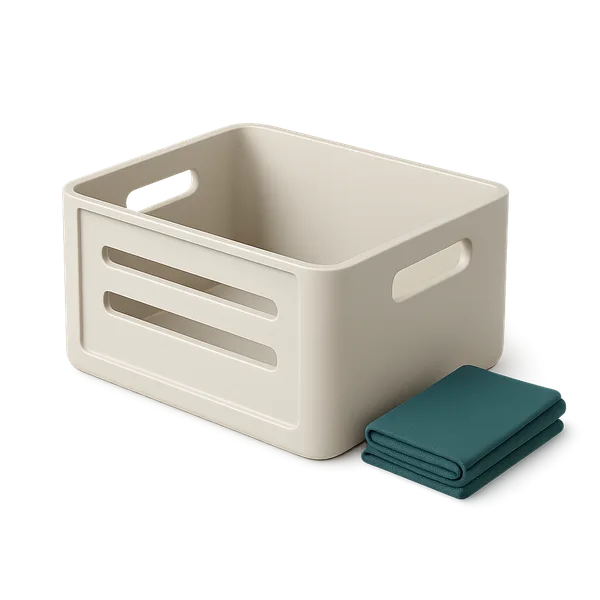


Warned before you run out
Below its threshold, the item turns red and the property is flagged in the app.
More detailsStep 3: Ensure Quality with Evidence and Data
Digitising isn’t just about going faster: it’s about producing usable records. Three practices transform your relationship with owners and guests.
First, the cleaning completion proof. With CleanClac, the cleaner finishes their job with photos or a video timestamped by the server, with a digital file signature and GPS location. Neither the cleaner nor the manager can backdate. If a guest disputes cleanliness at 11pm, you reply in two minutes with dated images.
Next, the arrival condition rating, from 1 to 5 stars, given by the cleaner: you spot guests who damage the property and document deposit claims with facts.
Finally, duration and cost data: by comparing estimated and actual cleaning times per property, you spot underpriced properties for the owner, over-ambitious checklists, and cleaners who are struggling. In CleanClac, the Reports page does this for a month or a year, by property or by cleaner: activity, time spent, cost (total paid to cleaners, per clean, per night, linen share) and quality (average arrival condition rating). These figures back up your commission increases and owner reports with facts, not impressions (see the cleaning report).

Change Management: Getting the Team On Board Without Resistance
The best tool fails if the team keeps sending WhatsApp messages. Change management is the trickiest part of the project, especially with cleaners who aren’t always comfortable with apps.
A few principles make all the difference:
- Explain the why before the how. Show the mistakes from the last three months and what the tool eliminates for them: conflicting rotas, unverifiable accusations, unclear instructions.
- Choose a tool that costs cleaners nothing. With CleanClac, cleaners never pay anything, and with a subscription, cleaners are unlimited, at no extra cost: you only pay per property. No one has a financial excuse to stay outside the system.
- Appoint a lead user. Train the person most comfortable with their phone first: they’ll become first-line support for the others.
- Switch decisively, on a small scale. Two pilot properties, two weeks, then roll out to all. And cut off the old channel: if the WhatsApp rota survives “just in case”, everyone will go back to it.
- Celebrate early wins. The first guest dispute resolved in five minutes thanks to timestamped photos is worth all the training sessions.
For management, the co-manager role lets you delegate a group of properties to a coordinator: they can schedule, assign, manage checklists, stocks, access, and incidents, and invite cleaners, without ever accessing billing, subscription, or account settings. Successful digitisation takes the pressure off the founder: that’s the main sign of success.


 Chloe
 Sofia
 Amara
 Luke
 Emma
 Thomas
Cleaning team management
Cleaning team management in one app: your cleaners, inspectors, co-managers, properties and missions.
More detailsWhat It Costs, and What It Saves
Let’s talk budget, the number one objection. With a cleaning management tool like CleanClac, the first property is free, with no time limit and no card required, then the subscription is £7.99/month for 2 properties, £11.99 for 3, £15.99 for 4, £19.99 for 5, and £4 per property above that. For a management company with 20 properties, that’s £79.99/month (or £479.99/year annually), so £4 per property per month, team included: less than a single refunded night for a missed clean (full pricing details).
Set this cost against three measurable gains:
- Coordination time: automatic creation of cleans and no more re-entry saves several hours a week from 10 properties upwards, time you can reinvest in winning new contracts.
- Avoided errors: a single missed clean can cost a refund, a negative review, and sometimes a lost management contract.
- Growth capacity: with professional processes, adding 10 properties no longer means hiring another full-time coordinator.
To choose the right tool for your portfolio, our guide Airbnb Cleaning Software: How to Choose the Right App reviews the key criteria, and our overview of management software in France compares the market solutions.
Migration, Week by Week
Now for the practical switch from the old system to the new. Here’s a plan that fits into a month, outside peak season.
- Week 1, propertiesWith a connected PMS, properties import themselves, with address and capacity; otherwise, create them with their default cleaning slot and paste in their iCal links. Fill in each property’s access vault, clearing out codes left in WhatsApp.
- Week 2, checklistsCarefully build one for a typical property, then use “Same as:” to copy it to similar properties. Each copy remains independent and can be tweaked later.
- Week 3, the teamInvite your cleaners by their phone number (an SMS with the app link and a 6-digit code), link them to their properties with their rate, enable automatic assignment, and give each a colour in the calendar to see who’s doing what.
- Week 4, the switchAnnounce the date when the WhatsApp group stops being used for scheduling, and stick to it. In the first weeks, check each morning for cleans still orange (to be scheduled) or yellow (awaiting response).
If growth means you need to recruit, you can do that through the tool too: “Find a cleaner” shows on a map the cleaners available near a property, with their desired hourly rate and completed cleans. One request goes to all, and you pick the one you want from those who respond, with no commission (find a cleaner).
The Most Common Migration Mistakes
- Importing everything without sorting: inactive properties or copied checklists not reviewed clog up the tool from day one.
- Forgetting the owners: let them know their reports will look different, and show them a first cleaning summary.
- Keeping a “just in case” Excel file: it becomes the reference at the first sign of trouble.
- Training everyone on the same day: prefer short sessions, starting with the lead user.
Your questions
Which tool should you start with when digitising a management company?
Start with the calendar: a channel manager or PMS that centralises bookings and eliminates double entry. This is the foundation for all other tools. Next, tackle the cleaning layer, where the most visible errors for guests occur. Invoicing and dynamic pricing can wait for phase two.
Do you need a PMS before adopting a cleaning management tool?
No. A tool like CleanClac works with simple iCal sync from Airbnb, Booking, or Vrbo. If you later adopt a PMS (Beds24, Smoobu, Lodgify, Hostaway, Guesty, SuperHote, Uplisting, Hostfully, GuestWisely), the connector (free) imports properties and bookings to schedule cleans automatically. The two are complementary: the PMS manages bookings, the cleaning tool manages operations.
How long does it take to digitise a management company?
Allow 2 to 3 months for a smooth transition: two weeks to map processes, a month to centralise calendars with pilot properties, then four to six weeks to roll out the cleaning layer and train the team. Avoid peak season: start the project during a quiet period.
My cleaners aren’t comfortable with apps, what can I do?
This is a common concern. Choose a simple app in the cleaner’s language (CleanClac is available in seven languages: French, English, Spanish, Italian, Portuguese, German, Arabic), train a lead user first who can help the others, and show the concrete benefits: clear instructions, photo proof that protects them from unfair accusations, unambiguous rotas. Most cleaners are on board within a week or two of use.
Is Excel enough for a small management company with 5 properties?
Excel may be enough for accounting, but it quickly shows its limits for operations: no sync with booking calendars, no notifications to cleaners, no proof of attendance. From 5 properties with frequent turnovers, the risk of a missed clean justifies a dedicated tool, with an entry cost lower than a single clean.
How do you convince owners of the value of digitisation?
Show them what they gain: factual reporting, timestamped photo proof of every clean, tracked stocks, logged incidents, and even guest feedback on cleanliness via a QR code card in the property. A well-equipped management company justifies its commission with data, not promises, which retains existing contracts and makes it easier to sign new ones: operational rigour is what owners are buying.

Written by Jonathan Lalinec
Jonathan Lalinec is the founder of CleanClac. He compares and automates tools for short-term rentals.
Published on August 7, 2026 · Updated on November 11, 2026
Read next
 Airbnb iCal Link: Sync with Booking and Vrbo, FixesAirbnb iCal link: where to find it, how to sync it with Booking and Vrbo, real sync delays, fixes when it stops updating, and automatic cleans.Tools and automation
 Vacation Rental Automation: What to Hand Over in 2026Vacation rental automation in 2026: messages, pricing, check-in, cleaning and reviews, what to automate, time saved and the best order to start.Tools and automation
 Airbnb Cleaning Software: How to Choose the Right AppHow to choose Airbnb cleaning software: booking sync, checklists, photo proof, team pricing, tool types compared, a 10-scenario test grid and ROI method.
One property free to put all of this in place, for as long as it takes.