

Photo proof of cleaning: which tool stands up in a dispute
All apps promise end-of-cleaning photos, but few timestamp them server-side. What counts as proof, and how to set it up.
8 min read
A guest writes three days after departure: “the property was dirty when I arrived”, and requests a partial refund. You have photos. So does the guest. Yours show a spotless flat, theirs a mark on a worktop. The platform decides, and what makes the difference is not the quality of the photos, but what can be proven about their date and location. All cleaning tools promise “end-of-cleaning photos”. Very few provide actual proof. Here is the difference, how to check it before choosing a tool, and how to set up a proof protocol your team will actually follow.
This is not a minor issue: according to a Vrbo survey from April 2026 of 1,758 travellers, 78% cite impeccable cleanliness as a strong signal of listing quality. Cleanliness is the number one cause of disputes because it is the number one focus.
What an ordinary photo does and does not prove
A photo sent from a phone’s gallery carries EXIF metadata: a date, sometimes a location. There are three problems, and they are deal-breakers.
The date comes from the phone. It can be changed in the settings in ten seconds. A photo taken last week can show today’s date with no trace.
Metadata disappears in transit. Most messaging services and apps strip EXIF data on sending, for privacy reasons. The photo arrives stripped bare.
Nothing prevents substitution. If the tool accepts a photo from the gallery, it accepts any photo: from a previous clean, from another property, from the listing.
None of these three points assumes bad faith. A rushed cleaner who forgot to take photos may reuse one from last time, thinking it is helpful. That is exactly what real proof prevents.
The four levels of proof, from weakest to strongest
Level 1: free photo upload. The cleaner sends whatever they want, from the gallery. Almost no weight in a dispute.
Level 2: photo taken in the app. The camera opens within the tool. This is better: the photo is taken during the clean. But the time is still from the phone.
Level 3: server-side timestamping. The server, not the phone, records the time when the photo is received. The cleaner can no longer backdate: they would have to change the editor’s server time.
Level 4: timestamp, fingerprint, and location. To the server time, add the digital fingerprint of the file, a signature that changes if a single pixel is altered, and the GPS location when available. Now, you cannot backdate, swap the file afterwards, or claim the photo is from another property without being contradicted.
CleanClac operates at level 4, for both photos and videos. It also adds on-site check-in, with distance to the property measured, the actual cleaning duration, and the condition rating on arrival, from 1 to 5 stars, given by the cleaner. This last point documents the entry, not just the exit: if the previous guest left a mess, it is recorded before cleaning starts.

Timestamped, sealed photos
The time that counts is the server's, not the phone's.
More detailsA word of honesty about what this is worth: these are solid, consistent technical elements, timestamped by the server and impossible to backdate, but not a legal act established by a bailiff. They make falsification practically impossible, which is more than enough in discussions with a platform or guest.
How to check before choosing
Five questions to ask the provider, or to test on your own property. They take ten minutes and avoid nasty surprises when it matters.
- “Who sets the time, the phone or the server?” The right answer is the server. Ask where the time is recorded and how it is displayed to the manager.
- “Is there a file fingerprint?” This prevents swapping the photo in the database after the fact.
- “Is the location recorded?” Without it, nothing links the photo to the property.
- “Can the clean be completed without photos?” If yes, photos will be missing precisely on busy days, when disputes are most likely.
- “Who else can see the proof?” Proof visible only to the manager is reassuring; proof the guest can see on arrival defuses disputes.
What CleanClac puts in place, concretely
Proof is part of the checklist. Photos and video form the last group, “Proof”, which the cleaner can complete at any time. The clean is only finished once tasks are ticked off and proof is taken.
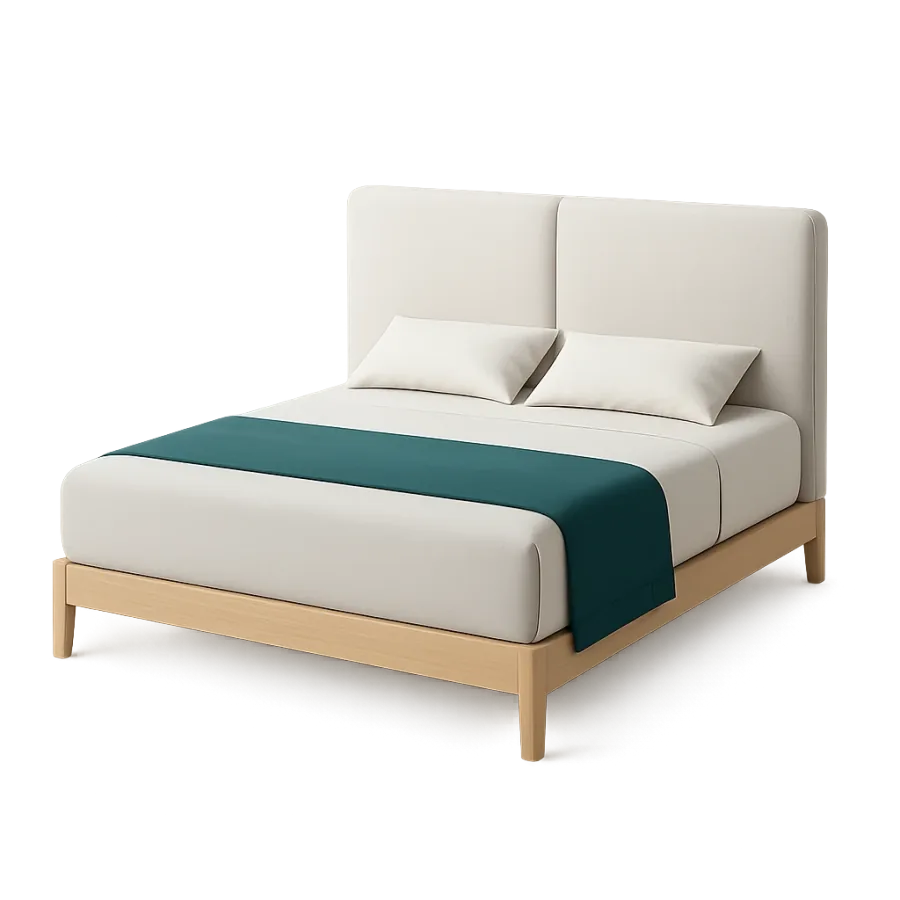
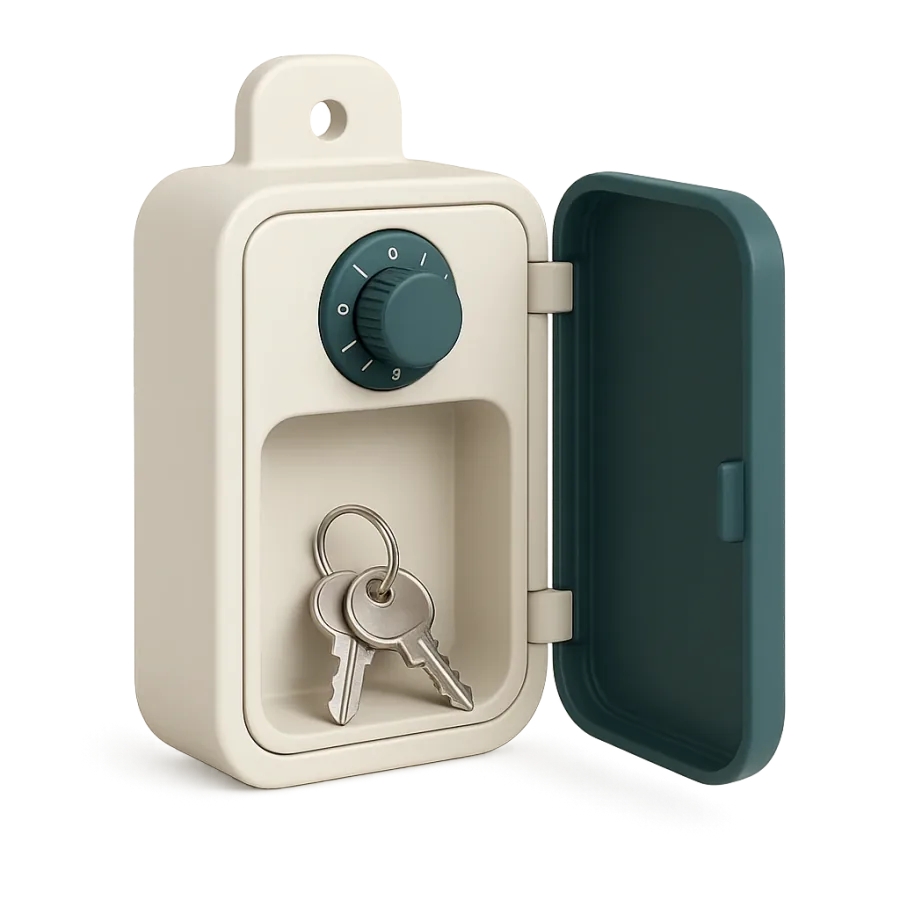
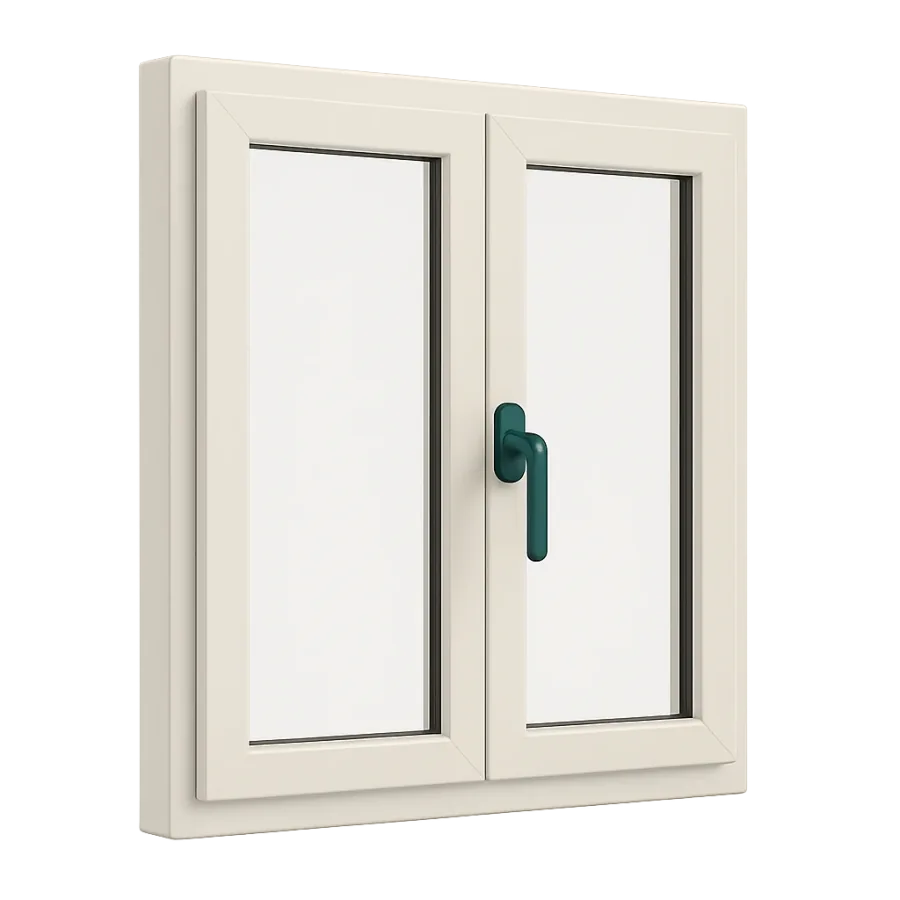
You choose what to photograph. In the Proof tab of the property’s checklist, each room gets its number of photos (kitchen, bathroom, terrace…), with a description and, if you wish, a sample photo showing the expected framing. Checkpoints cover what is not a room: keys returned, badge stored, bins emptied, meter reading, heating off, windows closed, door locked.
 Air the room
 Vacuum the floors
 Mop the floors
 Empty the bins
 KitchenX2
 BathroomX2
 BedroomX2
 Living room
 Keys
 Windows
Proof, room by room
In the Proof tab, pick the rooms and checkpoints to photograph after the cleaning, and how many photos each.
More detailsPhotos or video. Photos are available to all, including free accounts. Video, of a room or the whole property, is for subscribers only.
A summary after every clean. As soon as it is finished, the manager receives the duration, arrival condition, photos or video, rating, and location at check-in. Any incident reported by the cleaner is also shown. The details are on the cleaning report page.
The guest sees the last clean. The guest card “Cleaning tracked”, placed in the property, opens via QR code, with no app or account, the page for the last clean: when, by whom (as much as the cleaner agrees to show), checkpoints, photos or video. The guest rates cleanliness from 1 to 5 stars; a rating of 3 or less notifies you immediately. A guest who sees, on arrival, a dated and photographed clean is much less likely to dispute. See the guest card page.

 Fresh sheets
 Fresh duvet cover
 Fresh pillowcases
- Surname
- Phone number
- Cleaning issue reports
- Access codes
What guests see
The last cleaning in detail: the time, the cleaner, the points checked, the linen and the little touches.
More detailsSetting up a proof protocol in five steps
- List your past disputes.Worktop, shower, hairs on the bed, bins: your photos should target these points first.
- Ask for few, but always.One photo per living space, plus two or three checkpoints. Five to eight photos for a one-bedroom flat is enough.
- Show the framing.One sample photo per room is better than a written instruction: the cleaner copies what they see.
- Read the summaries in the first week.Correct blurry or too-tight framing straight away, before habits set in.
- File the proof at the right time.When a guest disputes, respond quickly with the cleaning summary, time, and photos, before the discussion escalates.
For more on the control method, read our guide to photo-based quality control, and for guest-caused damage, our article on inventories and damage. The comparison CleanClac and Cleanster applies this proof framework to two concrete tools.
Common mistakes
Requesting twenty photos. Beyond ten, the cleaner rushes the series and quality drops. Better a few systematic photos than many careless ones.
Only photographing the exit. Without the arrival condition, you cannot tell a missed clean from a messy previous guest.
Forgetting checkpoints. The most expensive dispute is not always a stain: it can be a window left open or keys not returned.
Never looking at the proof. A team that knows no one reads the summaries will end up taking photos just for show.
What this changes in practice
With a guest. The discussion often ends before it starts. A summary showing server time, photos, and condition rating, sent in the conversation, removes the argument.
With a platform. Airbnb and Booking decide based on documents, via their help centres (Airbnb, Booking.com Partner Hub). A dated, located, consistent file carries more weight than a series of photos with no context.
With your own team. This is the least expected and most useful daily effect: when everyone knows the time comes from the server, last week’s photo disappears by itself. Proof improves cleaning even before it is needed.
With your insurer. In case of damage, knowing the property’s condition after the previous clean pinpoints when the damage occurred.
Your questions
Are timestamped photos enough in a dispute?
They do not have the force of a bailiff’s report. They are technical elements: server time, file fingerprint, location. Their strength is in their consistency and the practical impossibility of backdating or swapping them, which is enough in the vast majority of disputes, which are settled with a guest or platform, not in court.
Is a photo’s EXIF enough?
No. It comes from the phone, whose time can be changed in ten seconds, and is stripped by most apps on sending. It is an indication, not proof.
Should I take photos or video?
Both have their uses. Photos target specific points, can be compared from one clean to the next, and are easy to send. Video shows the whole and the continuity, but is heavier to review. The most effective is a few targeted photos of sensitive points, plus a video for large properties. With CleanClac, video is for subscribers, photos are open to all.
How many photos should I request at the end of a clean?
Between five and eight for a one-bedroom: one per room plus the usual dispute points, worktop, shower, toilet, bins emptied, bed made. Add two or three checkpoints, keys and windows first. Beyond that, quality drops.
What if my cleaner does not have a recent smartphone?
Server-side timestamping does not require anything special from the phone: the server sets the time. An older device with a decent connection is enough. Location, however, requires that location services are enabled in the app.
Can the guest see the cleaning photos?
With the CleanClac guest card, yes: they scan the QR code in the property and see the last clean, its checkpoints and its photos or video, with no app or account. Access codes, surname, and cleaner’s number are never shown. The card is free for all properties.

Written by Jonathan Lalinec
Jonathan Lalinec is the founder of CleanClac. He compares and automates tools for short-term rentals.
Published on August 7, 2026 · Updated on October 10, 2026
Read next
 Best Airbnb Cleaning Software: Which Tool to Choose in 2026Discover Airbnb cleaning software in 2026: the three tool families, seven key criteria, true costs based on your properties, and how to test effectively.Comparisons
 CleanClac or Turno in 2026: the honest comparisonCleanClac versus Turno in 2026: business model, real prices for 1, 5 and 10 properties, cleaning proof, marketplace. Which to choose for your portfolio.Comparisons
 Alternative to Turno in 2026: avoiding commission feesIs Turno really free? The true cost in 2026, commission-free alternatives for European hosts, and a 7-step migration plan.
One property free to put all of this in place, for as long as it takes.